Showing posts with label Geosi Reads. Show all posts

Wednesday, April 29, 2015

Tendai Huchu interviewed on Geosi Reads

Interview with Zimbabwean Writer, Tendai Huchu

from Geosi Reads: A World of Literary Pieces
https://geosireads.wordpress.com/2015/04/14/interview-with-zimbabwean-writer-tendai-huchu/

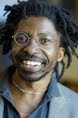
Photo: Tendai Huchu
Brief Biography:
Tendai Huchu’s first novel, The Hairdresser of Harare, was released in 2010 to critical acclaim, and has been translated into German, French, Italian and Spanish. His multi-genre short fiction and nonfiction have appeared in The Manchester Review, Ellery Queen’s Mystery Magazine, Gutter, Interzone, AfroSF, Wasafiri, Warscapes, The Africa Report and elsewhere. His new novel is The Maestro, The Magistrate & The Mathematician.

Geosi Gyasi: Perhaps, we could start with your new novel, “The Maestro, The Magistrate & The Mathematician”. Could you tell us how you came to write it?
Tendai Huchu: I wanted to tell a story about the time and the city I live in. When you’ve been doing this thing for a good while, you’re hit by ideas near enough every day, and the hard part is choosing which to discard and which to run with. I guess I wrote this because the idea was super loud in my head and wouldn’t go away. Writing the book then became a form of exorcism.

Geosi Gyasi: The title of the book is interesting. How did you arrive at the title?
Tendai Huchu: The title is a bit of a misnomer because the book contains some misdirection. But I liked the alliteration in the mmm.

Geosi Gyasi: What sort of preparation goes into the writing of a novel?
Tendai Huchu: I haven’t figured it out yet. I think you have to approach each work as it comes. My first novel was very spontaneous, but that wouldn’t fly with this book because it required a lot of careful architectural planning to work as a whole. The project I’m moving on to next requires a lot of historical research. The two crucial ingredients you need are time and determination, outside of that it’s there but for the grace…

Geosi Gyasi: In a few sentences, could you tell us what “The Maestro, The Magistrate & The Mathematician” is all about?
Tendai Huchu: It’s about three men living in Edinburgh, trying to find a place for themselves in the city. It’s a novel about ideas, music, memory, love, that kind of shit.

Geosi Gyasi: How long did it take you to write the book?
Tendai Huchu: Three years or thereabouts. A lot of false starts and U-turns in the process. Madness.

Geosi Gyasi: How different is “The Maestro, The Magistrate & The Mathematician” different from your first novel, “The Hairdresser of Harare”?
Tendai Huchu: I think stylistically, thematically and structurally, it’s a little more complex. You have to take each idea as it comes and find the correct form in which it will manifest as a novel.

Geosi Gyasi: Between the two books, which of them do you feel more closely attached to?
Tendai Huchu: I’m more attached to the book I’m thinking of writing next. And when that’s done, I shall be more attached to the one that comes after.

Geosi Gyasi: Do you often depend on personal experiences to write?
Tendai Huchu: Not really, no. I mean you obviously have to know something to write it, but the fun is in taking imaginative leaps and putting yourself in your characters’ stilettos.

Geosi Gyasi: What is the most boring part of writing?
Tendai Huchu: It can be difficult, frustrating and a host of other shitty things, but boring is never one of them. I mean you’re creating stuff, dude; that’s so much fun. You’re the cat who’s like, “Let there be light,” and there is light. Could you ever get bored with that kind of magic wand?

Geosi Gyasi: Is there anything interesting about writing?
Tendai Huchu: There are no boundaries, no limits whatsoever; it can be anything that you want it to be. It’s not interesting, it’s Amazing. Brings out the kid in me.

Geosi Gyasi: This could go into my records as the most witless question I’ve ever asked but why do you write?
Tendai Huchu: It’s an impulse. We all have the storytelling gene inside of us. I read a lot, and I fantasise that when I write, I’m only telling the story that I want to read, but it’s not there in my library yet.

Geosi Gyasi: How often do you follow the political situation in Zimbabwe?
Tendai Huchu: Fairly often. I have an interest in politics around the world. Whether you like it or not, politics is about people and power, and it governs every aspect of your life – what you can or cannot say, who you may or may not marry, whether your faith is permissible or not, the quality of air you breathe, the salt in your food, whether you even have the right to exist or not…

Geosi Gyasi: Do you know who reads your books?
Tendai Huchu: I’ve met diverse readers along the way at literary events and stuff. I get the occasional email from someone who’s been touched by my work, which is really cool. Readers are gracious and kind in the main and one can only be grateful when someone else takes the time to engage with their work.

Geosi Gyasi: How did you get the idea for your story, “The Second Coming of Dambudzo Marechera”?
Tendai Huchu: Fungai Machirori who runs Her Zimbabwe suggested we do something for Marechera’s anniversary last year. I thought I’d do a pastiche of the guy and it was a lot of fun. The idea was to have just enough in there from his original works to fool the reader into thinking it might just be plausible, then, around that base code, I had room to do my own thing.

Geosi Gyasi: Could you tell us anything about Dambudzo Marechera?
Tendai Huchu: Easily the most popular and influential Zimbabwean writer ever. He’s a sort of cultural icon, though few people actually engage with his work, so he has that special quality of being everything to everyone.

Geosi Gyasi: Which writer has had the greatest influence on your writing?
Tendai Huchu: I read a lot and am constantly getting influenced by different writers at different phases in my life. I really couldn’t pick one.

Geosi Gyasi: How different is a novel different from a short story?
Tendai Huchu: The most obvious answer is that the length constraints in the short story require a certain economy where the novel can be more forgiving. The short story demands precision. You often have to dispense with the build up and start smack-bang in the action. It’s debatable whether the form is truly as immersive as the novel, but for the writer, working in the short form requires s/he put on a different head.

Geosi Gyasi: Is it true that writers are boring to hang around with?
Tendai Huchu: That stereotype is pretty much true, except for the sci-fi crowd which is full of really, really interesting people with the most fascinating ideas you can imagine.

Geosi Gyasi: What are your literary plans for the future?
Tendai Huchu: At the moment I’m translating Mapenzi by Ignatius Mabasa from Shona to English. I’ll be on that project for the next couple of months. Outside of that, I have no real plans; just take it one day at a time, I suppose.

Geosi Gyasi: Are you an avid reader?
Tendai Huchu: Yep. I wouldn’t be doing this if I wasn’t a reader. I don’t think anyone can truly engage with any established craft unless they’re a fan first. Imagine the footballer who says he wants to play but he doesn’t give a hoot about watching the game, doesn’t know the greats – Pele, Maradona – let alone the rules of the game, but somehow the motherfucker wants to jam for Man United. How does that work?

Geosi Gyasi: What are you likely to be caught doing if not writing?
Tendai Huchu: Cycle a bit. Walk now and again. Watch popular movies a lot – I’m talking blockbusters with loads of explosions: think Michael Bay. Live life and wait for the next idea.
END.


Monday, June 27, 2011

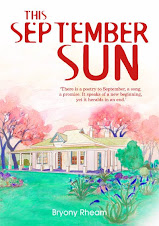
Geosi Reads interviews Bryony Rheam, author of This September Sun

From: http://geosireads.wordpress.com/2011/06/27/bryony-rheam-author-of-this-september-sun-interviewed/

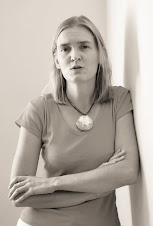
Brief Biography:
Bryony Rheam was born in Kadoma in 1974 and lived in Bulawayo from the age of eight until she left school. She studied for a BA and an MA in English Literature in the United Kingdom and then taught in Singapore for a year before returning to teach in Zimbabwe in 2001. She was part of the British Council sponsored Crossing Borders creative writing project and has had short stories published in several anthologies, including all three volumes in the Short Writings from Bulawayo series and inLong Time Coming: Short Writings from Zimbabwe. Bryony won the Intwasa Arts Festival koBulawayo Short Story Competition in 2006. Also, her first novel, This September Sun was released from ‘amaBooks in 2009.

Geosi Reads Interviews Bryony Rheam:

GEOSI READS: I begin with what John Eppel said of your book, ‘This September Sun brilliantly evokes the ennui of the pre-Independence settler community who measure out their lives in cups of tea, sundowners, and illicit affairs. In this absorbing debut novel, Bryony Rheam has produced a work worthy of a place in the bibliography of post-colonial writings in Africa.’ What is it about the tea ritual we encounter in your novel?

BRYONY RHEAM: Tea making is actually a positive ritual in the novel. I consider myself to be something of a tea connoisseur; tea should be made in a certain way: the pot must be warmed first and the tea left to brew for a certain time before it is poured. Most people don’t have time for this and simply use a teabag in a mug – that’s modern life. Evelyn belongs to a different generation and the way she makes tea – including the use of teacups and saucers and the setting of the tray – all serves to create a certain atmosphere, and emphasize that her way of life is fast-disappearing.

GR: This September Sun is your first novel but before the novel came out, you used to be writing short stories. Were the short stories a preparatory mode of a sort? Did the writing of short stories influence the writing of your novel in any particular way?

BR: I can’t say that they did, except that having them published gave me the confidence to complete my novel.

GR: Take us through the process of writing ‘This September Sun’. How long did it take you to complete it? Do you write longhand?

BR: When I lived in London in 1997/98, I had an exercise book in which I used to write down anything interesting that I had seen or heard or thought of and some of these later became Ellie’s experiences. When I moved to Singapore in 2000, I joined a writers’ group and had to produce a piece of work each week, which was really good for me as I tend to lack self-discipline! I wrote the first chapter and then thought right, what do I do now? I had a story with grandparents who didn’t like each other and had to think why. Mostly I wrote longhand and then transferred it on to computer. The letters, especially, I had to write out as proper letters so that I actually got a feel for the character.

GR: Does it matter to you where you write your stories? Where was your book written? BR: Yes, it does matter. I have to be in a room where I feel comfortable and I have to sit at a table. I can’t write outside and I can’t write lying down! My book was written on various tables in various houses I have lived in!

GR: You wrote your story in a powerful first person narrative style. What informed your decision to employ this particular style? Did you so much trust your narrator to convey the appropriate story to readers?

BR: I really love a first person narrator. It’s something that’s becoming increasingly common at the moment, whereas at one time most books were written in third person. A book which influenced me greatly in this regard is The Great Gatsby – how different it would be told in third person! I feel using a first person narrator makes the situation more immediate than it would be otherwise and feelings are much rawer as well. Of course, you can’t trust this type of narrator one hundred per cent, so it’s good to also bring in other voices which may counter that strong main one.

GR: Is it appropriate to label your book as semi – autobiographical, considering the fact that you share some similarities with Ellie, the narrator?

BR: A lot of people ask me this, and I feel some people are even disappointed when I tell them it’s not a true story! I wonder if it’s because of the popularity of memoirs, especially of white writers, which abound at the moment. I cannot say that any character or event in the novel is ‘true’, although I may have drawn on certain characteristics of people I have met or things that have happened. My mother did have an Uncle Cadwallader who was an architect, but there the similarity ends. There are parallels between my life and Ellie’s, such as going to the UK to study, but I have never worked in a book shop and I didn’t begin a Phd. Miles, Tony and Mark are entirely fictional. Having said that, it’s probably true to say that I am like Ellie in character, although not as extreme, but then I am also like Evelyn in some ways.

GR: At a point in time, Ellie was keen to seek a life beyond what the small Bulawayo offered her and the country she eventually relocated to happened to be England. In her own words, she says to her Grandmother, ‘I’ll die, Gran, if I stay here. I’ll shrivel up and die.’ (p83) In Mugabe’s Zimbabwe of today, is it likely to see citizens yearning to relocate to other countries? If yes, why do you think that is so?

BR: Yes, I think most school leavers want to leave the country and, in fact, it has become the norm to do so. One of difficulties I’ve had to face being a teacher, is that most of the pupils I teach don’t want to stay in Africa and many a time I have felt I am educating people to go and enrich another country. When I wanted to leave, it was to explore the world a bit, but now I think that young people just don’t see any future in Zimbabwe. There’s a whole generation missing (people in their twenties). I think when you’ve travelled a bit and if you’ve got a family, you might come back later because it’s still quite a safe place and the pace of life is so much slower than it is in the developed world.

GR: Would you suggest Tony’s pronouncement as the major setback confronting the growth of Zimbabwe? I may want to quote what Tony said to Ellie, ‘We both want to be in control…both black and white. The problem in Zimbabwe is that whites want to live first world lives in a third world country… The problem with blacks is that they want to do things their way…’ (p187)

BR: I think it’s one of a number of obstacles that Zimbabweans have to deal with. I find a lot of people saying that things shouldn’t be this way or that way, because it isn’t like that in the UK or America. While this point is often a valid one, I don’t always feel it’s a very helpful one. Things happen differently in Africa and that’s what we all have to accept. By this, I don’t mean that we accept corruption and violence. I’m talking more about a way of life and a way of thinking. There has been a great break down in black African life because of the merging of two very different cultures. We see the breakdown of the family, especially the extended family, as well as a general spiritual and moral decline. It was once the white community which I would have said was in trouble, now I think it’s the other way around. I reckon Africa has to find an African solution to its problems. Western ideas don’t really work here.

GR: To whom is your novel intended for? Is it for white Zimbabweans or black Zimbabweans or both or for anybody at all?

BR: Just before the book was published, I was worried that it would appear to be very much a ‘white’ novel; after all, the majority of characters are white. However, I am pleased to say that I have probably had more feedback from black readers than from white. A couple of these readers have commented on how much they identified with Ellie, despite the obvious racial differences, which has been great. I never really thought who the book was intended for when I wrote it.

GR: What are some of the challenges you encountered in writing ‘This September Sun’?

BR: Time! I’ve come to realize that you need to treat writing as a job if you intend to make any money out of it. You have to have set times that you write and you have to be consistent. However, until you actually have a book published, it’s often hard to be taken seriously, or even to take yourself seriously, so you tend to waver with your discipline. I couldn’t afford to give up my job to write, so unfortunately teaching took up a lot of time, especially all the preparation and marking.

GR: You have received some special prizes in the course of your writing career. For instance, you won the Intwasa Arts Festival koBulawayo Short Story Competition in 2006 and the Zimbabwean Book Publishers Award for 2010. Do prizes matter to you in anyway? Does it have any influence on your writing career?

BR: I think the most important thing you gain from winning a prize is a boost of confidence. It makes you feel that you are on the right track and that someone out there likes your work. It’s all promotional as well, so you hope that someone might read your work because they heard it won a prize. I feel it would great to be at least nominated for a major prize – I’m sure most authors do.

GR: One of my favorite moments in your novel has to do with Tony’s words to Ellie. I quote, ‘Africa is Africa… Accept it and move on.’ (p249) Do you think the post – Independence Africa we see today is just too unbearable for its own citizens to carry on living?

BR: Well, some people don’t have much choice, do they? This comes back to what I was saying earlier, if you keep comparing Africa to other places, you will always be disappointed. If you compare life now to life in the past, you are unlikely to be disappointed as well. But this is something we seem to spend a lot of time doing. When I lived in Zimbabwe, I felt a lot of people talked about the past – things they used to do and they way life used to be – but when you suggested that there were some things they could still do, they didn’t want to do them! Everyone, from the poorest person on the street to the richest in town, can make a difference, but we’ve developed this mindset that it’s someone else’s problem.

GR: How did you meet your publishers? Was it tough haunting for publishers to publish your novel?

BR: I answered an advert looking for short stories for a collection back in 2002. I had a couple of stories published by amaBooks before I asked them if they would be interested in looking at it. It has been hard finding a publisher for the novel outside of Zimbabwe. It was very difficult getting a foot in the door and just getting someone to read it.

GR: You have on many platforms talked about how much you’ve loved the ‘The End of the Affair’ by Graham Greene and ‘Mrs. Dalloway’ by Virginia Woolf. Were these books useful to you in the writing of your novel? In other sense, are you often influenced by the kinds of books you read?

BR: ‘The End of the Affair’ definitely was an influence. I had a problem with writing Evelyn’s diary entries because they had to become more than just usual entries, and so I read the diaries in this novel a couple of times. It also helped me to ‘become’ a woman in the 1940s. Virginia Woolf influenced me in the sense that Ellie is very sensitive and self-conscious as many of Woolf’s female characters are.

GR: Is it appropriate to say that black Zimbabweans dominate the house of Zimbabwean letters? I am tempted to believe so because only a few names of white Zimbabwean writers come to mind or perhaps I may be wrong. Names like John Eppel and Doris Lessing comes to mind upon reflection. Is that so?

BR: Yes, I think they do and that’s only natural. Doris Lessing may be a famous writer, but I don’t think she’s the first name that springs to mind when you think of Zimbabwean writing.

GR: Can you help with a few names – just to enlighten us a bit?

BR: Tsitsi Dangarembga, Dambudzo Marachera (I actually feel drunk when I read his work!) and Chenjerai Hove. These I feel are the ‘old masters’ of Zimbabwean writing. There are white writers like Peter Godwin and Alexandra Fuller, but they don’t live in Zimbabwe anymore and so that seems to remove them somewhat.

GR: Do you read reviews of your book? How do you take it if you read an unfavorable review?

BR: I read all the reviews, and am happy to say that I haven’t really read anything negative so far. I think as a writer you have to realize that some people just aren’t going to like your work, but if there are some that do, then it’s great.

GR: Characterization in novels is one critical area most readers look out for. How do you choose the names of your characters? From where did you get character names like Ellie or Evie Saunders?

BR: Ellie is a name I have always liked, which is why my younger daughter is also named Ellie. I considered changing the name after we had given it to her as the book hadn’t been published at this point, but the character had grown so large in my mind, I didn’t feel I could change it! I got the name Evelyn from an old trunk I bought for $100 (when it couldn’t buy you a loaf of bread). The lettering on the trunk read: Miss Evelyn Saunders, Passenger to Southern Rhodesia. I do have to think about names as they must suit the character.

GR: In recent times, publishers are introducing e-books into the book industry. Your novel is also available as an e-book. Are you enthusiastic about e-books?

BR: Not really. I fear normal books may die out, which will be a great shame. There is nothing better than shelves full of books!

GR: Do you read your work out loud while you are working on it?

BR: Yes, I do. I also have conversations aloud, which must seem rather strange to anyone looking in the window. I can’t write dialogue without speaking it aloud.

GR: Have you ever revisited your novel and wish you had a line or paragraph changed?

BR: Yes, just recently I had cause to do so, and I thought I would probably cut some bits out. I see that the novel works without those bits, but at the time I thought they couldn’t.

GR: Did you know as a child that you wanted to be a writer? Take us through how you ended up a writer?

BR: I’ve always wanted to be a writer, ever since I was very young. My dad bought me a second-hand typewriter when I was about eleven and I used to write stories about a dog called Merlin. It wasn’t until I did a creative writing workshop when I was at college that I really started writing though. I’ve always had lots of thoughts, but haven’t put them down. The tutor was very encouraging and I started writing articles for a college magazine. Then I lived in London and kept the exercise book of notes that I told you of.

GR: I read somewhere that your next novel is going to be about murder. How true is this?

BR: It’s true! I’ve already started writing it. It’s about five very different people who are drawn into solving the mystery of who murdered a Bulawayo woman found dead in her house. I just hope I don’t take another ten years to write it!

Wednesday, May 18, 2011

Geosi Reads reviews This September Sun

Title: This September Sun

Author: Bryony Rheam

Rating: 4/5

Publisher / Year: 'amaBooks / 2009

‘On the 18th of April 1980, my grandfather burnt the British flag. I remember because it was my sixth birthday and he ruined it.’ This begins the narrator’s recount of the occurrences surrounding her sixth birthday and – thus – sets the novel in motion. The narration of Rheam’s compelling first novel is entrusted to the care of Ellie, born in 1974, and living with her parents in small town Bulawayo. Ellie’s sixth birthday coincides with the birth of a new country: Zimbabwe.

‘The day of my sixth birthday was the day Zimbabwe got its Independence from Britain. No one went to work. Prince Charles came all the way from England to shake Mr Mugabe’s hand and give back the country to the black people. Many white people had already decided to leave by the time the Rhodesian flag was lowered and the new Zimbabwean one hoisted.’

The period Zimbabwe gained independence from Britain marked a significant moment in the life of Gran, Ellie’s grandmother, with whom she was closely attached. The flag burning incident, resulting from the intoxicated grandfather’s behaviour, during which Gran’s forearm is permanently scarred, sets the basis on which Gran leaves Grandfather in search of her own freedom. Ellie describes the scar: ‘I said that it looked like the shape of Zimbabwe etched on her arm. I think Gran was always a little proud of the mark, a symbol of the price she paid for freedom.’

The story thus emerges out of Gran’s separation, as she leaves Grandfather to set up her own home. Gran’s departure affects Ellie’s regular routine and this creates a longing that is hard to fill. Among other things, Ellie misses Gran for the times when she would read to her from her library books, or when they would walk to the library together. Now, to cater for the boredom and loneliness created at home because of the absence of Gran, Ellie passes weekends at Gran’s and thus creates a strong link between her old life and that of her new life. Ellie describes herself as a ‘go-between’.

As the story moves back and forth, Ellie is determined to seek a life beyond what the little Bulawayo offers. In one of the many conversations that ensue between Gran and herself, she declares why she wants to leave Bulawayo. ‘I’ll die, Gran, if I stay here. I’ll shrivel up and die.’ Ellie’s wish is realized when she finally leaves Zimbabwe in January 1993 and relocates to England. While in England, she embraces the warmth the new environment offers:

‘Here was everything I had ever dreamed of… It had absorbing culture, it had art and, above all, it had books. There was no pressure to conform, no need to be anyone but myself. It is strange now to realize that freedom, or an idea of it, is something that exists in one’s mind.’

Ellie returns to Zimbabwe after her grandmother has been murdered and embarks on a journey in which her past family secrets are to be unveiled. The mysteries that surrounded her childhood are unraveled, thrashing out the opaque secretive past. The question of identity, in the end, becomes paramount and Ellie discusses this with her suitor, Tony. In response, Tony says:

‘We both want to be in control… both black and white. The problem in Zimbabwe is that whites want to live first world lives in a third world country and can’t understand when it doesn’t work out like that. The problem with blacks is that they want to do things their way, but it’s never really their idea. Their own idea. Democracy, for example. It’s somebody else’s invention. They talk of colonialism and the need of an African culture, but they wouldn’t swap any of the benefits of colonialism for the chance to have their old way of life back.’

Ellie’s return is marked with a sense of hope, one that promises a new beginning rather than returning to the past. It is with this sense of hope that Tony presses on. ‘Africa is Africa… Accept it and move on.’ In the end, it is clear that Ellie has pondered on these words and concludes: ‘I felt it was time to put my life into perspective… I don’t want to live in the past.

‘This September Sun’ is an overwhelmingly interesting narrative with a dual cast on life since independence and life in the Diaspora: the mainstream focus on the new independent Zimbabwe and Ellie’s journey to the United Kingdom. Rheam’s first novel is ambitious in its own right and deserves to be commended. I highly recommend ‘This September Sun’.