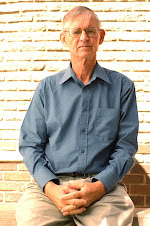
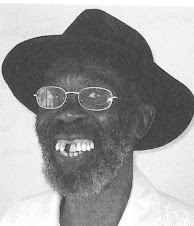
Melissa Tandiwe Myambo was shortlisted for the 2012 Caine Prize for African Literature with her short story La Salle de Depart. African Violet and Other Stories, the Caine Prize for African Writing 2012, which contains Melissa's story, is published in Zimbabwe by 'amaBooks.
.jpg)
Several months ago, Panorama Magazine asked me to write about my trip to the UK as one of the writers shortlisted for the 2012 Caine Prize for African Writing.
We were in London from June 27 to July 5, 2012; hence this write-up is way overdue.
However, the reasons for my tardiness are manifold, ranging from general idleness to the inability to summarize the myriad emotions and historical complexities evoked by this experience.
Be warned, prospective Zimbabwean writer, if you enter the prize you’re in for quite a ride. Where to begin?
When the inaugural Caine Prize was awarded at the Zimbabwe International Book Fair in 2000, I was in Harare and heard about it for the first time when one of my friends from secondary school called to tell me about it. However, I somehow forgot all about it until Zimbabwean writer NoViolet Bulawayo won in 2011 and then I thought oh yeah, the Caine Prize, I must also enter.
But really I had no idea what I was getting into. I thought that you just enter and then some months later you get an email saying you did or did not win. Little did I know that two months prior to the prize being awarded, a shortlist of up to five writers is announced and from there, it’s a pressure-cooker situation!
Suddenly, you find that there is a whole “army of bloggers assembled to attack the Caine Prize shortlisted stories” as one blogger put it. Welcome to the blogosphere, a kind of frontier space governed by a general ruthless lawlessness and boiling-hot ambition.
Some of these bloggers function more like literary critics of old and provide constructive critiques and interpretations of the works; others read the stories reductively, trying to determine, for example, if such-and-such-a-character is a “good” representation of African womanhood or Africanness or Africa. As if one character can bear the burden of representation for such a huge continent of approximately 54 nation-states and such rich human diversity.
Not only must the character bear the weight of representation but so must the writer. You must not only represent your country but also something called “African writing,” a category that works less to define a body of works than to pose questions about it: what is African, what is Africa? Samuel R Delaney, an American writer, once observed that the genre of “African-American science fiction” “exists largely by means of it having been named” by a white publishing establishment, “however dubious its reality.” Isn’t it all just sci-fi?
So, however dubious its reality, there is such a thing as African writing and like so much of contemporary Africa, it is intimately intertwined with the colonial encounter, especially literature written in the languages bequeathed by the colonizers: English, French, Portuguese.
Of course, long before our arrival in London, writers like Chinua Achebe and Ngugi wa Thiong’o had wrestled with the question of how to define African writing – is it by Africans, or works about Africa by non-Africans? What about writing by Africans about Bolivia or Bhutan? Does their ethnic/national identity dictate how their work should be categorized or should subject matter or form determine genre? There are no easy answers.
Even the term Africa itself is of Latin origin. For so many thousands of years, “natives” of the African continent have been named by others, and often negatively defined as inferior and “other.”
So when you have your obligatory BBC radio interview prior to leaving for London, your nose will begin to twitch at the putrid scent of colonialism’s undead corpse. African writing, negatively defined as inferior and “other,” seems to be some sort of subpar subset of Writing (which is Euro-Anglo-American).
Like world music which is what the rest of the world produces as opposed to Music out of the Euro-Anglo-American geographical sphere (despite the fact that much of that music is made by Africans in diaspora), African writing does not seem to measure up to what the British Broadcasting Corporation considers Literature.
Maybe this is why 2002 Caine Prize winner, Binyavanga Wainaina, so satirizes the whole experience in his recent memoir, One Day I Will Write About This Place:
Dear Caine Prize Shortlisted Guy, called Binya…vanga. Do you want to come to England, and have dinner in the House of Lords, and do readings, and go to the Bodleian Library for a dinner of many courses, with wine, and all of London’s literati? At this dinner, you will find out if Baroness Somebody Important will give you fifteen thousand dollars in cash, and even if she doesn’t, you should come because being shortlisted and having dinner at the House of Lords and such is like a big deal, a really big deal. Will you come?
Oh yes, I go.
I win the Caine Prize, and cry, bad snotty tears, and come back with some money. A group of writers and I start a magazine, called Kwani? – which means so what? (Wainaina 189)
So what? So the Caine Prize was Wainaina’s trampoline, allowing him to vault into a career as a writer, thanks to the “bloody colonizers” (Wainaina 188). Ambivalence, irony, you get the picture.
So if you are lucky enough to be shortlisted for the Caine Prize, you may also have the good fortune to find yourself on a list of talented contemporary writers whom you might not otherwise meet. My fellow shortlisters - Rotimi Babatunde, Billy Kahora, Stanley Kenani and Constance Myburgh - are all fab people and fab writers so check out their work.
Even though I hate being photographed and definitely would not like to be filmed, a part of me would love for the world to see the backstage lives we led in London because we shared some seriously hilarious, tear-inducing, gut-jiggling jokes but if I told you now, they wouldn’t be funny. You had to see it for yourself.
If the Caine Prize staff really wanted to make a big splash, they should make the whole experience into a reality TV show. It has all the elements: a diverse set of contestants from different countries forced to compete with each other whilst being subjected to bizarre, stress-inducing situations in a variety of settings ranging from the Southbank Centre to the Royal Over-seas League (the Royal Over-seas League!).
But I was lucky. My comrades-in-arms made it easier to deal with the cold damp, all the readings and press attention and the super colonial tour of the House of Lords led by the Baroness Nicholson of Winterbourne who started the whole Caine Prize in honour of her late husband, Sir Michael Caine (you should know this before you go, unlike me who found this out at the House of Lords luncheon which she holds in your honour).
Unfortunately at the awards dinner itself at Oxford University, you will be split from your comrades and made to sit at separate tables with various wealthy sponsors and London literary luminaries. Motswana writer, Lauri Kubuitsile, describes it well in her report on her 2011 experience as a shortlister.
Reflecting upon my experience, I have to say that one of the worst aspects is the prize’s timing. I must just warn you now that unfortunately most of the 10 days in London in the run-up to the prize-giving ceremony will also prevent you from watching Wimbledon.
As a good colonial subject, I LOVE tennis, especially Rafael Nadal – and I was peeved at missing so many good matches but what can I say, I was also filled with gratitude. How many other institutions support African writing, whatever that may mean? How many? They are practically as rare as the pangolin.
The Baroness is at once Colonialism Incarnate - she told Malawian Stanley Onjezani Kenani that she chose his country’s national anthem – and Literary Fairy Godmother - she is highly intelligent, incredibly articulate and works hard to make sure that every year an African writer wins ten thousand pounds. Besides, she sent me a very nice Christmas card.
I am delighted that I will reconvene with my writerly comrades-in-arms and other African writers at the annual workshop which is happening in Uganda this year in April and so thank you very much, Baroness! We will each try and craft a story, a piece of African writing or some kind of writing with integrity, at any rate.
Because maybe you, like me, will find that when you meet the other Africans who also attempt this quixotic adventure called writing fiction, you will find that they only really care about good writing, regardless of category.
Hence drinking deep into the night, the conversation would always veer back to writers whom writers like, good writers such as William Faulkner, Yvonne Adhiambo Owuor, Jose Saramago, Petina Gappah and Leo Tolstoy. Because what each of us is trying to do in our own way is just to write something vaguely worthy of being called good. And sometimes the chances of that seem as likely as seeing a pterodactyl.
Melissa Tandiwe Myambo, from www.panorama.co.zw

.jpg)


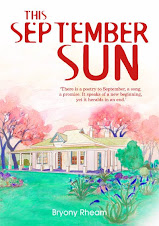.jpg)







.jpg)