Thursday, February 4, 2016

'Lusaka Punk', the 2015 Caine Prize anthology, reviewed in Harare News

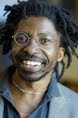
Brian Chikwava - previous Caine Prize winner

Every year local book lovers look forward to ’amaBooks Publishers latest anthology of short stories based on the Caine Prize for African writing. This year, the volume is named Lusaka Punk, after Zambian-born Efemia Chela’s story based on ‘teenage angst’ and a gap year spent in the internet cafés and night clubs of Lusaka. In all, there are 17 short stories, including the five short-listed authors, and 12 other writers who took part in this year’s workshop in Ghana.

The Caine Prize for African Literature was established in 1999 by Baroness Nicholson, in memory of her husband, Sir Michael Caine. Sir Michael, a larger than life character, was an executive of Booker PLC, a group of companies involved in food distribution and agribusiness. It was his love books and reading that lead him in 1968 to create the Booker Prize for fiction, soon to become Britain’s most prestigious literary award.

Thanks to Baroness Nicholson, the Caine Prize for African writing provides an opportunity for writers linked to the vast continent of Africa to have their voices heard, to give shape and form to their creativity and to delight readers everywhere with extraordinary and diverse narratives. At the Zimbabwe International Book Fair in the Harare Gardens in 2000, the first ever winner of the award was announced as Leila Aboulela, for her story ‘The Museum’. Born in Egypt and brought up in Khartoum, Aboulela shows how a young Muslim student studying in Aberdeen adjusts successfully to culture, society and life in a cold climate.

In 2004, Zimbabwe hit the headlines again, when Bulawayo-born Brian Chikwava won the £10,000 prize with his story, ‘Seventh Street Alchemy’. Set in Harare’s once notorious Avenues, Fiso, an ageing prostitute, copes with the daily uneven fight for survival. Her struggles with bureaucracy and inability to obtain either a birth certificate or a passport will seem all too familiar to many readers.

A few years later, in 2011, NoViolet Bulawayo’s ‘Hitting Budapest’, chronicling the emotive, sometimes tragic, escapades of a gang of six underprivileged children, won the Caine Prize. While their mothers are busy with ‘hair and talk’ and the men play draughts under the jacaranda trees, the children raid gardens in wealthy suburbs, in search of adventure, and for guavas, to ward off hunger pains.

In 2012, Zimbabwean Melissa Myambo’s short story, ‘La Salle de Depart’, was shortlisted as a possible winner, but Nigerian writer Rotimi Babatunde wowed the judges with Bombay’s Republic, a darkly humorous narrative about Nigerian soldiers fighting in Burma during the second world war. Kenyan writer Okwiri Oduor won the prize in 2014, with ‘My Father’s Head’, a surreal story about a young woman coming to terms with her father’s death.

This year the panel of judges, headed by South African writer Zoe Wicomb, were presented with 153 entries. Brian Chikwava, now an established writer in London, returned to the Caine Prize as a 2015 judge. He described the ‘pleasant agreement and disagreement’ involved in selecting the shortlisted writers. ‘Being a good writer alone is not enough to guarantee a place on the short list’ he said. ‘One also needs luck. Plenty of it.’

The winning entry, ‘The Sack’, by Zambian Namwali Serpell, was described by the judges as a ‘truly luminous’ story. The surreal tale about an uncomfortable relationship between two men who loved the same woman, now deceased, relies heavily on the claustrophobic image of a sack. Serpell says that inspirations for ‘The Sack’ came from a disturbing dream she had at age seventeen about being in a sack, and from a 1999 Japanese psychological horror film, ‘Audition’. In an interview with The Guardian, Serpell said she was ‘really pleased that the Caine Prize is honoring something so strange’.

Judges and past winners can shed some light on what is deemed essential in a winning story, but bear in mind that the panel changes every year. Bernadine Evaristo, the 2012 chair of judges, looks for a ‘strong, original streak’, ‘a risk taker’, a story that is ‘provocative and unsettling’. Conversely, for Leila Aboulela, who acted as a tutor at this year’s writers’ workshop in Ghana, a stand out story would be ‘one I would want to pass on to friends’.

Many shortlisted authors and winners of the Caine Prize no longer reside in their native countries, but their link to Africa remains strong, a necessary element for the mindset and creativity displayed in the latest anthology. It is time for another Zimbabwean winner of the Caine Prize, so whether you are in Pote Primary School in Goromonzi, St John’s College in Harare, or reading English honours at UZ, pursue your love of reading, start writing and make a start on that short story that will change your life.


Lusaka Punk and Other Stories is published by ’amaBooks.

Reviewed by Diana Rodrigues
http://www.hararenews.co.zw/2015/10/lusaka-punk-and-other-stories-the-caine-prize-for-african-writing-2015/

Monday, February 1, 2016

'Textures' nominated for a 2016 National Arts Merit Award


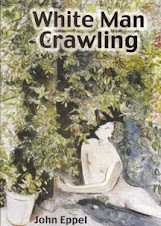
John Eppel and Togara Muzanenhamo's poetry collaboration Textures has been nominated for a 2016 Zimbabwe National Arts Merit Award, in the Outstanding Fiction category.


The other shortlisted books are:

Dzinonyandura coordinated by Rabson Shumba [263 Nhetembo] 
Ties that Bind by Phillip K. Chidavaenzi [New Heritage Press] 
The Book of Memory by Petina Gappah [Faber and Faber]


This is the second recent shortlisting for Togara Muzanenhamo. His collection Gumiguru was one of the three books shortlisted for the 2016 Glenna Luschei Prize for African Poetry; the prize eventually being awarded to South African poet Kobus Moolman for his collection A Book of Rooms.


Click here to hear Togara Muzanenhamo reading 'Gondershe' from Textures, accompanied by Leo Svirsky on accordion. Thanks to: Rick Messemaker (camera), Rumbi Katedza (editor), De Niewe Ruimte, A View with a Room and Poetry International.


Other readings by Togara Muzanenhamo from Textures include Mercantile Rain  and The Art of Man.


Readings by John Eppel from Textures include A Suburban Night in August  and Only Jacarandas.

Saturday, January 23, 2016

On Inspiration and How to Cook a Story: An interview with Tendai Huchu

from: http://www.parthianbooks.com/content/inspiration-and-how-cook-story-interview-tendai-huchu

Wed, 2016-01-20    Claire Houguez


Which writers, books or ideas have inspired you?

I’ve drifted through different phases where I’m into various movements and/or writers, so it’s pretty hard to narrow down a definite inspiration. In high school I used to read pulp genre sci-fi from the golden age, because that was the stuff we had in the library. In my early 20s I was into the Russians. Then I liked the experimentalists, even though I didn’t always get what they were doing. Late 20s I was into noir and hard boiled American authors. So, I’ve been pretty promiscuous, hopping from one bed to the next and never quite settling. This is by no means an exhaustive list, the point I’m trying to make is that inspiration would have to be the sum total of everything I’ve read so far.

What do you think are the basic ingredients of a story?

Oh God… I suppose first you have the idea, and then everything else really comes in to try to bring the idea to life in a story. Think about voice, what the story will sound like—who is telling it? in what tense? pacing and so on. Will the story have a plot or not? Character. Structure and form.  Setting or location. Genre. There are an awful lot of mechanical decisions as to what you will have in pot, when you do a story, but thankfully most of them are made instinctually.  You just go with your gut.

Do you write with an ending already in mind?

It pretty much depends on the story. When the muses are kind, I know exactly how we are getting from A to Z in a story, though there are almost always a few surprises along the way. At other times, I only have fragments which I try to piece together blind. I do find though that the longer the gestation period between the initial conception of the idea and its execution, the more likely I am to having the ending in mind before writing, so it may just be a case of how well thought out the piece is before I get to my desk.

Who do you imagine as your ideal reader?

Me as a young man, more open to new experiences. Now that would be an idea, hey? Writer invents a time machine and sends his own work back to his younger self… forget the loopholes. No! Stop right there, dude. That sounds so fucking vain, like my shit is so awesome, I just want to send it back to myself. Talk about masturbatory, ewww.  You’re getting this all wrong, man, the point I am trying to make is that I write stuff that I would want to read if I wasn’t the guy writing that stuff, that’s all.  Whatever.

If your main characters existed in real life would you be friends with them?


That would just be sad on so many levels. Like, my imaginary friends just popped into existence and here I am having tea with them in this beautiful English garden. Puh-lease.

Monday, January 11, 2016

kwaChirere reads Huchu's second novel

The Maestro, The Magistrate and The Mathematician by Tendai Huchu
from http://memorychirere.blogspot.co.uk/2016/01/kwachirere-reads-huchus-second-novel_10.html
Published by ámaBooks, 2014,
isbn:9780797495005

I don't know why I initially found it difficult to find time to do a nonstop read through Tendai Huchu's second novel, The Maestro, The Magistrate and The Mathematician. Months! Going. Stopping. Going. Stopping- then I was happy to be finally going on forever for the rest of last week!

I was even able to read through Tinashe Muchuri's new Shona novel, Chibarabada- in between The Maestro, The Magistrate and The Mathematician. Maihwe-e! I was carefully feeding into their different feel for life, place and people. 

I was even emotionally flattered to learn that there is a character in The Maestro, The Magistrate and The Mathematician itself, who reads two or more novels at the same time, before he starts to lose his bearings and decides to burn books! Kikikiki! That is the maestro for you. The reason: after reading many books nonstop, he finds that “each of these books was just a jumble of words with which he had no connection…” And after burning them, "he curled up on the carpet and cried himself to sleep.”  

There is a way in which The Maestro, The Magistrate and The Mathematician asks you to go slowly, crosschecking details, underlying whole passages for closer reading in another time and place... It allows you to use the page marker and do other things, read other things even, until you are able to 'return to the source' and take another dose to last you another whirl wind tour. The references to Geography, Music, History, Architecture etc are laden with nuggets that demand further contemplation and investigation.  

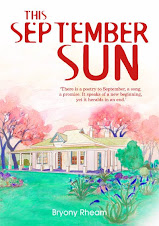
What I am telling you is that this novel is compact. I had a similar experience with Bryony Rheam’s This September Sun and Allende’s The House of The Spirits. The book tells you: You can’t deal with me in one gulp because I was written slowly, over time and… you can never really go away forever from me…

Now that I have finished reading it, I feel that I have been paid. I chat with friends at home and abroad about this novel and they marvel at the comments I make. I admire the parallel process arrangement of this novel. Three separate stories running together like three fine novellas from one shelf, only ‘confluencing’ together at the very end. Running dutifully together like three weaving cords. Maybe in that regard, this is the first novel of its type by a writer from my country, Zimbabwe.

Now that Alfonso is not exactly what I thought he was in the beginning, I have learnt a lot about the power of holding out a key detail. I must now go through this whole story again, mentally, laughing at myself for having been led down the garden path. Alfonso is not exactly that drunken fool who enters the novel through the Magistrate’s door one morning. Through him, you learn that this novel does not underestimate what the establishment in Zimbabwe can achieve, miles and miles away. That is why I am still laughing every time that I read the very last page of the novel. Alfonso! O, Alfonso!

At the heart of this story are three Zimbabwean men, residing in Edinburgh, Scotland, far away from Harare and Bindura. They are named The Maestro, The Magistrate and The Mathematician. The way these men think and go is typically Zimbabwean. Although they are far away from it, turbulent Zimbabwe of the around the year 2000 is their recognizable fulcrum.

The Maestro is my man. Through him, Tendai Huchu makes the most poignant contribution to Literature and Philosophy: “I went on a journey of discovery, trying to find the meaning of life, he said. I discovered that it is many things to many people at many times, and that , for me, and for me only, because you can only discover the meaning of your own life and no one else’s, that the meaning of life lies in giving a bit of yourself to someone else…. And he lay there and told her everything: wide open spaces, blue skies, laughter and the sound of sweet rain falling on zinc metal sheets, the brown puddles the rain makes, splashing in the puddles under the moonlight, cups of tea in the sunshine, cricket pavilions, of time that is measured not by the tick-tock of a clock but by its nearness to eternity, how the crickets sing their song in the night and birdsong picks up the refrain at dawn, all these things and more…”

Here is a man who goes far away from home in order to be himself and to read book after book after book, until he discovers that if a book contains an idea, then it contains something of the writer’s soul… 

I enjoy disliking the Magistrate. It is because despite his huge social loss that comes through leaving Zimbabwe and the pri

vileges he used to enjoy, he still has the holier than thou air around him, like most government officers everywhere whom I have learnt to loathe. His wandering around Edinburgh, taking in the environment and dreaming of little and far away Bindura, tells you that here is a bully looking for a new pedestal to sit on in order to start to bully the rest. No wonder I like it when that fatherly pride of him is constantly punctured for him by his no longer submissive wife and unsympathetic daughter. But I catch myself wallowing in and enjoying his deep appreciation of Zimbabwean music. He turns all the remembered songs into a map of his good and bad memories of Zimbabwe.

I don’t know what to do with the Mathematician and what finally happens to him. I honestly think that he wanted opportunity to find meaning out of life, love, sex and friendship.

Tendai Huchu’s second novel is a serious work of art, meant to accompany you through three different mental journeys of travelers from one country to one city that adopts them and has various levels of allure for each of the travelers.
-Memory Chirere, January 2016, Harare.

Thursday, December 31, 2015

Top 12 Novels by Writers of Colour in 2015, from Mediadiversified

  1. The Maestro, The Magistrate & The Mathematician, Tendai Huchu

Having read his debut novel ‘The Hairdresser of Harare’ I had high expectations of Tendai Huchu’s latest offering and luckily I have not been left disappointed.
A witty and intelligent read, the book follows three Zimbabwean men adjusting to life in Scotland.
Our magistrate re-lives his glory days while coming to terms with the fact that the success, qualifications and titles lauded on him back in Zimbabwe mean nothing in the UK; from magistrate to menial worker, how location can change the worth of a man, providing insight into the middle-aged male migrant experience. The mathematician, a student living it up away from home, benefitting from the chaos which is taking place there, and the maestro, a white Zimbabwean seeking solace from his turmoil in drugs and books.
This was a joy to read from start to finish, stirring within me both laughter and tears.

The full list is at http://mediadiversified.org/2015/12/31/top-10-books-by-novelists-of-colour-published-in-2015/

Saturday, December 19, 2015

Togara Muzanenhamo a finalist for African Poetry Prize


The three finalists for books chosen for the 2015 Glenna Luschei Prize for African Poetry are Zimbabwe's Togara Muzanenhamo for 'Gumiguru', South Africa's Kobus Moolman for 'A Book of Rooms' and, again from South Africa, Joan Metererkamp for 'Now the World Takes These Breaths'. Gumiguru, published by Carcanet Press in the United Kingdom, is Muzanenhamo's second  collection. His most recent, 'Textures, poems by John Eppel and Togara Muzanenhamo', published late last year by amaBooks in Zimbabwe, was launched at two events in Bulawayo, at the Indaba Book Cafe and at Christian Brothers College, and in Harare at the Book Cafe. He was recently announced as a finalist for this year’s Artists In Residency (AIR) programme and was a featured poet at the 2015 Poetry International Festival in Rotterdam and at the UK's Ledbury Poetry Festival.
Moolman, University of KwaZulu-Natal academic and playwright, was a finalist in the inaugural Glenna Luschei Prize for African Poetry and was also the winner of the 2013 Sol Plaatje European Union Award.
The Glenna Luschei Prize is worth $5 000 and the winner will be announced on 18 January, 2016. This pan-African poetry prize, funded by literary philanthropist and poet Glenna Luschei, is the only one of its kind in the world. Established to promote African poetry written in English or in translation, it recognizes a significant book published each year by an African poet. Entries came from Zimbabwe, Cameroon, Nigeria and South Africa.
Each year, an internationally renowned poet judges the prize. Now in its second year, the number of entries has more than doubled, and the quality and diversity of books received provided the judge, South African poet Gabeba Baderoon, with a challenging yet enjoyable task. Baderoon is the author of a number of poetry collections including The Dream in the Next Body and A Hundred Silences. She received the Daimler Chrysler Award for South African Poetry in 2005, and is Associate Professor of Women’s, Gender, and Sexuality Studies and African Studies at Pennsylvania State University in the United States.
Baderoon says: “I read these books and many of the poems again and again. The [finalist books] feel thoughtfully shaped, rivetingly intelligent and superbly crafted. I found them a pleasure and an education to read. Indeed, my horizons were vastly expanded by the extraordinarily well-realised poems in these collections.”

Wednesday, December 9, 2015

Bryony Rheam interviewed in 'Out of Africa'


Bryony was born in Kadoma, Zimbabwe, in 1974. She spent most of her childhood in and around Bulawayo, leaving in 1993 to go to the UK. She returned to Zimbabwe in 2001 where she spent the next eight years working as an English teacher.
In 2008, Bryony moved firstly to Ndola in Zambia and then to Solwezi. Bryony has had a number of short stories published in various anthologies of Zimbabwean writing, and in 2009, her first novel, This September Sun, was published in Zimbabwe by amaBooks. This September Sun won the Zimbabwe Publishers Best First Book Award in 2010 and was published in the UK in March 2012 by Parthian. In May 2012, it reached number 1 on Amazon Kindle sales. She lives with her partner, John, and their two daughters.
OOA: Where do you currently live?
BR: I recently moved back to Bulawayo after living in Zambia for seven years. Despite the economic situation here in Zimbabwe, Bulawayo is still a great place to live in.
OOA: Which writer(s) have influenced you most and why?
BR: I love F. Scott Fitzgerald (The Great Gatsby and Tender is the Night). His writing is so beautiful and moving. Each word seems to shimmer as you read it. I also love Virginia Woolf (Mrs Dalloway and The Waves) as she is able to transform every day moments into something wonderful. E.M. Forster wrote that ‘most of life is so dull that there is not much to say about it’, but Woolf proves him wrong! I am also a great Agatha Christie fan and love the puzzles in her books and how she presents them – the stories are very simple, yet it is almost impossible to work out whodunit and why.
OOA: Are the characters in your book inspired by real people?
BR: Someone said that a first book is almost always autobiographical and to a certain extent this is true of This September Sun. Both Ellie and Evelyn are very much like me in many ways – but not totally! One of the main characters is a man called Uncle Wally. My mum did have an Uncle Wally who was an architect and who lived for some years in Rhodesia in the 1950s. His wife was by all accounts a snob, which is where I got the idea from. However, the character and his actions are all fictional.
OOA: How has your childhood in Kadoma and Bulawayo influenced you?
BR: I was only born in Kadoma. My parents lived in Chakari at the time. We moved to Mhangura when I was about two or three. Bulawayo has had far more of an influence on me. It is a place I have both loved and hated which is perhaps why so much of my writing has centred on it. Its great failing is that it is such a cliquey place: not only do you need to have been born and raised there to be accepted, but at least three generations of ancestors need to have been as well! Life is often harsh, dominated by droughts and years of political isolation, but there is also a savage beauty to it. The history, too, is so interesting. Bulawayo is a mixture of the old and the new, whereas in Harare a lot of the old buildings have been pulled down. I like going to Harare for the occasional visit, but it lacks a heart – something is missing about it.
OOA: When did you first start writing?
BR: I remember writing when I was six years old. When I was eleven, my dad bought me a second-hand typewriter and I used to churn out stories and poems on it. My first published work was a children’s story in The Chronicle in 1988. I still have it.
OOA: Were you encouraged to write when you were young?
BR: My parents were always very supportive of me wanting to be a writer. Teachers also told me that I had a talent as did a lecturer when I was at university. Ironically, when I first began to think seriously about being a full time writer, that’s when I faced most opposition. How are you going to afford it? What are you going to live on? became common questions.
OOA: What schools did you attend in Kadoma and Bulawayo?
BR: The first school I went to in Bulawayo was Waterford. It was a government school and after a couple of terms, I moved to Whitestone which I did not enjoy as much. Everyone seemed to know each other and I felt very much on the outside of things. I then went to Girls’ College which I enjoyed.
OOA: What do you like to do when you are not writing, what are your hobbies?
BR: I enjoy gardening and reading, of course! I also enjoy looking for old furniture in second hand shops and at auctions.

OOA: You have successfully pursued a career in writing in Zimbabwe - how difficult has this been and what obstacles do Zimbabwean writers face?

BR: Zimbabwe has a very small reading population. Due to the price of locally produced books, many people cannot afford to buy them and borrow them instead. Therefore, sales are quite limited. One of the greatest challenges is being known outside of Zimbabwe and to get your work on the international market. Unfortunately, many people still expect a certain type of story from Zimbabwe – poverty, AIDS, farm invasions – and when you write something which does not include one of these themes, you are deemed to be dismissive of the problems facing the country, as though you are living in a bubble.

OOA: Where is your next novel set and what is the theme?

BR: My next novel, All Come to Dust, is a crime novel set in Bulawayo in the present day.

OOA: What words of advice can you give to aspiring (Zimbabwean) writers?

BR: Networking is very important. Get to know as many writers as possible and get yourself known. The days of being a recluse who does not go on the internet are over. You have to market yourself, which can be difficult if you are not that type of person. Saying that, you have to maintain a sense of perspective: just because you are popular in Zimbabwe, doesn’t mean you are the best in the world. Fame is also a short-lived experience. Don’t forget who you are and who your friends are. I have met a number of writers who are hesitant to help others or they forget their colleagues entirely. That’s not what it’s all about.