Showing posts with label Harare News. Show all posts

Thursday, February 4, 2016

'Lusaka Punk', the 2015 Caine Prize anthology, reviewed in Harare News

Brian Chikwava - previous Caine Prize winner

Every year local book lovers look forward to ’amaBooks Publishers latest anthology of short stories based on the Caine Prize for African writing. This year, the volume is named Lusaka Punk, after Zambian-born Efemia Chela’s story based on ‘teenage angst’ and a gap year spent in the internet cafés and night clubs of Lusaka. In all, there are 17 short stories, including the five short-listed authors, and 12 other writers who took part in this year’s workshop in Ghana.

The Caine Prize for African Literature was established in 1999 by Baroness Nicholson, in memory of her husband, Sir Michael Caine. Sir Michael, a larger than life character, was an executive of Booker PLC, a group of companies involved in food distribution and agribusiness. It was his love books and reading that lead him in 1968 to create the Booker Prize for fiction, soon to become Britain’s most prestigious literary award.

Thanks to Baroness Nicholson, the Caine Prize for African writing provides an opportunity for writers linked to the vast continent of Africa to have their voices heard, to give shape and form to their creativity and to delight readers everywhere with extraordinary and diverse narratives. At the Zimbabwe International Book Fair in the Harare Gardens in 2000, the first ever winner of the award was announced as Leila Aboulela, for her story ‘The Museum’. Born in Egypt and brought up in Khartoum, Aboulela shows how a young Muslim student studying in Aberdeen adjusts successfully to culture, society and life in a cold climate.

In 2004, Zimbabwe hit the headlines again, when Bulawayo-born Brian Chikwava won the £10,000 prize with his story, ‘Seventh Street Alchemy’. Set in Harare’s once notorious Avenues, Fiso, an ageing prostitute, copes with the daily uneven fight for survival. Her struggles with bureaucracy and inability to obtain either a birth certificate or a passport will seem all too familiar to many readers.

A few years later, in 2011, NoViolet Bulawayo’s ‘Hitting Budapest’, chronicling the emotive, sometimes tragic, escapades of a gang of six underprivileged children, won the Caine Prize. While their mothers are busy with ‘hair and talk’ and the men play draughts under the jacaranda trees, the children raid gardens in wealthy suburbs, in search of adventure, and for guavas, to ward off hunger pains.

In 2012, Zimbabwean Melissa Myambo’s short story, ‘La Salle de Depart’, was shortlisted as a possible winner, but Nigerian writer Rotimi Babatunde wowed the judges with Bombay’s Republic, a darkly humorous narrative about Nigerian soldiers fighting in Burma during the second world war. Kenyan writer Okwiri Oduor won the prize in 2014, with ‘My Father’s Head’, a surreal story about a young woman coming to terms with her father’s death.

This year the panel of judges, headed by South African writer Zoe Wicomb, were presented with 153 entries. Brian Chikwava, now an established writer in London, returned to the Caine Prize as a 2015 judge. He described the ‘pleasant agreement and disagreement’ involved in selecting the shortlisted writers. ‘Being a good writer alone is not enough to guarantee a place on the short list’ he said. ‘One also needs luck. Plenty of it.’

The winning entry, ‘The Sack’, by Zambian Namwali Serpell, was described by the judges as a ‘truly luminous’ story. The surreal tale about an uncomfortable relationship between two men who loved the same woman, now deceased, relies heavily on the claustrophobic image of a sack. Serpell says that inspirations for ‘The Sack’ came from a disturbing dream she had at age seventeen about being in a sack, and from a 1999 Japanese psychological horror film, ‘Audition’. In an interview with The Guardian, Serpell said she was ‘really pleased that the Caine Prize is honoring something so strange’.

Judges and past winners can shed some light on what is deemed essential in a winning story, but bear in mind that the panel changes every year. Bernadine Evaristo, the 2012 chair of judges, looks for a ‘strong, original streak’, ‘a risk taker’, a story that is ‘provocative and unsettling’. Conversely, for Leila Aboulela, who acted as a tutor at this year’s writers’ workshop in Ghana, a stand out story would be ‘one I would want to pass on to friends’.

Many shortlisted authors and winners of the Caine Prize no longer reside in their native countries, but their link to Africa remains strong, a necessary element for the mindset and creativity displayed in the latest anthology. It is time for another Zimbabwean winner of the Caine Prize, so whether you are in Pote Primary School in Goromonzi, St John’s College in Harare, or reading English honours at UZ, pursue your love of reading, start writing and make a start on that short story that will change your life.


Lusaka Punk and Other Stories is published by ’amaBooks.

Reviewed by Diana Rodrigues
http://www.hararenews.co.zw/2015/10/lusaka-punk-and-other-stories-the-caine-prize-for-african-writing-2015/

Wednesday, August 12, 2015

Textures - an anthology of contrast

From www.hararenews.co.zw
June 17 2015

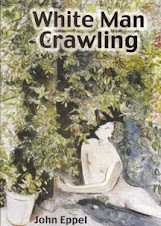
May this year saw Bulawayo-based publishers ’amaBooks launch Textures at Book Café – an event hosted with support from British Council and the Culture Fund Trust of Zimbabwe. The anthology is by two of Zimbabwe’s leading poets – John Eppel and Togara Muzanenhamo. Both were there to read to a warmly receptive audience, before a discus-sion on the book led by Ignatius Mabasa.
The fascinating feature of this anthology lies in the unexpected and significant contrasts between these two Zimbabwean poets; indeed, Polarities might be a more suitable ti-tle than Textures. Much of the conversation at the launch was around the interplay between form and content – both of which are vastly different between the poets.
Eppel reveals himself and his location in almost every poem whilst Muzanenhamo is almost invisible in his work, which is set in seemingly random global locations. Eppel, who described himself as a “suburban poet” draws inspiration mostly from the Hillside suburb of Bulawayo and his lyrical and meticulously crafted poems, whilst not without ambiguity and nuance, are an easy and pleasurable read. Eppel described the poetic forms such as the sonnet as a canvas. “I like to have a canvas, and to express my freedom within the limits of that space… it’s something of a paradox, I know. A good poet uses the rules of these forms, but so well so that a reader doesn’t even notice them.”
Through his poetry, Eppel shares his appreciation of nature, his loss of love, and his existential anxieties with the reader. In so doing, his vulnerability becomes a strength. In the opening poem of the anthology ‘A Suburban Night in August’, Eppel shows both his ability to create atmosphere from a few select details whilst sharing his loss of and long-ing for love. The diversity of Bulawayo’s rich nature provides both context and solace as he takes us with him on his late night walks through the suburbs and daytime excursions around the Dams. The formal structure of his poems creates a rhythm and rhyme which leads a reader without pause to sometimes unexpected conclusions. ‘Grey Heron’ for example ends with his need to rewire his house; ‘Hornbills in My Garden’ finishes with “…don’t forget to kill me once I’ve dined.”
Eppel has a determination to capture the essence of things, and perhaps uses poetry to distil his thoughts. This is most clearly revealed in ‘Cape Turtle Dove’. He runs through aspects of this iconic and common bird – its smell, colour, movement, rasp, pick – rejecting them with “that’s not it” until he comes to its “three syllables that rise and fall… and that’s it.” Eppel does not seek the exotic outliers to enrich his poems. The birds he selects are the most visible and common. The trees too. He captures the essence of his set-tings through the commonplace, local and everyday. Reading his poems is a delight especially for someone who has been there, who knows the Matabeleland dry season and the Hillside dams.
In contrast, it is unlikely that any reader could feel rooted in the soil of Muzanenhamo’s selection for this anthology. The poems have a global reach, the settings and stories are eclectic. Significance has to be sought. He is skilled in creating image and atmosphere, and his poems are looser in form.
Muzanenhamo is more than just a poet of the diaspora, but is a poet of the age of globalisation, fascinated with obscure and distant narratives. His subjects include a 19th century American jockey, early Tour de France competitors, Somali child soldiers, medieval Norwegian battles, jewellers, cricketers and brave pilots. It is refreshing to read a Zimbabwean poet who is free from the troubled history of Africa’s colonisation and liberation. I found his poems full of flavour though I was not sure what I was eating. They demand more work than Eppel’s to grasp, and for me have a taste that requires repetition to acquire. For most readers he digs “deep into the heart of the unknown.”
Muzanenhamo alluded to this at the launch, saying that writing poetry, “is very hard work and very frustrating, but the end product is something to be delighted in. Poetry can be read at three levels. Firstly they should be enjoyed as music, then the meaning sought. With my historical poems, the story then follows these.”
If you are of the rare species of poetry reader, buy this anthology. It contradicts the common perceptions of Zimbabwean literature. Give it time and frequent reading and you will be rewarded.

Thursday, February 12, 2015

'The Maestro, The Magistrate & The Mathematician' reviewed in Harare News

I first went to Edinburgh, Scotland to visit Tendai Huchu, with whom I had been buddies on social media, in 2012. He came to pick me at Waverley rail station, situated in a steep, narrow valley between the medieval Old Town and the 18th century New Town and we would traverse between the two.
Scotland’s capital city is a place of culture and literature. The heart of the city, a World Heritage Site, is packed with fascinating buildings and a remarkable history. The famous castle sits proud on its rock at the top of the Old Town, a warren of medieval streets and alleyways sweeping down to Holyrood Palace and the Scottish Parliament at the foot of the Royal Mile. And there is Holyrood Park, surely one of the most dramatic city parks I have seen, with the mini-mountain of Arthur’s Seat at its heart.
The opening of Huchu’s new book, The Maestro, The Magistrate & The Mathematician, vividly reminds me of this visit. In hindsight, it is as if when we walked we were rehearsing some of the scenes in the book. With the turn of every page Edinburgh becomes real.
The story is told in three voices which are emotionally distant, ruminative, and sometimes intellectual. Its principal characters are known by the titles of their current pursuits or former professions. Collectively the trio has some absences to fill, personal histories to recover.
Set during the decade of crisis, the novel zooms into the too often agonising life of Zimbabwean emigrants and also provides some valuable insight into the political and economic issues currently afflicting Zimbabwe.
Bindura and Edinburgh simultaneously move in the magistrate’s mind. Like many emigrants, he becomes an “in-between” person who does not belong here nor there. He remembers the man he was before Edinburgh took away his dignity.
Somehow it is the magistrate’s wanderings and their connections to personal histories — both his own and those of the people he meets that form the driving narrative, allowing him to reflect on his adopted country of Scotland and the Zimbabwe of his youth.
He is the character around which the whole narrative revolves – his dysfunctional family, his dalliance with opposition politics and his emasculation dominate most of the story. Indirectly he connects the other characters in the book by association.
Also embedded in the narrative are references to old Zimbabwean music. Music is used to map memories of identity and being. After all nostalgia has a playlist. In fact, Zimbabwean music is used to connect the narrator’s past with his present.
Immigration and exile are not new literary subjects, but Huchu’s treatment of them has a quiet clarity and surprising force. In fact, the book reads so much like a sequel to Brian Chikwava’s Harare North – the overseas territory of Zimbabwe is not limited to London but also extended to Edinburgh.
Edinburgh has a sinister side. Political turncoats and opportunists befriend the Zimbabweans, pretend to be a political agitators yet spy for the Zimbabwe government. In the Zimbabwean political discourse there is currently a rhetoric war between zvipfukuto, corrosive insects known as weevils, and gamatox, a poisonous pesticide.
After the walk about we stopped at a bookshop, I don’t recall its name, but it was a bargain bookshop that Huchu frequented. He bought me a copy of Brave New World by Aldous Huxley. Brave New World is an unsettling, loveless and even sinister place. In its patient, cumulative way, The Maestro, The Magistrate & The Mathematician paints a startlingly dim picture of Zimbabwe’s present moment. And the past is no refuge.

Review by Tinashe Mushakavanhu

Reproduced from Harare News, February 2015


The publication of The Maestro, The Magistrate & The Mathematician was supported by the Culture Fund Trust of Zimbabwe.

Tuesday, April 8, 2014

A Memory This Size: The Caine Prize for African Writing 2013

From: Harare News, Issue 9, April 2014

Review by Tinashe Mushakavanhu

Tinashe is a writer and editor. He read for a PhD in English at the University of Kent


The quality of the Caine Prize anthologies is always mixed but the gift of the Caine Prize to Africa has been to create a platform to share the continent’s rich terrain of stories and contradictions.

The book is in two sections. The first part comprises of the shortlisted stories and the eventual winner. Considering that these went through a rigorous judging process, they are certainly of high quality. The second section contains workshop stories.

What is quite intriguing on the list is the dominance of Nigeria. Are Nigerian writers far ahead of their African peers? And is Nigerian literature blooming while other African literatures are struggling?

The 2013 Caine Prize shortlist also highlights the fact that the African diaspora is increasingly shaping African literature, whereas before African literature grew out of the streets and bushes of the continent. What happened? Is it a shift of power? Or is it simply that the African narrative now has huge global demand? Whatever the case may be, thanks to the African diaspora for injecting life to an ailing literary culture. Our literature, African literature, is better off.

The creeping presence of America on the African imagination ties three of the stories together. Tope Folarin’s story Miracle touches on the issues of faith religion. Pede Hollist's Foreign Aid is a tale about the folly of a ‘Been-to’ who imagines he can return to his native land (in this case Sierra Leone). Elnathan John’s Bayin Layi unravels the violence in northern Nigeria. Chinelo Okparanta's America is, as the title suggests, a story about America as the longed-for-utopia. And Abubakar Adam Ibrahim’s The Whispering Trees is a magic realism narrative of a young man crippled by an accident that killed him, but didn’t.There is something particularly striking about African literature as reflected in these five shortlisted stories. Three of the stories are directly concerned with diaspora life in America. It points to a geographical extension of the African imagination in most of the new writing. The literature is a window into the African experience beyond Africa, its global interactions with other cultures though not always pleasant.The second section of the collection, the workshop stories, holds some brilliant work and some of a less polished standard. As outlined in the Ernest N. Emenyonu edited volume, Writing Africa in the Short Story, the short story genre is not an easy form despite its urgency and potency. A lot of the struggling stories in the volume have weak endings. It could be that African literature has for a long time been fed with long and elaborate tales in the form of folktales or in the form of novels.However, the stories in the second part of the anthology cover a wide range of topics and encompass a variety of styles representative of the diverse pool of writers from various African countries. There is irony and dark humour (Melissa Tandiwe Myambo); pathos (Hellen Nyana); satire and magic realism (Rotimi Babatunde); haunting and topical (Stanley Onjezani Kenani) among many other sensations. It’s a book worth reading simply because it provokes and challenges.

A Memory of this Size is published in Zimbabwe by 'amaBooks. It is available at the Book Café bookshop, National Gallery and Avondale Bookshop in Harare and at the National Gallery, Induna Arts, Tendele Craft and Phenduka in Bulawayo.