Tuesday, November 22, 2016

Bongani Kona, shortlisted Caine Prize writer from Zimbabwe, interviewed in the Daily News

This year’s Caine Prize anthology, The Daily Assortment of Astonishing Things has just been published in Zimbabwe for the local market by Bulawayo-based publisher, amaBooks.

The publication of this collection, the fifth of the Caine anthologies published by amaBooks, the anthology, packed with accomplished story-telling, includes pieces by two Zimbabwean writers. NoViolet Bulawayo, who won the Caine Prize in 2011, is featured in the book, as is Bongani Kona with his short-listed short story, “At Your Requiem”, from this year's anthology.

The Weekend Post this week spoke to Kona to about his newly found fame.
Below are excerpts of the interview.


Q: Can you tell us who Bongani Kona is?

A: Firstly, thank you so much for the interview. I’m a writer and editor based in Cape Town. I was born in 1985 and I grew up in Hatfield, Harare, and I lived there until I was 18. When I completed my A’ Levels at Prince Edward School I left Zimbabwe to go and study in South Africa and I worked as a freelance journalist for few years before I decided to go back to the University of Cape Town to study for a Masters in Creative Writing.

Q: Congratulations on being short-listed for the Caine Prize this year, it is quite an achievement. How did it feel to be catapulted onto the literary scene?

A: Thank you. It was really an unexpected gift but one that came at the right time. I think all beginning writers need encouragement. You fail more times than you succeed and it’s important just to keep at it.

Q: Your short-listed story, ‘At Your Requiem’, which appears in the Caine Prize collection for 2016, The Daily Assortment of Astonishing Things, will be available to readers in Zimbabwe through the publication by local publishers, amaBooks. Is this your first publication in your home country? Is it particularly significant for you to have your work available to a Zimbabwean audience?

A: Yes, and it’s an incredible thing that the anthology is available for sale to Zimbabwean readers, and for me personally it means so much. No Violet Bulawayo, who is one of my favourite writers, also has a story in the collection.

Q: I understand that you are presently studying for a Masters degree in Creative Writing at the University of Cape Town. There has been a lot of discussion of late about the usefulness to writers of creative writing programmes. Do you think your studies have played a major part in improving your writing?

A: Yes, I’m currently studying for an MA in Creative Writing at UCT and to be honest, I don’t think anybody will ever be able to give a definitive answer on the usefulness of creative writing programmes.
We’re all different and you know best what you need. I’d been working as a freelance journalist for many years and I signed up to the programme because I wanted to explore writing fiction. And in that respect, it’s helped develop my writing and it’s what I needed to do.

Q: What gave you the idea for ‘At Your Requiem’? It is a dark, painful story.

A: I wrote the story in November 2014 and I’d spent the first seven months of that year documenting cases of sexual violence for an NGO in Cape Town. And I think some of those experiences subconsciously worked their way into the story. But the spark for the story came from a poem with the same title. I don’t remember who wrote the poem, but I found it in an old copy of New Contrast, a South African literary journal. I was really moved by it, and everything else followed from there.

Q: Do you think that writing as a journalist has helped prepare you for being a writer of fiction? Are there any particular lessons that you have learnt as a journalist that you see yourself using in your creative writing?

A: Definitely. One of the most important things that journalism teaches you is to be observant and curious about how other people live and that’s been really useful.

Q: It’s probably a question you have been asked before but here it is again – what advice would you give to an aspiring writer?

A: I would say read as much as you can and just write. Even if a word of what you write never gets published, it doesn’t mean you’re wasting your time.

Q: Are there any particular Zimbabwean writers you particularly admire?
A: I’m a big fan of Petina Gappah and NoViolet Bulawayo. I also admire Brian Chikwava, Panashe Chigumadzi, Tendai Huchu, Percy Zvomuya and of the older writers, Charles Mungoshi, Yvonne Vera and Dambudzo Marechera.

Q: What about in Africa?

A: There are too many but perhaps one way to limit the scope of the question is to say, from the books that I’ve read in the last year, which do I recommend? The Reactive by Masande Ntshanga, The Woman Next Door by Yewande Omotoso, Dust by Yvonne Adhiambo Owuor, Tales of the Metric System by Imraan Coovadia and Tram 83 by Fiston Mwanza Mujila.

Q: What are you working on at the moment?

A: I'm working on multiple projects at the same time and I’m afraid I can’t say more than that.

Q: I’m sure that being short-listed for the Caine Prize resulted in you being interviewed on numerous occasions. Is there one question that stands out in your mind as being a tough one to answer? If so, how did you answer it?

A: Actually, I've been lucky enough to have pretty straightforward questions thrown at me and none stands out as difficult to answer.

Q: Your parting shot?

A: Thank you very much for interview Jeffrey and again, it’s really amazing that The Daily Assortment of Astonishing Things is available to Zimbabwean readers. It's a great collection of short stories by writers from diverse parts of the continent.


Monday, November 21, 2016

When maestro, magistrate and mathematician meet

The Herald, November 21, 2016          www.herald.co.zw

Tendai Huchu, photo courtesy of 2016 Ake Festival


I don't know why I initially found it difficult to find time to do a nonstop read through Tendai Huchu's second novel, The Maestro, The Magistrate and The Mathematician. Months! Going. Stopping. Going. Stopping. Then I was happy to be finally going on forever for a week.

I was even emotionally flattered to learn that there is a character in The Maestro, The Magistrate and The Mathematician itself, who reads, like me, two or more novels at the same time! But unlike me, he starts to lose his bearings and decides to burn books! That is the maestro for you. The reason: after reading many books nonstop, he finds that “each of these books was just a jumble of words with which he had no connection…” And after burning them, “he curled up on the carpet and cried himself to sleep.”  

There is a way in which The Maestro, The Magistrate and The Mathematician asks you to go slowly, crosschecking details, underlining whole passages for closer reading in another time and another place.This novel allows you to use the page marker and do other things, read other things even, until you are able to 'return to the source' and take another dose to last you another whirl wind tour. The references to Geography, Music, History, Architecture, etc, are laden with nuggets that demand further contemplation and investigation.  

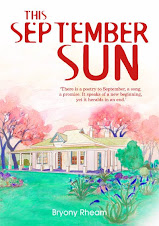
What I am telling you is that this novel is compact. I had a similar experience with Bryony
 Rheam’s This September Sun and Allende’s The House of The Spirits. The book tells you: You can’t deal with me in one gulp because I was written slowly, over time and you can never really go away forever from me.

Now that I have finished reading it, I feel that I have been paid. I chat with friends at home and abroad about this novel and they marvel at the comments I make. I admire the parallel process arrangement of this novel. Three separate stories running together like three fine novellas from one shelf, only ‘confluencing’ together at the very end. Running dutifully together like three weaving cords. Maybe in that regard, this is the first novel of its type by a writer from my country, Zimbabwe.

Now that Alfonso is not exactly what I thought he was in the beginning, I have learnt a lot about the power of holding out a key detail. I must now go through this whole story again, mentally, laughing at myself for having been led down the garden path. Alfonso is not exactly that drunken fool who enters the novel through the Magistrate’s door one morning. Through him, you learn that this novel does not underestimate what the establishment in Zimbabwe can achieve, miles and miles away. That is why I am still laughing every time that I read the very last page of the novel. Alfonso! O, Alfonso!

At the heart of this story are three Zimbabwean men, residing in Edinburgh, Scotland, far away from Harare and Bindura. They are named the Maestro, the Magistrate and the Mathematician. The way these men think and go is typically Zimbabwean. Although they are far away from it, turbulent Zimbabwe of the around the year 2000 is their recognizable fulcrum. Their thoughts on Zimbabwean politics are not bitter but careful. 

But the Maestro is my man. Through him, Tendai Huchu makes the most poignant contribution to Literature and Philosophy: “I went on a journey of discovery, trying to find the meaning of life, he said. I discovered that it is many things to many people at many times, and that , for me, and for me only, because you can only discover the meaning of your own life and no one else’s, that the meaning of life lies in giving a bit of yourself to someone else…. And he lay there and told her everything: wide open spaces, blue skies, laughter and the sound of sweet rain falling on zinc metal sheets, the brown puddles the rain makes, splashing in the puddles under the moonlight, cups of tea in the sunshine, cricket pavilions, of time that is measured not by the tick-tock of a clock but by its nearness to eternity, how the crickets sing their song in the night and birdsong picks up the refrain at dawn, all these things and more…”

Here is a man who goes far away from home searching for his lost soul. Then he starts to read book after book after book, until he discovers that if a book contains an idea, then it contains something of the writer’s soul… 

I must add that I enjoy disliking the Magistrate. It is because despite his huge social loss that comes through leaving Zimbabwe and the privileges he used to enjoy, he still has the holier than thou air around him, like most government officers everywhere whom I have learnt to loathe. His wandering around Edinburgh, taking in the environment and dreaming of little and far away Bindura, tells you that here is a bully from Zimbabwe, looking for a new pedestal to sit on in order to start to bully other people all over again. I am startled that the opposition sees method in him! I can reveal that I like it when that fatherly pride of his is constantly punctured for him by his no longer submissive wife and unsympathetic daughter. However, I catch myself wallowing in and enjoying his deep appreciation of Zimbabwean music. He turns all the remembered songs into a map of his good and bad memories of Zimbabwe. I am also like that.

I don’t know what to do with the young Mathematician and what finally happens to him. I honestly think that he wanted opportunity to find meaning out of life, love, sex and friendship.

Tendai Huchu’s second novel is a serious work of art, meant to accompany you through three different mental journeys of travellers from one country to a foreign city. This is a novel about cities through the eyes of newcomers. I think you may want me to say that this is a novel about migrants and how they peer into their souls from behind totally new cultures and infrastructure. But I will add: you come closest home when you travel further and further from home!

Memory Chirere

memorychirereblogspot.com

Wednesday, November 16, 2016

5 Minutes with Tendai Huchu

Interview with Femi Aregbesola for Nigeria's pmenaija.com

Tendai Huchu is a Zimbabwean author best known for his novels The Hairdresser of Harare and The Maestro, The Magistrate & The Mathematician. He is heavily involved in the annual Ake Arts and Book Festival which is happening at Abeokuta from the 15th to the 19th of November, 2016.


Hello Tendai, introduce yourself
I am a dude from a small mining town called Bindura in Zimbabwe, who happens to have written two novels, The Hairdresser of Harare and The Maestro, The Magistrate & The Mathematician (the latter is published in Nigeria by Farafina).

When did you know, you would become a writer?
By my early 20s I sort of knew I wanted to produce stories to engage with ideas that fascinate me. I never called myself a writer, I just wrote, and, for me at least, the practice is more important than any labels that can be attached to it. I only started using the term for myself long after other people had started calling me that.
What would you say inspires your writing process?
Life inspires me, the act of turning the mundane and extraordinary into art is a great source of pleasure. I also draw energy from reading and engaging with the works of other writers. I have said before I consider myself 99% a reader and only 1% a writer.
What has been the highlight of your career thus far?
I honestly can’t point to a single thing, but I believe the ultimate triumph resides in the will to get up in my garret most mornings and sit at my desk for hours creating. The act, the doing of the thing, the solitary striving that happens when no one else is watching, is the most important part of what I do. What matters to me is the art form, anything else outside of that is mere noise.
Being part of the Ake festival, what do you hope the festival achieves in enabling reading in our communities?
Lola Shoneyin and her team have done a fantastic thing in bringing together so many artists and readers together in a space that encourages the exchange of ideas. Anything that makes literature more visible at the forefront of public consciousness is a great thing, particularly in a digital age where there are so many other distractions. The festival actively engages with schools and I think this dimension is very, very important, because if we can win over the kids then we can have a base to grow in the future. I am a guy who makes up things for a living, and I can only marvel at the sort of organizational challenges that the guys at Ake face to bring about something of this magnitude and complexity. We should all celebrate this remarkable achievement.
What impact do you hope your books and writings have in Africa and the world at large?
I am skeptical of claims that literature still has any overt influence in society. Zimbabwe pre-1890 was not a literate society and I view the written word as an alien art form, just one that I happen to have adopted and am passionate about. I can only hope that my work, at a basic level, gives some pleasure to some readers – anything outside of that is a bonus.
Who are your role models in the literary sector?
Writers of all stripes (novelists in particular) make for very poor role models. If you are interested in my creative influences, the list is too long to mention, but chief among them is the Russian author Fyodor Dostoevsky.
Words of advice to young and aspiring writers?
Do your own thing. Do not care too much about what other people think or what they are doing. This thing is a solo-sport – you alone versus the white blank page, day after day. Love what you do. Dare to be different. Fail, fail and fail again, you have nothing to fear. May the Force be with you.


Monday, November 14, 2016

Zimbabwean Literature takes the stage in Nigeria

Tendai Huchu at Africa Writes (BAS News and Events)


NoViolet Bulawayo (courtesy of Ake)
Zimbabwean literature is well represented at this year's Ake Arts & Book Festival, which takes place this week in Akeokuta, Nigeria, with Zimbabwean writers Tendai Huchu, NoViolet Bulawayo and Panashe Chigumadzi taking part. Ake Festival is ‘five days of cultural immersion'. Its aim is to develop, promote and celebrate creativity on the African continent. This, the fourth edition, will feature 18 authors in 'Book Chats', as well as panel discussions, interviews, workshops, concerts and a night of poetry. Other writers taking part include Ngugi wa Thiong'o, Helon Habila, Chinelo Okparanta, Lidudumalingani, Teju Cole, Yewande Omotoso and Zukiswa Wanner. Lidudumalingani, a South African, won this year’s Caine Prize for African Writing with his story, ‘Memories We Lost’. The Caine anthology is published in Zimbabwe by amaBooks.

Ngugi wa Thiong'o (courtesy of Ake)
A panel discussion, moderated by academic Dr Ranka Primorac, will consider 'From the Land of the Flame Lily: New Fiction from Zimbabwe', with panellists Tendai Huchu, Panashe Chigumadzi and NoViolet Bulawayo. NoViolet Bulawayo is well known, through winning the Caine Prize for African Writing and through her Booker Prize shortlisted novel We Need New Names, while Zimbabwe-born Panashe Chigumadzi's debut novel Sweet Medicine has recently been published in South Africa. Tendai Huchu's debut novel The Hairdresser of Harare achieved international success, and his second novel The Maestro, The Magistrate & The Mathematician has already been published in Zimbabwe, the United States, United Kingdom, Germany and in Nigeria. Ranka Primorac is a lecturer at the University of Southampton and is the author of The Place of Tears: The Novel and Politics in Modern Zimbabwe.

Each of the writers above will talk about their recent work in 'Book Chats' that take place throughout the festival. As well as the panel discussing Zimbabwean fiction, Tendai Huchu will take part in a panel on 'Flying Dreams and Alien Nightmares: Speculative Fiction in Modern African Writing'.  


Last year, Bulawayo-based writer Bryony Rheam was at Ake. Her debut novel, This September Sun, has been published in Kenya, Tanzania and Uganda, as well as in Zimbabwe and the United Kingdom. There are a growing number of literary festivals across Africa bringing readers in contact with the writers.

Wednesday, October 26, 2016

Why I Read by Bryony Rheam


I don’t know why some people like reading and others don’t, except somewhere along the line I think those who find reading boring haven’t been pointed in the right direction.  When I say ‘the right direction’ I don’t mean towards what is considered ‘good’ or high-brow literature, but what is enjoyable, what makes you sit immersed in another world for hour upon hour, hesitant to re-join reality.
As a child, I devoured books.  I remember reading so much, my mother worried about it.  I loved adventure and mystery; far-off lands where magical things happened. My first forays into literature were with school set texts: Animal Farm and The Mayor of Casterbridge, stories that have stayed with me for years, perhaps because I had to learn huge chunks of quotes!  Mrs Dalloway was one of the first literary books I chose to read myself.  I read it in the holidays before I left school.  It was August and I was working at a plant nursery.   The combination of Spring, the blossoming flowers and the exquisite beauty of the words had a lasting impression on me.
It’s exactly that beauty, that power of the word, that I try to infuse my own writing with. It’s impossible to write anything new: love, death, war, loss (and the rest) are subjects that writers have grappled with since the beginning of time.  What is important is how we tell the story. Graham Greene once said that a writer writes from their subconscious, a place deeply influenced by experience. Part of this experience will, of course, be reading, which is not to suggest plagiarism; rather, that what one reads is an inspiration for one’s own writing. Is it even possible to be a writer if one doesn’t read?
I have yet to meet someone who neither enjoys reading nor watching films or following a series on television.  Even those with no access to the printed word or technology will enjoy listening to someone telling them a story.  The worst form of torture must be to be locked in a room with nothing to read! The human need to escape into a different reality is very firmly entrenched in our being.  But it’s the written word that connects us to so much more than the passing moment.  It links us to culture, to history, to the world outside and the world within. I read because it’s part of who I am – and that’s no exaggeration.


Wednesday, October 12, 2016

Music and Literature

Mbira Music


Some thirteen years ago a friend, a Chinese doctor of traditional medicine, told me I was never too late to learn. An old adage which in this situation referred to starting tai chi. He was right as I still practice tai chi and have taken up ku fu fan and a couple of sword forms. Not very good at any but enjoy it and it’s healthy exercise - as opposed to unhealthy! The adage continues to be true as I have now discovered mbira music. It’s so full of life, whatever the tempo.   A variety of percussion instruments reflecting a long tradition and culture. All the exponents I watched and listened to on YouTube reflected the sheer enjoyment of its exponents. In one example it seemed to be almost jamming but maybe rules have developed over the ages. Don’t know enough about this genre so that is meant as a compliment! There was a unity and interplay amongst all the musicians .Am listening to it as I type although I keep wanting to get up and move. It has that almost hypnotic effect on you.
Also discovered sungara music which also makes you want to get up and dance as well, although not sure I could replicate such energy now - not sure I ever could move so fluently. The dance movements are as harmonious as the perfect song harmonies which come across as natural.
What am I on about you may ask? Well, I discovered all this new enjoyment as a by-product of reading:

‘The Maestro, the Mathematician and the Magistrate’ by Tendai Huchu


 How often are writers advised ’Write about what you know’? Mr Huchu certainly knows Edinburgh which almost becomes a character in itself. We walk the city with the characters. It becomes alive. The music is by no means a by-product but is very much integral to the novel as a whole, in particular the voice and character of the Magistrate who now lives in Edinburgh with his family and has to come to terms with loss of standing and cannot help comparing that life with his present life. Another M is a younger compatriot, the Mathematician, who takes full advantage of the life he can access in Edinburgh but does intend to return to his country. The third M is a young man who tries to escape a life with which he is not at ease through reading books.  Mr Huchu depicts a place where a shared nationality forms tenuous ties that do not necessarily equate to loyalty or kinship. A shared nationality, all dealing with a sense of loss or identity  but with different, contrasting values.
Three disparate men, three different voices. This could lead to confusion but doesn’t because Mr Huchu is in full control. The overlap of their lives may be surprising but totally believing for such is life. This intertwining is not foreshadowed, is cleverly devised and not at all contrived. The book has many layers and may be read on different levels. Serious matters are addressed but both subtle humour and incisive wit percolate. I loved the ‘cameo’ appearance at the party!
I couldn’t predict the ending at all with any certainty and had to re-read the book - after a space of a few weeks - to see it with fresh eyes. The fresh eyes led me to the conclusion that Mr Huchu is quite the philosopher.
How pleasing to come across a book of literary merit, an enjoyable read but one that does address modern issues. Thoroughly enjoyed it as I did ‘The Hairdresser of Harare’, also by Mr Huchu. Both very different books but both well worth a read.

by Mary Irvine, http://www.glasgowwestend.co.uk/mary-irvines-blog-music-literature/

Tuesday, October 4, 2016

Why I Read by Bongani Kona


Bongani Kona, photo courtesy of the Caine Prize

In December 1999, as their final act before the turn of the millennium, TIME magazine published a special issue profiling the hundred most influential people of the 20th Century. I remember casually paging through the issue and being drawn by the brief entry on Philo T. Farnsworth, the man who invented television. What really caught my interest was not the entry itself – Farnsworth died in relative obscurity, dogged by lawsuits and in debt – but the caption that ran underneath the photograph, of a man sitting with his back turned to the camera, in a room surrounded by screens. It said Farnsworth was unhappy with what he saw, even before 500 channels.
Perhaps because I was going through puberty and its attendant flux of emotion – I was fourteen that year – I felt a sense of kinship with Farnsworth. I could relate to that difficult-to-explain unhappiness, even as a teenager growing up in Harare. In hindsight, the reason I’ve never forgotten that episode is because I understood for the first time something I’d always felt but had been unable to name; what it means to be alone.  
I’m trying to explain to you, in so few words, why I was drawn so much to the world of books. Reading made me feel less estranged from the world. My favourite scene in J.D. Salinger’s The Catcher in the Rye is when Holden Caulfield goes to visit Mr. Antolini and he says to him: “Many, many men have been just as troubled morally and spiritually as you are right now. Happily, some of them kept records of their troubles. You'll learn from them – if you want to. Just as someday, if you have something to offer, someone will learn something from you. It's a beautiful reciprocal arrangement. And it isn't education. It's history. It's poetry.”

In short, reading has been my way of connecting with the world. My way of understanding what it means to be human. I can’t offer an equally coherent explanation for why I write. Writing is difficult and it’s the only line of work I know of where you’re guaranteed to fail more times than you succeed and there have been times when I’ve given up. The only reason I keep going is because I want to give to someone else what books have given to me. A way out of loneliness.


Zimbabwean writer Bongani Kona was shortlisted for the 2016 Caine Prize for African Writing with his short story 'At your Requiem'. The story is published in the 2016 Caine Prize anthology The Daily Assortment of Astonishing Things, published by amaBooks in Zimbabwe, New Internationalist in the UK, Jacana Media in South Africa, Interlink Books in Nigeria, Kwani? in Kenya, Sub-Saharan Publishers in Ghana, Gadsden Books in Zambia, Femrite in Uganda and Langaa in Cameroon. 'At your Requiem' was first published in South Africa by Burnet Media in Incredible Journey: Stories That Move You.
Bongani is a freelance writer and contributing editor of Chimurenga. His writing has appeared in Mail & Guardian, Rolling Stone (South Africa), Sunday Times and other publications and websites. He is also enrolled as a Masters student in the Creative Writing Department at the University of Cape Town.