“2 l8 4 crisis”
Reviewed by Tom Cheesman , www.hafan.org
To appear in The Raconteur, www.theraconteur.co.uk
Who – among Brits – gives a shit about Zim? (Hello there, Zimbabwean Raconteur readers in exile! And hello to other readers with Zimbabwean roots and ties! But apart from you…?) During the campaign to kick out white farmers, in 2000-2002, British media were full of Zimbabwe. Now we just get occasional reports about cholera, and crazy inflation figures. The latest: 231 million per cent. And unemployment: 94%. And life expectancy: 37. Zimbabwe was a rich agricultural country. Now the people are mostly starving, and violence and disease are endemic.
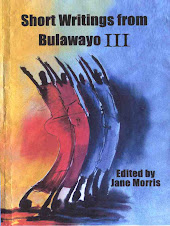
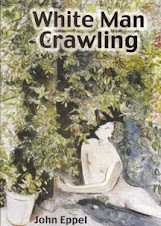
A few do prosper, under what John Eppel calls “a government of the obese, by / the obese, for the obese”. In his poem a roadside vendor offers for a sale “a cigarette, a handful / of peanuts, and a blighted onion. […] Sick, her child is the colour of ash, / a rag doll of hopelessness, symbol / of the new Zimbabwe.” This poem is in a remarkable, inspiring book published inside the country: Long Time Coming: Short Writings from Zimbabwe. It’s a simple act of solidarity: buy it! You’ll be repaid with some brilliant writing. The editor is Jane Morris, originally from Ebbw Vale. She co-directs the publisher ‘amaBooks in Bulawayo. Long Time Coming is one of about twenty titles they have published. It contains stories and a few poems, all of a very high standard, by 33 writers, most young. Some publish here for the first time; some are well-known (most of them in exile), such as Petina Gappah (here with a devastatingly detached story about AIDS) and Ignatius Tirivangani Mabasa; a few pieces are by Welsh and other international visitors, including Owen Sheers and Peter Finch. The writings are very varied – satire, domestic realism, fantasy, reportage, adventure – but all share a beating heart of political resistance. And the name of Robert Mugabe is never once mentioned: out of caution, no doubt, but also out of contempt.
In 1980, when Mugabe was sworn in as prime minister, Bob Marley sang at the ceremony: “Africans a-liberate Zimbabwe, yeah! / No more internal power struggle, / We come together to overcome the little trouble. / Soon we’ll find out who is the real revolutionary. / I don’t want my people to be tricked by mercenaries.” Soon Mugabe fulfilled Marley’s fears. Thousands died in civil conflict over the next years. Civilians were massacred both by government troops and by dissident militias and gangs. The red berets of the Fifth Brigade, directly controlled by Mugabe’s office, were particularly feared. He called their task Gukurahundi, a Shona word: “the early rain which washes away the maize chaff before the spring rains”. This metaphor of “cleansing” has ethnic implications: opposition is strongest among non-Shona-speakers.
In 1987, Mugabe became “executive president”: in effect dictator. Conflict with the white farm owners came to a head from 2000, as “squatters” and “veterans” were encouraged to violently seize tens of millions of acres. The productivity of the land plummeted. International donors and banks withdrew support. Food, fuel, medical supplies, foreign currency, and all kinds of goods became scarce. The obese profit from the economic chaos (some of their tricks are detailed in Wim Boswinkel’s story “Justice”). Infrastructure has collapsed: water and sewage, roads, health and other facilities. The usual methods of state repression are used: police and army brutality, disappearances, torture, extra-judicial executions, clamp-downs on independent media, educational and legal institutions.
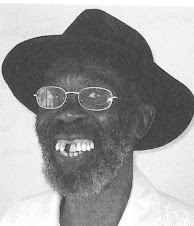
A refugee who came from Harare to Swansea, William G. Mbwembwe, wrote a poem in 2005, “I guarantee”: “I can guarantee that there is freedom of speech in Zimbabwe / But I cannot guarantee freedom after your speech […] I can guarantee you long life in Zimbabwe / Just don’t carry this poem around with you” (from Soft Touch, Hafan Books, 2005). That year, Operation Murambatsvina (“clean-up”) began. Hundreds of thousands of people – mostly supporters of the opposition Movement for Democratic Change – were evicted from urban areas, and street markets were shut down, destroying the livelihoods of millions. Still, in January 2009 the MDC leader Morgan Tsvangirai became prime minister, sharing power with Mugabe. The crisis might be reaching a climax. Surely, as Sam Cooke sings, “it’s been a long time coming, but a change is gonna come”.
William Mbwembwe was a charismatic community volunteer. Not long after getting refugee status, he fell ill and died in 2008. In Soft Touch we also published his story, “From the South South to the North West”. He tells how his family decided to leave: “When the invaders invaded the farm across the road and started demanding food and water, I knew vamoosing was the best advice. We packed up all our stuff including the roaches (you don’t leave those behind, they are family) and we headed off to live somewhere else (which I won’t say coz I don’t trust you).” Many stories in Long Time Coming have that chatty gallows humour, joking with the reader. Tales of suffering – but survival – are told with an engaging twinkle in the eye. The twinkle’s also challenging, if you’re from the global “North West”: the rich, comfortable zone.
Up here, people protest if fuel prices rise. In Long Time Coming several stories are about travelling on overcrowded “chicken buses”, or with people who still have cars, who sell rides to the highest bidder at the roadside, to pay for fuel. Sandisile Tshuma’s autobiographical “Arrested Development” opens the book. She pays 800,000 dollars to get from Bulawayo to Beitbridge, on the South African border. First, she has to wait for a ride: “I had to wait two hours to get money from the bank to pay for my journey and now here I am waiting. Again. It’s what we do. We wait for transport, for electricity, for rain, for slow-speed internet connections […] but you know how hope is. It never dies. So we tell ourselves that there isn’t anything yet. We’ll find a way out; in the meantime let’s wait.” While waiting, she gets a text from a friend, joking that “since life expectancy in Zim is reportedly quite low, she reckons she is entitled to a mid-life crisis”. But she has miscalculated. Tshuma replies: “Sori m8. In mid-20s nw so u hav abt 10 mo yrs left 2 liv. Thz r the sunset yrs. 2 l8 4 crisis.”
Finally on her way, “as the kilometers go by I am struck by a loneliness that I have noticed in everybody lately.” This loneliness is conveyed by many of the stories. Ignatius Mabasa perhaps captures it best, in “Some Kind of Madness”. The narrator leaves home and waits for a bus, vaguely feeling he’s forgotten something important. Through interactions with neighbours, passengers, the driver, and police at a roadblock, Mabasa gives a detailed snapshot of the social conditions, evoking both tragedy and hilarity. Someone at the back of the bus asks why they’ve stopped. Someone else shrieks: “What, are you blind?” The reply comes: “Actually I am blind.” Into the embarrassed silence, the narrator laughs and quotes aloud from the Bible: Jesus telling his disciples that a man was born blind “so that the work of God might be displayed in his life.” All the passengers look at him. One asks: “Who are you?” He answers: “I don’t know.” And then, he realises: “That’s it […], that’s what I have forgotten.” It’s a brilliantly chilling final twist.
I don’t have space to mention many of the good things in the book, but two extraordinary, visionary stories stand out for me: resonant visions of feminine hope and masculine horror, suggesting alternative futures. Judy Maposa, in “First Rain”, recounts a dream of a proud, naked, goddess-like woman amid torrential rainfall which cleanses Zimbabwe of its traumatic history, flushing away Gukurahundi and Murambatsiva, feeding the turbines of Kariba, bringing a rich harvest and an end to power cuts. Finally the narrator is woken by her daughter – “The taps are coughing. Get the containers” – and smiles: “Everything is going to be alright.” Here, visionary hope transcends everyday reality. By contrast, Thabisani Ndlovu’s “Stampede” recounts the nightmare of a young soldier walking for days through moribund wilderness, to and from his mother’s abandoned hut, in search of weapons he seems to have lost, to join an uprising against the regime of the “Great Leader”. The uprising is is crushed before it begins, and he joins a terrifying stampede of faceless fleeing figures, stamping soft body parts underfoot, before collapsing in a dry riverbed. Torrential rain falls, only to bring more horror: he must take off his uniform to avoid detection as a rebel, but it sticks to him wetly. His mother appears, trying to help him, but is crushed in the stampede… This story ends with a bitter laugh and the deeply ambiguous question: “Was there anyone left with the Great Leader at all?”


.jpg)


.jpg)







.jpg)