Intwasa Poetry (2008, ISBN: 978-0-7974-3645-9) is a book of memorable poems from inside and outside Zimbabwe. The fifteen poets who are brought together in this collection have all read from their work at the Intwasa Arts Festival koBulawayo.
The Zimbabwean poets in the book are Julius Chingono, Chirikure Chirikure, John Eppel, Ignatius Mabasa, Shepherd Mandhlazi, Judy Maposa, Deon Marcus, Albert Nyathi, Pathisa Nyathi, Mthabisi Phili and John S. Read.
From outside Zimbabwe, the poets are Owen Sheers and Lloyd Robson from Wales, Véronique Tadjo from Côte d’Ivoire/South Africa and Joelle Taylor from London.
There is a diversity in their work. There are poems of love, of sensuality, of humour, of compassion, of yearning, of sadness, of loss and of outrage. They range from the intensely personal to reflections of life at this pivotal time in Zimbabwe’s history.
Review from www.artsinitiates.com
Intwasa Poetry is a pocket book size collection of ‘memorable poems from inside and outside Zimbabwe.’ All this work has at least been read at the Intwasa Festival in Bulawayo. Intwasa is Bulawayo’s premier Arts festival held in September each year since 2005. Intwasa is Ndebele word for Spring. Intwasa Poetry contains fifteen poets.
Julius Chingono’s poetry has always been ‘short’ poetry. He sees the world through the eyes of the weak and the disadvantaged of society. His philosophy seems to be small matters are big matters and big issues are understood through small issues. You see it in poems like About Words and ‘Ditched’.
Chirikure Chirikure’s poetry has always been one that lends itself to both silent reading and performance. Like in his anthology Chamupupuri and his musical album Napukeni, Chirikure is keen on exposing the ironic side of life of ordinary people especially as they ‘misrelate’ with those in various forms of power. In ‘Dancing mother’, a woman dances, vigorously ploughing the earth with her feet so that the powerful IMF could be excited and donate money to restore the ‘dignity’ of the mother and her society.
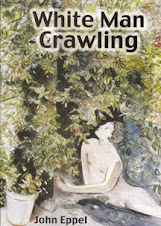
John Eppel’s is ‘a roundabout poetry’. He tells one story so that you begin to gradually see the other more important story inside the insides of the story. And when you get to it, the poet leaves himself the leeway to say, J. Alfred Prufrock style, “No, that is not what I meant at all”, maybe with a wry smile on his mustachioed face.
The poetry of Owen Sheers ‘who was born in Fiji in 1974 and brought up in South Wales’ is diverse but central to it is the pursuit of and search for values that are permanent and enduring. There is here the life of a Maths teacher who away from the logarithms goes home to look after hens that lay the occasional egg. In another poem a child comes across the picture of its mother at the age of seventeen and cannot believe what it sees on the face of the girl from far back. In yet another piece, a man goes back to his birth place and finds the umbilical tree is long gone, swept away ‘by a hurricane all these years’.
I have never met Deon Marcus but I think he is an old wise man or he is an old young man! He knows that words cost a lot of money. His short poems are over laden with meaning, depending which time of the day you read them. His three line poem Love talks about love as an old and over trodden emotion that remains, if you have the time to touch it, ‘soft like a butterfly’. In the poem There is something Marcus demonstrates an ability to derive universal meanings in mundane things like ‘the sound of a closing door’, ‘the way a curtain draws’ and ‘in the root of an age old tree’.
The books helps to show that ’amaBooks could be fast becoming for Bulawayo what Weaver Press is to Harare. You see it in the very meticulous editing and inspired choice and arrangement of artists.
Memory Chirere, University of Zimbabwe
*****
Review from The Zimbabwean
It is said that simplicity is at the heart of most things innovative. This is true of the 2008 Intwasa Poetry collection; whose cover design and the poems in it reflect the spirit of a new beginning. Intwasa means Spring in the Ndebele language. This is a collection of acclaimed and accomplished local talent, enhanced by the contributions from writers from outside Zimbabwe. All the writers in the book have read from their work at the Intwasa Arts Festival koBulawayo, which takes place each September.
Far from being frivolous entertainment or a mere intellectual exercise, it is clear that these poets regard their work as a serious art with a serious aim. For example Juilius Chingono’s poem, About Words, opens the book with a subtle warning concerning the use of words, how they can be used in a devious way, and for people to be wary of their dishonest use. This is particularly important at this time when some politicians take advantage of the gullible to have their own way.
There is also a fundamental seriousness in the writings of the poets that is perhaps indicative of the times in which they live and their accompanying experiences. Upon Mzilikazi Bridge, by Pathisa Nyathi, underlines this fact succinctly as he writes of looking down upon ‘the sprawling dusty townships’ of Bulawayo and the daily grind of the people surviving in harsh times. Amongst Chirikure Chirikure’s contributions to the book is his poem Time to Move On, which questions the political status quo that sees people oppressed merely because they have ‘strayed in the wrong area’ or blurted ‘the wrong party slogan’. Ignatius Mabasa’s aptly titled poem Epitaph offers a poignant reminder of the injustices that have befallen society in Zimbabwe and the resultant loss of hope.
Not all is gloom and doom, however, as many of the poems show a spirit of resilience and make for fascinating reading. The merciless fire of the poets’ tongues brings out a song of truth that expresses the poets’ imagination about their society and what they desire it to be. This is amply demonstrated in Judy Maposa’s How About? In reading Intwasa Poetry we feel the poets’ desire to lead a free life, where they are able to chart their own destiny.
The Iraqi poet Jamil Sidq al-Zahawi once declared that ‘the best poetry is that which interprets the heart and its sorrows’, and that ‘in poetry, lying is not sweet and deceit is not permissible’. This is true of this collection of Intwasa Poetry, whose poems of love and sensuality expose the writers’ ingrained feelings for their subjects whilst on the other hand their sadness, loss and outrage at the status quo cannot be ignored.
In his opening address at the recently held launch at the National Gallery of Zimbabwe in Bulawayo, prize-winning poet John Eppel quoted President John F. Kennedy, ‘When power narrows the areas of man’s concern, poetry reminds him of the richness and diversity of his existence. When power corrupts, poetry cleanses.’
Eppel continued, ‘Well, there will always be power so there must always be poetry. When the poet stops speaking that is the time for us to despair; and that is why we should welcome this slim volume of poetry in all its diversity.
‘The diversity can be indicated by looking at a few examples in the book, the overtly socially committed poems of Véronique Tadjo and Ignatius Mabasa; the introspective deeply personal poems of Deon Marcus; the ironic playfulness of Julius Chingono; the lyrical beauty of Owen Sheers.’
This is a wonderful book that deserves to be in any serious reader’s collection.
Walter B. Dube