Monday, November 14, 2016

Zimbabwean Literature takes the stage in Nigeria

Tendai Huchu at Africa Writes (BAS News and Events)


NoViolet Bulawayo (courtesy of Ake)
Zimbabwean literature is well represented at this year's Ake Arts & Book Festival, which takes place this week in Akeokuta, Nigeria, with Zimbabwean writers Tendai Huchu, NoViolet Bulawayo and Panashe Chigumadzi taking part. Ake Festival is ‘five days of cultural immersion'. Its aim is to develop, promote and celebrate creativity on the African continent. This, the fourth edition, will feature 18 authors in 'Book Chats', as well as panel discussions, interviews, workshops, concerts and a night of poetry. Other writers taking part include Ngugi wa Thiong'o, Helon Habila, Chinelo Okparanta, Lidudumalingani, Teju Cole, Yewande Omotoso and Zukiswa Wanner. Lidudumalingani, a South African, won this year’s Caine Prize for African Writing with his story, ‘Memories We Lost’. The Caine anthology is published in Zimbabwe by amaBooks.

Ngugi wa Thiong'o (courtesy of Ake)
A panel discussion, moderated by academic Dr Ranka Primorac, will consider 'From the Land of the Flame Lily: New Fiction from Zimbabwe', with panellists Tendai Huchu, Panashe Chigumadzi and NoViolet Bulawayo. NoViolet Bulawayo is well known, through winning the Caine Prize for African Writing and through her Booker Prize shortlisted novel We Need New Names, while Zimbabwe-born Panashe Chigumadzi's debut novel Sweet Medicine has recently been published in South Africa. Tendai Huchu's debut novel The Hairdresser of Harare achieved international success, and his second novel The Maestro, The Magistrate & The Mathematician has already been published in Zimbabwe, the United States, United Kingdom, Germany and in Nigeria. Ranka Primorac is a lecturer at the University of Southampton and is the author of The Place of Tears: The Novel and Politics in Modern Zimbabwe.

Each of the writers above will talk about their recent work in 'Book Chats' that take place throughout the festival. As well as the panel discussing Zimbabwean fiction, Tendai Huchu will take part in a panel on 'Flying Dreams and Alien Nightmares: Speculative Fiction in Modern African Writing'.  


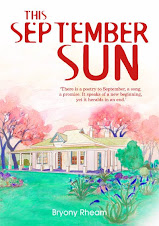
Last year, Bulawayo-based writer Bryony Rheam was at Ake. Her debut novel, This September Sun, has been published in Kenya, Tanzania and Uganda, as well as in Zimbabwe and the United Kingdom. There are a growing number of literary festivals across Africa bringing readers in contact with the writers.

Wednesday, October 26, 2016

Why I Read by Bryony Rheam


I don’t know why some people like reading and others don’t, except somewhere along the line I think those who find reading boring haven’t been pointed in the right direction.  When I say ‘the right direction’ I don’t mean towards what is considered ‘good’ or high-brow literature, but what is enjoyable, what makes you sit immersed in another world for hour upon hour, hesitant to re-join reality.
As a child, I devoured books.  I remember reading so much, my mother worried about it.  I loved adventure and mystery; far-off lands where magical things happened. My first forays into literature were with school set texts: Animal Farm and The Mayor of Casterbridge, stories that have stayed with me for years, perhaps because I had to learn huge chunks of quotes!  Mrs Dalloway was one of the first literary books I chose to read myself.  I read it in the holidays before I left school.  It was August and I was working at a plant nursery.   The combination of Spring, the blossoming flowers and the exquisite beauty of the words had a lasting impression on me.
It’s exactly that beauty, that power of the word, that I try to infuse my own writing with. It’s impossible to write anything new: love, death, war, loss (and the rest) are subjects that writers have grappled with since the beginning of time.  What is important is how we tell the story. Graham Greene once said that a writer writes from their subconscious, a place deeply influenced by experience. Part of this experience will, of course, be reading, which is not to suggest plagiarism; rather, that what one reads is an inspiration for one’s own writing. Is it even possible to be a writer if one doesn’t read?
I have yet to meet someone who neither enjoys reading nor watching films or following a series on television.  Even those with no access to the printed word or technology will enjoy listening to someone telling them a story.  The worst form of torture must be to be locked in a room with nothing to read! The human need to escape into a different reality is very firmly entrenched in our being.  But it’s the written word that connects us to so much more than the passing moment.  It links us to culture, to history, to the world outside and the world within. I read because it’s part of who I am – and that’s no exaggeration.


Wednesday, October 12, 2016

Music and Literature

Mbira Music


Some thirteen years ago a friend, a Chinese doctor of traditional medicine, told me I was never too late to learn. An old adage which in this situation referred to starting tai chi. He was right as I still practice tai chi and have taken up ku fu fan and a couple of sword forms. Not very good at any but enjoy it and it’s healthy exercise - as opposed to unhealthy! The adage continues to be true as I have now discovered mbira music. It’s so full of life, whatever the tempo.   A variety of percussion instruments reflecting a long tradition and culture. All the exponents I watched and listened to on YouTube reflected the sheer enjoyment of its exponents. In one example it seemed to be almost jamming but maybe rules have developed over the ages. Don’t know enough about this genre so that is meant as a compliment! There was a unity and interplay amongst all the musicians .Am listening to it as I type although I keep wanting to get up and move. It has that almost hypnotic effect on you.
Also discovered sungara music which also makes you want to get up and dance as well, although not sure I could replicate such energy now - not sure I ever could move so fluently. The dance movements are as harmonious as the perfect song harmonies which come across as natural.
What am I on about you may ask? Well, I discovered all this new enjoyment as a by-product of reading:

‘The Maestro, the Mathematician and the Magistrate’ by Tendai Huchu


 How often are writers advised ’Write about what you know’? Mr Huchu certainly knows Edinburgh which almost becomes a character in itself. We walk the city with the characters. It becomes alive. The music is by no means a by-product but is very much integral to the novel as a whole, in particular the voice and character of the Magistrate who now lives in Edinburgh with his family and has to come to terms with loss of standing and cannot help comparing that life with his present life. Another M is a younger compatriot, the Mathematician, who takes full advantage of the life he can access in Edinburgh but does intend to return to his country. The third M is a young man who tries to escape a life with which he is not at ease through reading books.  Mr Huchu depicts a place where a shared nationality forms tenuous ties that do not necessarily equate to loyalty or kinship. A shared nationality, all dealing with a sense of loss or identity  but with different, contrasting values.
Three disparate men, three different voices. This could lead to confusion but doesn’t because Mr Huchu is in full control. The overlap of their lives may be surprising but totally believing for such is life. This intertwining is not foreshadowed, is cleverly devised and not at all contrived. The book has many layers and may be read on different levels. Serious matters are addressed but both subtle humour and incisive wit percolate. I loved the ‘cameo’ appearance at the party!
I couldn’t predict the ending at all with any certainty and had to re-read the book - after a space of a few weeks - to see it with fresh eyes. The fresh eyes led me to the conclusion that Mr Huchu is quite the philosopher.
How pleasing to come across a book of literary merit, an enjoyable read but one that does address modern issues. Thoroughly enjoyed it as I did ‘The Hairdresser of Harare’, also by Mr Huchu. Both very different books but both well worth a read.

by Mary Irvine, http://www.glasgowwestend.co.uk/mary-irvines-blog-music-literature/

Tuesday, October 4, 2016

Why I Read by Bongani Kona


Bongani Kona, photo courtesy of the Caine Prize

In December 1999, as their final act before the turn of the millennium, TIME magazine published a special issue profiling the hundred most influential people of the 20th Century. I remember casually paging through the issue and being drawn by the brief entry on Philo T. Farnsworth, the man who invented television. What really caught my interest was not the entry itself – Farnsworth died in relative obscurity, dogged by lawsuits and in debt – but the caption that ran underneath the photograph, of a man sitting with his back turned to the camera, in a room surrounded by screens. It said Farnsworth was unhappy with what he saw, even before 500 channels.
Perhaps because I was going through puberty and its attendant flux of emotion – I was fourteen that year – I felt a sense of kinship with Farnsworth. I could relate to that difficult-to-explain unhappiness, even as a teenager growing up in Harare. In hindsight, the reason I’ve never forgotten that episode is because I understood for the first time something I’d always felt but had been unable to name; what it means to be alone.  
I’m trying to explain to you, in so few words, why I was drawn so much to the world of books. Reading made me feel less estranged from the world. My favourite scene in J.D. Salinger’s The Catcher in the Rye is when Holden Caulfield goes to visit Mr. Antolini and he says to him: “Many, many men have been just as troubled morally and spiritually as you are right now. Happily, some of them kept records of their troubles. You'll learn from them – if you want to. Just as someday, if you have something to offer, someone will learn something from you. It's a beautiful reciprocal arrangement. And it isn't education. It's history. It's poetry.”

In short, reading has been my way of connecting with the world. My way of understanding what it means to be human. I can’t offer an equally coherent explanation for why I write. Writing is difficult and it’s the only line of work I know of where you’re guaranteed to fail more times than you succeed and there have been times when I’ve given up. The only reason I keep going is because I want to give to someone else what books have given to me. A way out of loneliness.


Zimbabwean writer Bongani Kona was shortlisted for the 2016 Caine Prize for African Writing with his short story 'At your Requiem'. The story is published in the 2016 Caine Prize anthology The Daily Assortment of Astonishing Things, published by amaBooks in Zimbabwe, New Internationalist in the UK, Jacana Media in South Africa, Interlink Books in Nigeria, Kwani? in Kenya, Sub-Saharan Publishers in Ghana, Gadsden Books in Zambia, Femrite in Uganda and Langaa in Cameroon. 'At your Requiem' was first published in South Africa by Burnet Media in Incredible Journey: Stories That Move You.
Bongani is a freelance writer and contributing editor of Chimurenga. His writing has appeared in Mail & Guardian, Rolling Stone (South Africa), Sunday Times and other publications and websites. He is also enrolled as a Masters student in the Creative Writing Department at the University of Cape Town. 

Tuesday, September 27, 2016

The African Books Collective has launched 'Read African Books'


 Read African Books offers a place where people can come to read about the latest books, news, reviews and comment, on African publishing.

The extracts section contains samples of John Eppel and Togara Muzanenhamo's poetry from Textures. You will also find a poem from each of the poets in Textures below.

African Books Collective (ABC) was founded in 1989 by a group of African publishers to supply libraries and other book buyers worldwide with African published books. ABC was established as a 'non-profit', covering its overheads only, and remitting sales income to African publishers. On the one hand, ABC addresses the hurdles for Northern libraries in acquiring books from Africa; and on the other, strengthens African publishers by providing international exposure and valuable sales income.

Read African Books is intended to help grow awareness of the issues affecting African books and publishing - to celebrate its diversity - and to increase the visibility of African books worldwide.

 See more at: http://www.readafricanbooks.com/about#sthash.vDdwahYa.dpuf


Sunday, September 11, 2016

Interview with Tendai Huchu, Author of The Maestro, The Magistrate and The Mathematician

ImageNations: Promoting African Literature

Today, I bring you an interview (a discussion) with Tendai Huchu. I interviewed him when his first book The Hairdresser of Harare came out. He has published his second book: The Maestro, The Magistrate & The Mathematician. I caught up with him via Facebook and this is what ensued.

Nana Fredua-Agyeman: So how did The Hairdresser of Harare do? And how was it accepted in Zimbabwe noting the subject matter?

Tendai Huchu: The Hairdresser isn't a book I think much about now. I have moved on as an artist. It was well received in Zim. First print run sold out. Good reviews. It was a popular read.

Nana Fredua-Agyeman: OK. Great. I'm surprised you say you think not much about it. Is it that you are more concerned with your new work?

Tendai Huchu: Yeah, I am doing newer and, hopefully, more interesting stuff. I have/am evolving. For me, the next project is always more exciting than the last. I imagine it is the same for all writers.

Nana Fredua-Agyeman: Yes. You always have to focus on your current project and allow the last one to live its own life. Your second book fascinates me. I was wondering what will be contained in its pages. What's this book about?
 
Tendai Huchu: It is hard for me to distill a 90,000 word text into a soundbite, particularly when it has no real central theme. But the stuff that interested me most in making the text was the formal stuff, mechanical things to do with structure, and, of course, playing with genre and also trying to create a work that was ambiguous and contradictory. This makes little sense if you have not yet read the book, but I hope you will one day.

Nana Fredua-Agyeman: This sounds appetising. I'm no stranger to stranger literature. In fact experimental literature is itself novel. So will you consider your text experimental?

Tendai Huchu: I wouldn't necessarily consider myself an experimental novelist. I don't think I wield the necessary pyrotechnics to assume such a designation, rather the form the text was created try to buttress the ideas in the story I was putting forward. For example, the text contains 3 novellas, and this was only because my initial attempts at creating a unified, conventional novel failed, and the only way I could get the three characters to work was by highlighting their differences. It was a process of simplification, but that comes with its own complications, the language and style of the separate stories then had to be altered radically, the visual presentation of the text on the page itself had to be looked into. If there is any innovation in the text, it is merely a response to difficulties I encountered in writing the damned thing.

Nana Fredua-Agyeman: Your response piques my interest. After all, it is in adversity that we innovate. Your response reminds me of Doreen Baingana's linked stories Tropical Fish. You said earlier that the story (like Murakami's novel Kafka on the Shore) has no central theme how then were you able to sustain the writing to reach a meaningful conclusion?

Tendai Huchu: The conclusion is part of the play with ambiguity that I had going on. So for long stretches of the novel you have these disparate elements in play, but then at the denouement the camera zooms out and you see how these events come together and have been orchestrated, but only once you step out of the limited, chaotic experience of the individual characters. You also come to realise that the real hero of the story is someone else. I am talking round the book here because I am avoiding spoilers, but the idea is that whatever position the text takes must be undermined by an equal and opposite truth. Thus, I now do a U-turn and advance the argument that the book actually has a theme and is tightly plotted. It is not a literary novel but a genre novel of a very specific kind.

Nana Fredua-Agyeman: This sounds interesting and I look forward to reading it one day. However, how's distribution of your books like? Getting books distributed in Africa is difficult*.

Tendai Huchu: It is published in Zimbabwe by amaBooks and in Nigeria by Farafina. The problems of book distribution in Africa are well documented, but we are really talking simple market forces here, nothing more. It's not as though there are hordes of readers demanding my work across the continent. My publishers will be lucky if they so much as break even with this book. That's the harsh reality. Why would a publisher anywhere else in Africa try to sell my book when they already have a hard time selling works by their own local authors? I sound pessimistic and for this I apologise but the future of the book industry is intimately linked to the future of the general economy. You put more money in people's pockets and they have more leisure time, they might indulge and engage with this art form. The state has the resources to build libraries and stock them, there is another market for publishers. Combine this with mass literacy and the industry has a shot. We have to be realistic and tie the future of this art form to inescapable power of capitalism. Books are just another product of that system. Nothing more, nothing less.
 
Nana Fredua-Agyeman: Thanks Tendai for this discussion.
_____________________
*Conducted this interview before I got a copy of this book. My copy is published by Farafina and the Writers Project of Ghana has copies for sale.


The book is also available in the UK through Parthian Books and in North America through Ohio University Press.

Friday, August 19, 2016

The Maestro, The Magistrate & The Mathematician, or the Lonely Scotlanders


Reviewed by Dami Ajayi (http://wawabookreview.com/author/dami-ajayi/)
Title: The Maestro, The Magistrate & The Mathematician Author: Tendai Huchu
Publisher: ‘amaBooks
Number of pages: 273
Year of publication: 2014 Category: Fiction


Zimbabwean writer Tendai Huchu’s second book, a novel, is called The Maestro, The Magistrate & The Mathematician, a rather mouthful title that enjoys the playful alliteration of a recalcitrant poet.
This novel follows his acclaimed debut novel called The Hairdresser of Harare (another title that is a subtle work of alliteration), which used the urban space of a beauty salon to explore themes of homosexuality, love, family life and other complications of modern life in Zimbabwe.
His new book also deals with Zimbabwe, but Zimbabweans in the Diaspora, in Edinburgh, Scotland, where the author himself currently resides. Through the eyes of three characters, who collectively lend their monikers to the book title, the immigrant experience is explored once again. The life of immigrants has been a fascinating topic for black writers from Samuel Selvon’s The Lonely Londoners down to Teju Cole’s Open City.
The aforementioned novels situate the experiences and the insights through which this novelist attempts to revisit the compounding problems of migration. In the intervening years, the home front has not become comfortable enough for the desired ‘Back to Africa project’. If anything, the egress of notable thinkers, intellectuals, skilled labourers and academics persists and Huchu tackles the experience of this ‘fortunate’ lot who leave the homeland in pursuit of better lives abroad.
His characters reside in Scotland, three men of different ages, backgrounds and temperaments. There is The Magistrate, a pot-bellied, stay-home husband and father of a 15-year-old daughter. He has a hard time assimilating to the new clime. Back home, he was a man of means, a judge, but in Edinburgh, he is the husband of an estranged wife, a nurse. The Magistrate takes long, winding walks around the
city whilst listening to Zimbabwean music on a walkman. These walks cast this
city whilst listening to Zimbabwean music on a walkman. These walks cast this character in the role of a flaneur through whose eyes the architectural edifices of the city are navigated. In this sense, he shares a kinship with Julius, Open City’s protagonist, but he is clearly more humane even if his view is equally jaded, skeptical and detached.
Through The Magistrate’s psyche, we experience the resigned alienation of middle- aged migrants whose pursuit of a better life in the Diaspora is at best illusory. His marriage suffers the brutal assault of the colder clime and anxieties about raising a daughter in an alien culture is the gnawing concern that eases in the denouement. He finds solace in drink and the music of his people. By pairing the music of his people with sightseeing in Scotland, he finds a balance between the old and new.
Farai is The Mathematician, a pompous man in his twenties. His Political Science doctoral thesis is on hyperinflation in African economies. He has rich and firm ties to the home country, and his scholarship is being lavishly funded by his family. He lives with his friends, Brian and Scott, a rabbit called Mr Majeika, and he indulges in playing television games. He dates Stacey, a working-class, white girl and ex-porn star. His character sketch is that of a smart man who loves the streets and enjoys the adrenaline rush that living on the edge brings. He is also flotsam in the Diaspora tide although he fancies himself as being in control; he remains dependent on his friends, his Mozambican colleague Nika, and his family to support his lifestyle.
The last of trio is The Maestro, a white Zimbabwean whose experience exacts the worst toll. He is a private person and an avid reader immersed in existential philosophy. His whiteness does not seem to ease his integration; perhaps it even fosters his alienation, which is ultimately self-destructive. Every attempt by his Polish lady friend/love interest to break his cocoon is rebuffed as he journeys deeper and deeper into himself, searching for his essence, till he fractures his mind in a psychotic spell.
These characters are connected by a pivotal character called Alfonso, an unscrupulous, self-proclaimed political organiser. He is, in a sense, the mediating character in this novel. He forces his friendship on The Magistrate and coerces him into participating in the political group he runs; he worked with Farai’s parents in the homeland and parted ways with them under questionable circumstances; he also plays a major role in the final home-going of The Maestro. Almost all major events revolve around Alfonso, either directly or indirectly, and he is indeed the portrait of the well-adjusted African in the Diaspora. Notwithstanding the estrangement and detachment that the immigrant experience presents, Alfonso and the possibilities of his political pressure group offers anchor to displaced Zimbabweans.
Told in stylish and dense prose, this novel subscribes to a certain American
aesthetic of interrogating the immigrant experience in Europe. Mr Huchu wears
aesthetic of interrogating the immigrant experience in Europe. Mr Huchu wears rather proudly the influences of some American authors, most notably David Forster Wallace with whom he could be said to share much more than a love for wearing bandannas.
His prose sometimes strives to be playful even though the weight of serious issues makes this deadpan. Again, there is that narcissistic authorial preoccupation with giving the self a cameo appearance, in this case as a lecherous disc jockey (giving a nod to music). It is not often that you find a novelist so immersed in the thrust of their story as well as in the desire to reflect the influences of previous writers in a certain literary tradition, but sometimes, ambition occasions overkill.
Existentialist tropes run through the characterisation. This is most obvious with The Maestro, is evident in the pace of the narrative itself and is glorified in the denouement. The meaninglessness of life as the antithesis of the immigrant experience is the basis of this cautionary tale.
At a time when the West is adjudged as being the shaper of African literature, this novel is a departure from the sensationalism of impoverished Africa – instead it interrogates the Western gore by showing, not telling, how African characters are broken by the whims and caprices of a well-governed society. Unfortunately, the wretched of the earth do not enjoy salvation when they transplant themselves to colder climes.
Here is an important novel about migration that negotiates to differentiate itself from tradition by approaching character development through an inventory of the minutest of details, psychological projections as well as existential concerns. The tempered voice of the author is remarkably American in inflection but the characters are deeply African, human.

In Fiction (http://wawabookreview.com/category/fiction/)

(http://wawabookreview.com/2015/07/24/the- maestro-the-magistrate-the-mathematician-or-the-lonely-scotlanders)