Thoughts from Botswana by Lauri Kubuitsile
Writings and thoughts from Motswana writer, Lauri Kubuitsile
Reproduced from https://thoughtsfrombotswana.blogspot.com/2017/09/amabooks-zimbabwean-publisher.html
amaBooks, A Zimbabwean Publisher
amaBooks is a respected publisher located in Bulawayo.
They’ve published work by some of the most well-known Zimbabwean writers
including Tendai Huchu, John Eppel, NoViolet Bulawayo, and Petina Gappah, among
others. It’s run by the
irrepressible Jane Morris and her husband Brian Jones. I had the chance to
interview Jane about amaBooks, the conversation is below.
Can you tell me a bit about how you started your publishing
house?
We could have called ourselves Accidental Publishers rather
than amaBooks as we had not planned to start a publishing company. So, no
research, no business plan, little knowledge of publishing. At the time, in
2000, I was working as a social worker and trainer and was involved in training
volunteers for a charity involved in helping children. Short of money to run
the charity, we approached the Bulawayo-based writer John Eppel who kindly
donated a collection of his poems. But how to get it published? My husband and
I decided to take on the task and, although I had a background in literature
(my husband Brian is a scientist), we had little idea of what publishing a book
entailed. It was a steep learning curve – ISBN, paper quality, book format,
font type, size of print run, origination, pricing, launch, distribution,
promotion… We were lucky to find a sympathetic printer who guided us through
many of the steps. And months down the line we ended up with John Eppel:
Selected Poems 1965 – 1995. Within six months all 1000 copies of the collection
had been sold, with all profits to the charity. We were hooked and when John
Eppel suggested starting a publishing house as he had a couple of novels
waiting to be published we thought why not? It wasn’t the most propitious time
to start the business as Zimbabwe’s economy had started its steady decline but
we love books and were excited at the prospect.
How is the trade market in Zimbabwe?
When we began amaBooks the economy hadn’t completely
crumbled so there was a better trade market and we could look to selling 1000
copies of a title, sometimes a little more. Our print runs have grown
progressively smaller with the decline in book sales. We specialise in fiction
and, unlike Germany for instance, where fiction is the strongest segment with
32% of the total market, fiction sales in Zimbabwe are a small proportion. With
the high level of unemployment here and the poor economy, people are generally
loath to spend any of their income on buying a book. Added to this is the
difficulty of finding books for sale, with many bookshops having closed.
What is your approximate percentage of trade sales and
educational sales? Do you consider yourselves trade publishers primarily?
We are first and foremost trade publishers and our sales are
almost exclusively outside the educational system. A book being accepted as
part of a curriculum is an added bonus, but that it not our original intent in
publishing a title. As an independent publisher we have the freedom to publish
what we choose, though there are, of course, financial constraints that have
prevented us publishing all the books we would have liked to bring out.
Do you do a lot of development of writers? If so how do you
approach it?
amaBooks don’t tend to give detailed feedback to writers
when they submit a manuscript. We have, however, organised workshops for
writers who have already had some success in being published and for those who
aspire to be published, either run by ourselves or by experienced writers. As
well as workshops aimed at improving writing skills, we have organised sessions
on reading your own work and on looking at other avenues open to writers to
help make a living. Working with new writers has been a significant part of our
work as publishers. From the beginning we decided that we wanted to provide an
opportunity for new writers to get published. We thought that a good way to do
this was to showcase their work, alongside that of more established writers, in
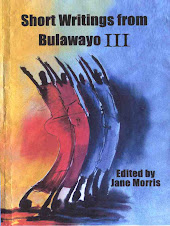
collections of short writings. To date we have published around 250 writers.
Hopefully the editing process provided an input to the development of the
writers and we have gone on to publish books by a number of the writers whose
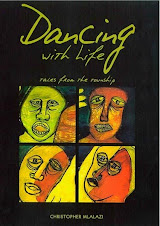
work first appeared in the short writings collections, including Christopher
Mlalazi, Bryony Rheam and Deon Marcus. We have also helped to organise reading
groups as we strongly believe that writers should be readers; hopefully, by
enthusing the participants about literature, some may go on to become writers
and some may come our way.
Workshops on publishing, which we have run, with themes such
as how to approach a publisher and the difference between traditional
publishing and self-publishing and all in between, have attracted much
interest.
What do you see as the biggest challenge for publishers on
the continent? Do you manage to sell your books in other African countries?
This seems to be a real challenge for most publishers.
Distribution is a major problem, both within and outside
Zimbabwe. We would love our books to be available throughout the continent and
to have more books by African writers available here, but the cost of transport
is prohibitive. Being a very small publisher getting our titles onto the
shelves of major chains is very difficult so we tend to concentrate on
independent bookshops, though that tends to be limited to South Africa. If one
of our writers attends a festival, or we attend a book event, that is an
opportunity to sell a few copies, and to develop links.
We are keen to sell rights across Africa and have had some
success with other African countries – Nigeria and, through Nigeria, the other
ECOWAS countries and Cameroon, Kenya with Tanzania, Uganda, Rwanda and South
Sudan, South Africa and Egypt.
We continue to try to think of innovative ways of getting
our books out there. Our titles are available as ebooks on many sites, and the
African Books Collective distribute for us outside of Africa.
Despite its
many challenges, Zimbabwe seems to have quite a thriving literary community and
quite a few successful writers especially if you compare it to Botswana. Why do
you think that is the case?
Zimbabwe has many good writers, quite a few having received
international acclaim; names that come to mind are Yvonne Vera, Doris Lessing,
NoViolet Bulawayo, Dambudzo Marechera, Petina Gappah and Tendai Huchu. As to
why this is, there is a tradition of valuing education and reading, Zimbabwe
still has the reputation of having a high literacy rate. And there is plenty to
write about in Zimbabwe, though I guess the same could be said of many other
African countries.
When we started amaBooks many of the writers were still in
Zimbabwe and there was a thriving literary community here but, sadly, due to a
myriad of reasons, including the economic and political climate, many are now
based in the diaspora. We have just finished compiling a short story
collection, Moving On, and, of the
twenty Zimbabwean contributors, more than half live outside Zimbabwe.
What do you think have been the biggest successes for
amaBooks?
How to measure success? For me, one success, despite all the
stressful times, has been the joy that amaBooks has brought into our lives,
being greeted in the streets of Bulawayo with ‘Hey amaBooks’.
Getting good reviews from readers and critics is one of the
things we value most. We love what we do and it is heartening when others enjoy
the books we have brought out. We enjoy collaboration and getting our books
accepted by publishers in other countries is very exciting – the thought of
expanding the readership beyond Zimbabwe. As well as selling rights to other
publishers in Africa, we have sold rights in Europe, in North America and
recently to the Arab world.
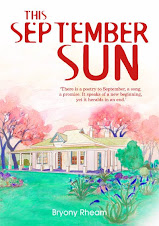
Our most successful book has been the prize-winning novel This September Sun by Bryony Rheam. It
was accepted for the ‘A’ level syllabus in Zimbabwe and also sold well to the
general public. Other publishers have brought the book out in Kenya and the UK,
and a publisher in Egypt is having the book translated into Arabic to
distribute in the Arab world.




.jpg)







.jpg)