Bryony Rheam's short story collection Whatever Happened to Rick Astley? has been nominated for the Outstanding Fiction Book category of Zimbabwe's premier arts awards, the National Arts Merit Awards. The awards celebrate the achievements of artists across a wide array of categories, from music, literature and visual arts to film, theater, dance, and journalism. This year, for the 22nd edition, a record-breaking 1,280 entries were received. The winners will be announced at the awards ceremony, to be held in Zimbabwe's second city of Bulawayo on 24 February.
Wednesday, February 21, 2024
'Whatever Happened to Rick Ashley?' nominated for National Arts Merit Award
Tuesday, December 19, 2023
Wales Arts Review of Bryony Rheam's 'Whatever Happened to Rick Astley?'
Reproduced from https://www.walesartsreview.org/whatever-happened-to-rick-astley-by-bryony-rheam/
‘The afternoon hangs suspended in the drowsy heat of late October. The house is quiet with the softness of sleepers.’ So begins ‘Music from a Farther Room’, one of sixteen stunning stories in Zimbabwean writer Bryony Rheam’s collection, Whatever happened to Rick Astley? The themes of the story are echoed throughout the book: isolation, loss, and a profound dislocation; of not knowing whether it’s the place or the people that truly create a sense of belonging. This particular story focuses on Julia, an elderly woman sharing a house with her son and English daughter-in-law, newly arrived in Zimbabwe from the UK. It moves deftly between the two women’s perspective, full of curiosity and understanding for both points of view. It’s not simply a generational divide that complicates their relationship, but cultural and social differences too, leading to a profound loneliness for both of them. Rheam’s smooth, resonating prose captures the increasing solitude thus: Julia’s ‘children are scattered throughout the world, not one on African soil. They’ve all asked her to live with them … but she always shook her head and gave a little laugh. Gradually, they stopped asking.’
![]() |
| Bryony Rheam |
Rheam writes beautifully and skilfully about people whose lives have been affected by waves of migration and immigration; of the generational ebb and flow of people coming to, and leaving, Zimbabwe. One story in particular, ‘The Last Drink at the Bar’, sees a man visiting his homeland over the years from his job teaching in Wales, and each time he feels as though he is being pushed away, alienated, from the culture and community in which he was raised. His old drinking mates are suspicious of his desire to return; after all, shouldn’t he have everything he wants in the UK? Rheam explores the idea of belonging and un-belonging further by revealing the tensions in travel and tourism: ‘His was the oblivion of the tourist who sees only himself, the pivotal figure around which everything else revolves’, she writes of one character during his visit to Bristol, heavy with its history of the slave trade, its ‘Whiteladies Road’ and ‘Black Boy Hill’. In ‘The Fountain of Lethe’, a woman insists on bringing her family to a beloved holiday spot in Bulawayo, but the visit does not turn out to be what she had hoped: ‘What was it, that particular feel of hotel rooms? That mixture of holiday excitement and disappointment one wavered between.’ There are countless moments like these in the collection: sentences, wonderfully wrought, that illuminate everyday life.
Whatever Happened to Rick Astley? is available to buy in the UK here.
Whatever Happened to Rick Astley? is co-published by amaBooks and Parthian Books.
Saturday, December 16, 2023
'Whatever Happened to Rick Astley?' reviewed by Derek Workman in The Kalahari Review
A look at Bryony Rheam’s new collection of short fiction
Derek Workman
Reproduced from The Kalahari Review (https://kalaharireview.com)
Bryony Rheam’s collection of short stories, Whatever Happened to Rick Astley?, is a stunning group of stories that shows the Zimbabwean writer’s range and formidable control of language and tone.
The stories move through situations that are at once so real and palpable that you can feel a hot road beneath your feet and smell flowers in the garden. Yet they are sprinkled with the small serial thoughts and moments that make up our lives.
In “The Colonel Comes By”, Ms Rheam shows the long path that grief and loss can take. She gives us sentences like “Forgiveness is a long process…And there is a lot of it to be done.” And, “We wanted someone to appear, their arms around a smiling Mom, and say everything was alright. It was all over, the searching. We could go back to our bikes and our games and our petty arguments and be ourselves; be children once again.”
Throughout the collection, she shows us again and again ways the generational emotions are passed down — and the beauty there is in preserving someone’s innocence as long as we can. Especially in the story “Castles in the Air”, which follows a mother and daughter on an evening and sees how the mother can see the dangers in the world but protects her daughter’s sense of joy all along the way. A stunning gift that our parents have given us.
The story “Potholes” is such a gentle mix of harsh emotions, handled with such a soft hand, that it is incredible. And “The Piano Tuner” shows the change of time, how some things can shift, but the nature of privilege and power tends to always remain.
Ms Rheam’s control of tone and sentences is formidable — guiding the reader through her world and scenes, which are filled with lushness and strong emotions, with firm and gentle hands.
Whatever Happened to Rick Astley? is a perfect gift for any time of the year, especially now as we are in the festive season. You can purchase this wonderful collection online through the UK publisher Parthian Books , through Amazon UK or The African Books Collective.
Derek Workman is the founding editor of The Kalahari Review. When he is not running the publication he takes photographs. You can find more of his work at derekworkman.com.
Whatever Happened to Rick Astley? is published by amaBooks (Zimbabwe) and Parthian Books (UK).
Tuesday, October 17, 2023
'Whatever Happened to Rick Astley?' reviewed by Ignatius T. Mabasa in Zimbabwe's NewsHawks
Reproduced from NewsHawks (thenewshawks.com), 6 October 2023 p.52, https://anyflip.com/ylrqu/jknb/
Title: Whatever Happened to Rick Astley?
Author: Bryony Rheam
Publisher: amaBooks/Parthian Books
Year: 2023
ISBN (Zimbabwe): 978-1-77931-095-8
ISBN (UK): 978-1-91459-514-1
Reviewed by Ignatius T. Mabasa
Whatever Happened to Rick Astley? is an unforgettable collection of stories that take you on an emotional roller coaster. Bryony Rheam is amazing in the way she is consistent in carefully crafting and sustaining the intensity of emotions in her stories. She does not just narrate a story but rather she becomes part of the story, as a keen observer who picks small but metaphorically rich actions and reactions, splashing colour here and there to make murals. And besides the colours, she wields a powerful hammer like the mythical Thor, and uses it to demolish façades in relationships, triggering mudslides of vulnerability and emotions, exposing complexities and fractured pieces of what appear to be good normal lives.
Rheam almost effortlessly but slyly uses irony in most of her stories. I particularly enjoyed the vividness with which she captures emotions and thought processes of her characters. She is a conscientious arranger of lines, sense, feeling and tone – coming up with a heavy, rich-smelling and fresh bouquet. 'The Colonel Comes By' exhibits the intense power and beauty that Rheam, like a gardener, uses to cut and arrange relationships, casting away some, and allowing them to wilt and be burnt. The metaphorical richness of the story – those errant flowers, the order and the effect we have on each other’s lives leading almost to death – is unforgettable, almost haunting.
'Potholes' is another harrowing but beautifully told story. Although talking about a man’s strange relationship with potholes along a road that he has appropriated, the story is a well-executed commentary that centralises traumas of ordinary marginalised people of Zimbabwe against the socio-economic and political milieu. It brings out the raw creativity that is the hallmark of this talented storyteller. 'Potholes' is brilliantly metaphorical as 'Castles in the Air' is beautiful and multi-layered. 'Castles in the Air' appeals to readers in the way it suspends reality to allow the grotesque to take place, yet the reality has a stubborn way of disrupting the fantasy. This story is a shrewd creative tour, analysis and commentary on life and the state of things in Zimbabwe.
And I just loved 'The Piano Tuner', and how Rheam makes the reader respect the art of creative writing because of the patience and magic with which she lures the reader into her story. The mystery and suspense she weaves into the story – casting it against a background of racism, classism and unparalleled irony is stunning. Rheam is indeed what Ngũgĩ wa Thiong'o called “a writer in politics” – she exhibits brilliant awareness of class struggle, coloniality and the challenges of postcolonial Africa.
If there is a theme that Rheam tackles so well, it is that of the passage of time, and the inevitability of change. 'Whatever Happened to Rick Astley?' is an ingenious multi-layered story that serves as a brilliant commentary on morphed relationships. There is a cyclic pattern in life, and Rheam shows how love comes and goes, and how we invest in new loves that are intrinsically anchored to the first love, even though they are completely separate.
Personally, as a Zimbabwean writer who mainly creates in my indigenous language, Rheam has helped me get a quick update of how white people are seeing, managing and documenting happenings in independent Zimbabwe. This is a very important voice in Zimbabwean literature. Through her sensitivity to race and class struggles she allows African readers to see white people struggling with the very same issues that also affect black people. The stories therefore become a window and an intercultural dialogue of some sort.
Although I was a bit apprehensive that Rheam writes about detailed and complex relationships among Africans as she did in her story 'The Big Trip' – she managed to tear down the wall of my fears by writing in an amazingly convincing manner the type of politics usually found in African families – especially the strain on kinship due to living in a foreign land. She is not writing Africa – looking at it with imperial eyes. She has my respect.
Overall, Rheam’s biggest achievement is her ability to create and curate, as well as sincerely capture the soul of characters, places and relationships. Her characters are unforgettable. She respects the art of creative writing as can be observed in how she is not just for the story, but is able to experiment with form in a manner that only seasoned writers can do. She writes Africa in a sensitive manner – yes, like Doris Lessing.
________________________
Dr. Ignatius T. Mabasa
Saturday, September 16, 2023
The Journal of the Britain Zimbabwe Society review of 'Whatever Happened to Rick Astley?'
Reproduced from the Zimbabwe Review, The Journal of the Britain Zimbabwe Society, Issue 23/3 September 2023. ISSN 1362-3168
Review
WHATEVER HAPPENED TO RICK ASTLEY?
Pat Brickhill reviews a collection of short stories by Bryony Rheam
Bryony Rheam’s latest book is a collection of short stories, each one is linked in some way to Zimbabwe.
Most are set in various suburbs of Bulawayo, where Bryony lives with her family. A handful are set in the UK, and The Piano Tuner, a touching story of prejudice and compassion, is set in Zambia.The subject of each story varies from potholes, to disappearing electricity, to the physical and human neglect of Zimbabwe, but each describes a different facet of loss.
'The beauty of the ordinary'
I would agree with fellow Zimbabwean writer Siphiwe Ndlovu, who writes on the back cover that Bryony portrays loss 'of identity, memory, country or a loved one' and 'capture(s) the beauty of the ordinary'.
The writer has a talent for vividly painting with words the world she is writing about. We are drawn into a realm of reflection that arises with the passage of time as we grow older: reliving childhood, or the excitement of joining the world of adults, combined with the loneliness that can come with old age.
These themes are developed in The Queue and These I have Loved, while the consequences of bad life choices are explored in Dignum et Justum est.
Bonding
Bryony Rheam has a wonderful talent for bonding the reader with the story, tackling emotions that are familiar, looking at belonging, the loss of country, of husband, or merely the passage of time. Each story left me with a strong sense of the character struggling against the vagaries of life and perhaps attempting to reach a point of resolution or even redemption.
Castles in the Air was a beautiful descriptive story blending the compassion of motherhood with the magic of childhood, as the mother distracts from a power cut by taking her daughter on a late afternoon walk, enthusiastically joining in her child’s imaginary games. My least favourite story was The Colonel Comes By, which describes the stark, desperate struggle of a single mother, as the ending left this reader rather confused.
The Big Trip, The Young Ones and Last Drink at the Bar explore the familiar divide that opens with choices, or the lack of them, by those who leave their country and those who remain – as each attempts to justify or acknowledge where they live. Moving On is a touching story of coming to terms with the hidden trauma of loss that surfaces when memory and reality merge.
Bryony gives a glimpse of her skill at humour with Christmas. The Fountain of Lethe uncovers a memory from childhood perhaps best left buried.
Finally, the title story is a wonderful wistful reflection of a mother inspired by remembering a song from her youth in Whatever Happened to Rick Astley?.
I found this anthology both touching and entertaining. To some these stories will provoke nostalgia, for many people have endured the trauma of leaving the country of their birth – often leaving loved ones behind. Some tales will leave the reader with a familiar longing and feeling of sadness but every narrative is bursting with warmth and empathy. This anthology provides a poignant glimpse into the lives of strangers who are nevertheless familiar, to all who are fortunate enough to be able read it.
I thoroughly recommend it.
Whatever Happened to Rick Astley? by Bryony Rheam
Published by amaBooks, Zimbabwe/ Parthian Books, UK
ISBN 9781779310958/ 9781914595141
224 pages, 2023
Pat Brickhill is a freelance writer and BZS secretary.
Whatever Happened to Rick Astley? is available in the UK through Parthian and all good bookshops and online outlets, in North America through the African Books Collective, and in Zimbabwe through the Orange Elephant in Bulawayo and Bindu Books in Harare.
Thursday, September 14, 2023
Searching for a sense of security and continuity in Zimbabwe: 'Whatever Happened to Rick Astley?' reviewed by DC Rodrigues in The Financial Gazette
Reproduced from https://fingaz.co.zw/searching-for-a-sense-of-security-and-continuity-in-zimbabwe/
‘Whatever Happened to Rick Astley’
by Bryony Rheam
amaBooks/Parthian 214 pp., ISBN 978-1-77931-095-8
Book review by DC Rodrigues
WHAT’S not to love about the rich baritone voice of Rick Astley, iconic English singer and pop sensation of the 80s? Fans of a certain age will remember ‘Never Gonna Give You Up’ and many other songs that were smash hits in England, Australia and America.
In 1994, after a string of hits, he disappeared from the scene, and in his own words, ‘slipped out the back door when no one was looking and no one cared’. But some people did seem to care, and it was his disappearance that inspired the title of Bryony Rheam’s recently published collection of sixteen short stories, ‘Whatever Happened to Rick Astley?’
Set in Bulawayo, Lusaka, London and Bristol, Rheam explores a number of themes and familiar situations that will resonate on many levels and in different ways with readers all over the world.
In ‘Potholes’ an admirable character, Gibson Sibanda, takes it upon himself to traverse the suburbs of Bulawayo, filling potholes with sand and small stones. Grateful motorists sometimes stop to reward him for his work. As an aside, when considering the number of potholes bedevilling the roads throughout Zimbabwe, the appointment of a dedicated Minister of Potholes might be considered a priority. Zimbabwe is not alone in this problem, and Jeremy Hunt, Chancellor of the Exchequer in the UK, has allocated GBP700 million every year to deal with ‘the curse of potholes’. The fictional Sibanda takes his work seriously, and although he suffers some heartbreaking setbacks, is not deterred from his mission to make the roads of Bulawayo safe.
Although Bryony Rheam is a young woman with a young family, she seems to understand the plight of many of her characters who are elderly and widowed, struggling with a lack of money, and are separated from their children who have emigrated to the UK or to Australia.
The passage of time is a constant theme in Rheam’s stories. Says Prufrock, In TS Eliot’s poem The Love Song of J Alfred Prufrock, ‘I have measured out my life in coffee spoons’. In ‘The Rhythm of Life’, seasons come and go, and husband and wife, ex-farmers from Headlands, take bets every year on which day in November the first rains will fall. St Joseph lilies are collected and arranged in vases every February, and sweet pea and poppy seeds are planted in April. August winds regularly bring the threat of veldt fires, to be extinguished by buckets of water, kept at the ready. Anticipating these events creates what Rheam refers to as ‘the soft, undulating rhythm of life’, relied upon to provide ‘our sense of security and continuity.’ A new theme is introduced when the couple leave Zimbabwe, emigrating to an unnamed country where ‘the long journey to work’ is in ‘an overfilled railway carriage’. People have been emigrating for centuries, settling with varying degrees of success in their adopted country. Fossils found in the Cradle of Mankind outside Johannesburg, show that humans left their African homeland 80,000 years ago to colonise the world. While oppression, social marginalisation, or a desire to follow family members to other parts of the world may prompt migration, it’s safe to assume that some of Rheam’s characters abandon their social networks and culture for economic reasons.
William Lloyd, in ‘Last Drink at the Bar’, imagines ‘old age, senility and death’ in Zimbabwe, and ‘as much as he loved Bullies’ (Bulawayo), decides to obtain an ancestry visa and trace his father’s roots back to Cardiff in Wales. Failing to find a bar to his taste in Cardiff, or any drinking mates to replace Frikkie, Leonard and Rookie, he eventually finds himself again at Gatwick airport, this time heading north to a new life in Scotland.
There have been several waves of emigration from Zimbabwe, starting in 1965 with the declaration of UDI in Rhodesia; but it is the socio-political crisis that began in 2000 that has seen the number of Zimbabweans inhabiting the diaspora swell to over five million. The effect of this second wave of emigration provides the backdrop to this anthology, allowing Rheam to describe with skill and empathy through fiction, the lives of those who fled abroad and those who stayed behind.
Alternately referred to as ‘she’ or ‘Mom’, the narrator of the final story in the collection reminisces about ‘the good old days’ and imagines attending a Rick Astley concert with her boyfriend, Victor. Searching on Google she discovers that the pop icon of the 80s has come out of retirement, wowing thousands of fans at the Pyramid stage at Glastonbury earlier this year. Relieved that all is well with Rick Astley, ‘Mom’ now feels reassured and positive about her own role in life.
Through her characters, Bryony Rheam explores the themes of parenthood, ageing, lack of money, time past and time present, and immigration. Dispiriting as some of the stories may seem, her fictional characters are compelling and familiar; they also reflect a specific time in the history of Zimbabwe, and will provide compulsive reading for future generations.
If you'd like to watch Rick Astley's 'Never Gonna Give You Up', click on https://www.youtube.com/watch?v=dQw4w9WgXcQ
•
Monday, September 4, 2023
Interview: Bryony Rheam talks about her new collection of short stories ‘Whatever Happened to Rick Astley?’
Reproduced from Nation Cymru https://nation.cymru/culture/interview-bryony-rheam/
Bryony Rheam is interviewed here by Jane Morris
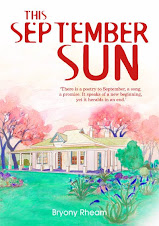
Jane Morris is an editor and publisher originally from Ebbw Vale. She moved to Zimbabwe in the 1980s when her husband Brian Jones took a job in the Applied Mathematics department at the National University of Science and Technology in Bulawayo. They set up amaBooks in the 1990s to publish emerging writers. One of their successes was Bryony Rheam whose novel This September Sun won the best novel award for Zimbabwe and went to No 1 on Amazon kindle.
On moving back to Wales in 2019 amaBooks have continued to be involved in the Zimbabwean literary scene. They are now based in Ceredigion. Here, Jane Morris talks to Bryony Rheam about her short story collection Whatever Happened to Rick Astley? which has just been published in association with Parthian Books of Cardigan.
Bryony, your latest publication, the short story collection Whatever Happened to Rick Astley? has an intriguing title. How did that title come about?
It all began with a Facebook post of mine. It was a Friday night and I was trying desperately to stay up until 9pm so that I could go and fetch my daughter from a party. I was remembering when I was a teenager and how we had to be out doing something on a Friday night and how early 9pm would have been then! It made me think of how quickly time flies, and how you become your mother. I was thinking of different songs that characterised my teenage years, which got me onto Rick Astley and then I wondered where he was and what he was doing. It was really comforting to find out that he had given up his singing career to bring up his daughter, and now she is an adult, he is making a comeback. There seemed to be a message in that for me. Life isn’t over just because you have reached a certain age, and each stage in your life brings different things.
You have said that you ‘don’t want to crush a story with politics’. How do you capture the effect that the economic and political situation has had on the lives of Zimbabweans?
It probably isn’t possible to write about Zimbabwe without bringing in the way in which we live and the way we have been treated by our government in the last twenty or so years. I think there is a difference though between showing how politics has shaped our lives and writing a ‘political’ story. For me, it’s in the background, but the main things in our lives are relationships and friendships and hopes and dreams. We don’t wake up in the morning and think of the government, but our lives are definitely influenced by the decisions that they make.
In what way do you consider that being a writer living in Zimbabwe has influenced your writing?
From a very early age, I have been able to connect with people’s emotions. It’s not always a good thing, believe me, because it can weigh me down. I pick up a lot of pain in people I meet. I know you could say that about people anywhere in the world, but there is this particular feeling that haunts Zimbabweans. We live in a fantastically beautiful country, but our lives are dominated by a haunting sense of loss. It is difficult to describe exactly because it is not as if Zimbabwe is in a war zone but there is definitely a feeling of something working against us. Writing about these things helps deal with the pain, especially if you can see a funny side to the story.
Do you identify with any of the characters in the stories?
There is a bit of me in every single story, but I think I identify most with the main character in ‘Whatever Happened to Rick Astley?’ – after all, it is a story based on my Facebook post! I draw a lot from real life, but I also change the details.
The academic, Professor Thabisani Ndlovu, who interviewed you for the launch of this collection in the UK, noted the level of interiority in a number of your characters as they delve deep to understand their situation and to move on. Could you comment upon this and give examples from the collection.
I have always loved authors such as Virginia Woolf and enjoy showing the inner thoughts of my characters. Often the shift in a story is merely in the thinking of one of the characters. I love taking a particular moment and showing everything that is happening at that particular point. Motivation is another aspect that I find interesting to explore: what takes us to a specific moment? What makes us do a specific thing. Most importantly, perhaps, what do we think, but don’t say? We spend our lives balancing our inner and outer worlds, often unconscious of our motivation for doing so. This is shown more in the stories with female characters: ‘Music From a Farther Room’, ‘The Fountain of Lethe’ and ‘These Things I Have Loved’, for example.
![]() |
| Whatever Happened to Rick Astley? |
Wales Arts Review has chosen Whatever Happened to Rick Astley? as one of its summer reads. Why do you think readers in Wales would be interested in reading your collection?
Although the majority of the stories are set in Zimbabwe, I don’t think you need to have been there to understand or engage with them. We all suffer loss, we all feel joy and we all experience fear. It is characters we identify with, not necessarily situations. I hope that readers anywhere would find the stories of interest – and perhaps learn about a place they know little of. Stories can teach us things that TV documentaries and factual articles can’t.
Incidentally, I have a strong Welsh connection through my mother who was from Swansea. Some of the experiences of the narrator in ‘Dignum et Justum Est’ were generated by things she told me: the way the English often put down the Welsh and the use of terms such as ‘boyo’. There is also a Welsh link in ‘The Piano Tuner’ where the main character, Leonard Mwale, has taken over the piano tuning business from a man called Thomas Jenkins. Another character in ‘Last Drink at the Bar’ has moved to Cardiff from Bulawayo and, whilst he is glad that his British roots have enabled him to escape Zimbabwe’s woes and move, he is also incredibly homesick.
Zimbabwe has a strong tradition of short story writing and it could be argued that a short story reflects the spirit of a particular time. The stories in the collection were written over a period of twenty years, starting with the first, ‘The Queue’, and ending with the story that gives the book its title, ‘Whatever Happened to Rick Astley?’. Do you think that your stories trace a time line in the lives of Zimbabweans?
Yes, I think so. ‘The Queue’ was written at the beginning of Zimbabwe’s economic woes and it reflects that awful feeling of desperation that many people, especially those on pensions, were facing. Hyperinflation, petrol queues and food shortages characterised those years. It was quite a terrifying time with many people losing their life savings and ending up on the poverty line.
Many, many people have left Zimbabwe over the last twenty or so years and, for the people left behind, it has been a very sad time and there are many lonely people with no family left here. Sometimes there is a resentment towards those people who have left; sometimes those who have left have struggled to fit into the countries they have moved to.
That feeling of homelessness is in stories such as ‘Moving On’ and ‘The Rhythm of Life’. I would really like Zimbabweans to imagine a new future. Often when we talk of moving forward, what we really mean is that we would like to go back to the past (even though there was no perfect time in the past!). Whatever Happened to Rick Astley? is about accepting the past is gone and that there is still a future to look forward to.
Bryony Rheam’s collection of short stories Whatever Happened to Rick Astley? is copublished by Parthian and amaBooks. It is available from all good bookshops.