Showing posts with label Raisedon Baya. Show all posts

Saturday, August 30, 2025

A review by Raisedon Baya of Tendai Huchu's The Maestro, The Magistrate & The Mathematician

There is literature that comes to you, sits with you, keeps you company, helps you sleep and then goes away and never bothers you or visits you again. Then there is literature that comes -usually without much fanfare or much ado - grabs you by the collar, sits you down, commands you to listen, asks you important questions, demands you to think, takes away your sleep and when it leaves, leaves you lost, unsure of what just happened or what you just experienced. Literature that touches you in places many others will not reach. This literature, rich and unflattering, is rare and special.

When I picked Tendai Huchu's book, The Maestro, The Magistrate & The Mathematician , I honestly didn't know what to expect. The title, somehow, looked heavy, brainy - complex. I honestly was in no mood for a heavy and complex read. Little did I know I was in for some ride. Several pages into the book Tendai Huchu had me sitting on the edge of the cliff, holding my knees, not knowing whether he wanted me to jump off or hang on.

Huchu swung me from one storyline to another, one character's life to another - from the Magistrate to the Mathematician, to the Maestro and back. He took me around Edinburgh, Scotland , showed me the streets, the nightclubs, the beach and homes where most immigrants spend their time doing care work - 'wiping bums' as many like to say. He painted characters that were so vivid, so realistic, so relatable - characters that had come overseas in search of dreams, characters still dreaming and those who had been uprooted and looked lost. He painted, and painted and painted.

Huchu's writing, the weaving of the stories, the details, the evidence of deep research, the humour - it sometimes just jumped on you from nowhere - and the richness of language made me want to pause after every chapter and call all my literature loving friends for a feast. 

This book, with it's strange title, was a lesson in reading, in literature. What it means, what it must mean for different people. What it can do to our lives. What is good literature and what is not? The books we read and the books we don't read. Who decides or influences our reading list. A subtle highlight of the complex relationship between readers, authors, and the literary world.

It was also a lesson in Zimbabwean music - that it has meaning and lessons and can be a soothing and powerful companion when one is uprooted from home and placed in some strange foreign land with its strange cultures and expectations. 

Another lesson was in diaspora/immigrant life. Tendai Huchu paints a vivid canvas about this kind of life. He gives it to you as it is. Like a doctor who gives you pills knowing they won't be sweet to the tongue or nurse that gives a child an injection knowing its sting will shock the child but also very aware of the necessity of the shock. Unflinching, yet necessary. 

Huchu explores themes such as immigration, identity, culture, politics, especially the complex relationship between Zimbabwe's official opposition and the ruling party. After putting the book down you'll ask yourself one question "is it a political novel or not?" And your answer to that will be interesting to other readers of the book.

Tuesday, July 15, 2025

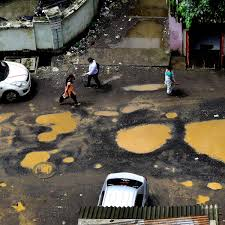
Potholes in 'Whatever Happened to Rick Astley?'


Raisedon Baya discusses the story 'Potholes' from Bryony Rheam's short story collection Whatever Happened to Rick Astley?, which was being discussed by the Bulawayo Book Club.

                                 ---------------------------------------------------

"Potholes"

I'm a sucker for political satire. I sometimes see it where it's not there. So please forgive me for seeing Potholes as some kind of political piece. Subtle but there. I don't know if there is anything called "covert satire" but in this piece I see a writer taking a short dig at politicians and the government. 

The futility of one man's, Gibson Sibanda's, attempt to solve a national problem is sad if not laughable.  Everyday we laugh at our problems and at ourselves. It's nothing new. The potholes are not only in Napier road but everywhere, as we later find out in the story. "He went first to Ilanda and then to Famona and finally settled on Pauling Road in Suburbs."

The dig is more pronounced when suddenly the city council wakes up to quickly fix the road because the the Vice President has bought a house in the neighbourhood. They quickly fixed the road so that the VP of the country would drive safely, and unbothered, to his new house. Here is a government of the people that has been captured and now panders to the whim of politicians. Politicians' lives have become more important than the ordinary people that the government claims to serve. Somehow priorities have been turned upside down. The servant has become the master. 

Potholes are a sign of roads gone bad. Unattended to. Unrepaired. And a danger to motorists. Potholes could also be a metaphor of something horrible gone wrong with our politics. Something that needs fixing immediately. And not by one person. 

Whether or not the author intended the piece to be a  political satire or not, the story effectively highlights the absurdity and injustice of a system that prioritises the needs of the powerful over those of the general population.

The story is also a typical example of "there is complexity in simplicity." It looks and reads so simple but on a closer look its depth is outstanding.  Potholes is just but of the 16 stories in Bryony Rheam's outstanding collection aptly titled Whatever Happened to Rick Astley?

Whatever Happened to Rick Astley?


Sunday, May 25, 2025

The Bulawayo Book Club discuss Bryony Rheam's 'Whatever Happened to Rick Astley?'

This month's meeting of the Bulawayo Book Club discussed Whatever Happened to Rick Astley? with the author of the short story collection Bryony Rheam. The book club is organised by Raisedon Baya and takes place at Alliance Francaise de Bulawayo.


Raisedon Baya's comments about the meeting, with two short story reviews by Raisedon, follow:


The Bulawayo Book Club just finished reading Bryony Rheam's collection of short stories entitled Whatever Happened To Rick Astley?. This is Rheam's third book after This September Sun and All Come to Dust. For the next few days I shall be doing some short reviews of some of the stories contained in the anthology.

Let me begin by saying the anthology offers thought-provoking insights into the human condition, societal issues, and the complexities of everyday life. Today I shall focus on "Potholes" and "The Piano Tuner". These two stories shed light on various themes like government neglect and the politicisation of public services, racial tensions and biases and the struggles of ordinary people in extraordinary circumstances.

Rheam's writing style, which hints at deeper meanings and leaves room for interpretation, adds depth to the narratives. 

"Potholes" is about how Gibson Sibanda starts fixing potholes in a road in Hillside suburbs and ends up moving to other roads. It is a simple story. Perhaps symbolic of how Zimbabwean roads have become. Anywhere, you know something is very wrong in a country when an individual who doesn't even own a car starts mending roads. The potholes are so many and the roads look neglected. Both local and national governments have abandoned their responsibility of mending roads. What is funny is the superficial mending of this one road because the Vice President of the country has bought a house in the suburbs. And they have to pretend to mend it. More hilarious is the fact they mend the road for an intended visit to the new house by the Vice President. A visit that never happens. A subtle dig by the author at our politicians and how simple decisions like mending a road have become political.

Then there is "The Piano Tuner". This one is set in Zambia but it might as well be a Zimbabwean story. A black piano tuner, Leonard Mwale, who apprenticed under a white piano tuner, takes over the business and continues to use the white man's name as the business name. (Doesn't this sound familiar?) On this particular day he is hired by an Indian client. The piano tuner is good. Very professional. He knows his work. Unfortunately, the Indian client discovers during lunch that he has engaged a black man and things change and racism rears its ugly head. It becomes clear that the Indian client would not have engaged the service of the piano tuner if he had known he was black. The invitation to lunch was extended to Thomas Jenkins the name, not the piano tuner. There are racial overtones in the story. So much that when the Indian leaves the payment for the service the money is short. He can't bring himself to pay a black man properly for proper service. The writer does not overwrite, she makes hints and leaves it to the reader to fill in the gaps.

With her current body of work I think Bryony Rheam now deserves to sit on the high table with other Zimbabwean literary giants. When we mention the likes of Tsítsi Dangarembgwa, NoViolet Bulawayo, Sue Nyathi, Siphiwe Gloria Ndlovu, we should not forget to include Bryony Rheam on that list. She has truly earned her spot.


Whatever Happened to Rick Astley? is published in Zimbabwe by amaBooks and in the United Kingdom by Parthian Books.


Wednesday, October 4, 2017

The House of Menka photos of the launch of 'Moving On'

From the House of Menka Facebook page


Saturday the 30 of September 2017 saw the launch of ‘Moving On and Other Zimbabwean Stories' a recent publication by amaBooks Publishers. The launch was part of the Intwasa Arts Festival in Bulawayo. The book launch featured writers from the anthology in conversation with our very own Tinashe Tafirenyika, a powerful poet, and Dr James Arnett, a Fulbright scholar at NUST, who both mediated the conversation.On the panel were: John Eppel, Mzana Mthimkhulu, Tariro Ndoro and Bryony Rheam. The conversation was very articulate as it delved into the individual writer's purpose of writing. The writers that were on the panel were also asked to comment on the impact of writing in Zimbabwe and being an African writer in the ever dynamic times from pre independence time to now. The writers revealed different aspects of their evolution as a writer. There was a clear desire among the writers that they prefer not to be labelled as black writer, white writer, woman writer, African writer but to be acknowledged as writers. However they all revealed their love and pride for being African and contributing to literature in Zimbabwe, Africa and internationally. 


The dialogue about the the writers individual contribution to ‘Moving On and Other Zimbabwean Stories' was fascinating as it revealed the state of mind of the writer and the state of the context in which their short story was created. 


The writers at the National Gallery in Bulawayo for the launch of 'Moving On and Other Zimbabwean Stories' were John Eppel, Adrian Fairbairn, Mzana Mthimkhulu, Tariro Ndoro and Bryony Rheam. The other writers in the anthology are: Raisedon Baya, Patricia Brickhill, Gamu Chamisa, Joseph Chikowero, Tendai Huchu, Donna Kirstein, Bongani Kona, Christopher Kudyahakudadirwe, Ignatius Mabasa, Barbara Mhangami-Ruwende, Christopher Mlalazi, Blessing Musariri, Togara Muzanenhamo, Melissa Tandiwe Myambo and Thabisani Ndlovu.


Monday, October 2, 2017

Bulawayo Launch of 'Moving On'

Photo courtesy of Mgcini Nyoni

The launch of 'Moving On and Other Zimbabwean Stories' at the National Gallery of Zimbabwe in Bulawayo, with a panel of four of the writers in the anthology - Bryony Rheam, John Eppel, Mzana Mthimkhulu and Tariro Ndoro - in conversation with poet Tinashe Tafirenyika and academic James Arnett.
Also at the launch were two other writers in the anthology Raisedon Baya and Adrian Fairbairn.


Photo courtesy of Mgcini Nyoni

Photo courtesy of Mgcini Nyoni

Photo courtesy of Mgcini Nyoni

Photo courtesy of Mgcini Nyoni


Photo courtesy of Mgcini Nyoni


Photo courtesy of Mgcini Nyoni


Tuesday, August 15, 2017

Why I Read: Raisedon Baya


My first serious read was a strange one – very strange for a young boy living right in the middle of the township. I was in Form 1 at Sobukhazi Secondary School and had just joined the Mzilikazi Community Library’s senior section. Why I joined the library when most of my friends and young boys my age were not members, and not interested in becoming members of the library, I don’t know even up to this day. Some of my friends and peers even went to their graves without seeing the inside of a public library.

Books were not the in thing for young boys growing up in Makokoba then. Young boys my age played hard, smoked hard, gambled hard, and hustled hard. There was no time to waste, no time for books and what many called girlish activities. The decision to join the library changed the course of my life and steered me away from danger and early death.

So there I was in the library, moving from one shelf to another looking for my first serious read. The library was always a cool place. The place had a good air conditioner that tirelessly blew a soft breeze around the room. Its floors were always sparkling clean as if the building didn’t belong in the township. You entered the building and immediately forgot that you were in the middle of Mzilikazi Township. After walking around, marvelling at the stacks and stacks of books neatly covered in plastic, I stopped at the African Section. This section was to become my favourite corner of the library for many years.

I remember picking a few titles before I saw it. I don’t know what drew me to the book but I remember holding Buchi Emecheta’s The Joys of Motherhood in my hands and feeling very excited. A strange choice for a young boy you might think. Why this particular title I have always wondered. I was just a boy, and very adventurous too, so why was I attracted to The Joys of Motherhood? My mother was not a joyful woman or mother then – she had too much to do and too many children to look after for her to sit down and savour the real joys of motherhood. Perhaps I took the book because it was the kind of book I wished her to read – just so that for a moment she could feel some happiness for contributing to the human race. (The basis of the novel is the necessity for a woman to be fertile, and above all give birth to sons – and my mother has six sons!)

Whatever the reason, I took the book home and plunged into the world of literature. My love for words and my serious flirtation with literature began that week. I was also very lucky to have a big brother who was an avid reader as well. My brother read anything printed. He ate words for breakfast, lunch and supper. He devoured books, in all their sizes, shapes and smells. He introduced me to the likes of Desmond Bagley, Robert Ludlum and to naughty writers like James Hadley Chase and Nick Carter. I remember him trying to hide Nick Carter's novels from me but I always found them.  I learnt to read faster so as not to get caught or to avoid him taking the books back before I finished reading.

In books I discovered a lot. I discovered priceless treasures. I discovered things neither my parents nor friends and peers could tell me. I discovered a world bigger and much better than Makokoba, Mzilikazi and the other townships I knew. I discovered that words could give me wings, wings I used to fly to places far and beyond. Books took me to countries I never imagined, books introduced me to many cultures. I travelled to Nigeria, South Africa, Ghana, Kenya, Cameroon, Senegal and other African countries – countries I didn’t even know where to place on the world map – through the eyes of writers like Ngugi, Es’kia Mphahlele, Njabulo Ndebele, Ousmane Sembène, Kalu Okpi, Micere Mugo, Can Themba, Grace Ogot, Nadine Gordimer, Wole Soyinka, Miriama Bâ and Chinua Achebe. I travelled to Europe and America on the pages of works by the likes of Agatha Christie, Desmond Bagley, Jeffrey Archer, Len Deighton, Leo Tolstoy and many, many others. Long before I knew what a passport was I had crossed borders. I was introduced to fascinating characters by these writers, some of these characters have stuck with me to this day.

I discovered that I could temporarily escape the poverty and monotony of township life through the pages of a book. Books became some form of escapism. With the years I realized the more I read the more better I became at seeing the world. The more I read the more I saw possibilities of getting out of the township. The more I read the more I wanted to write, to share my own stories – stories about where I came from and the people around me. I suddenly wanted my life, my friends’ lives and the world I lived in to also be on pages of books. Reading inspired me to write. 


Now I read for pleasure. I read to escape the harsh realities of my surroundings. I read to expand my horizons and knowledge base.  I read to feed my insatiable brain. Sometimes I read just to experience the sumptuous taste of good words strung joyfully together into beautiful phrases and sentences. – remember writing is like cooking, it’s art. I read because there is nothing that uplifts my spirits better than good literature. I read because there is so much joy wrapped up in ink and paper and this joy is much better than pizza, a box of chocolates or a bottle of wine. And so today I say enough respect to all writers and storytellers of the world. Thank you for writing and keep the stories coming.


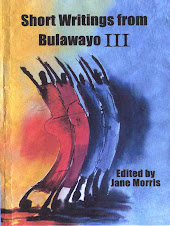
Raisedon Baya is a leading playwright, theatre director and festival manager based in Bulawayo. He has published a novel, Mountain of Silence, an anthology of plays, Tomorrow’s People, and features in an anthology of folktales, Around The Fire – Folktales from Zimbabwe. Some of his stories appear in Short Writings from Bulawayo II and III, and Where to Now? Short Stories from Zimbabwe, and his short story 'The Initiation' is to appear in Moving On and Other Zimbabwean Stories.
A former teacher and National Arts Council employee who worked at ZBCtv as a producer and commissioning editor, he has written over a dozen critically acclaimed and award-winning plays for television and stage. Several of his plays have toured Africa and Europe.
Two of his plays, Super Patriots & Morons and The Crocodile of Zambezi, are banned in Zimbabwe. In 2009 Raisedon Baya was a recipient of the Oxfam Novib/PEN Award for Freedom of Expression. He writes a weekly arts column for The Sunday News.

Monday, March 24, 2014

Launch of Siqondephi Manje? Indatshana zaseZimbabwe


with readings from their stories by Raisedon Baya, Mzana Mthimkhulu and Thabisani Ndlovu, and a reading of NoViolet Bulawayo's story by Sithandazile Dube.


Monday, June 3, 2013

amaBooks to translate book into isiNdebele


The Chronicle, 27 May 2013


AMABOOKS, the publishers of the story anthology, Where to Now?: Short Stories from Zimbabwe, are working on translating the book from the English language to isiNdebele to help promote the language.
The book would be titled Siqondephi Manje, Indatshana ZaseZimbabwe.
It is a collection of 16 short stories from Zimbabwean writers, the majority of them from Bulawavo.

In an interview, Brian Jones from Amabooks said they decided to translate the book into isiNdebele for the stories to reach a wider audience as well as promoting the language.
"The majority of the stories in the collection were written by Bulawayo writers in and out of the country and we realised that sometimes they think in isiNdebele and some of the words lose meaning in the process of translation into English.
"The stories often read much better in isiNdebele because it's the writers' mother tongue and some of the humour works better in isiNdebele," said Jones.
He said South African based writer Dr Thabisani Ndlovu was translating the book.
"So far, three stories have been translated by Dr Ndlovu, who is based at Wits University, and we are expecting that he would be done by the first of July.
"Zimbabwe has good writers and we want the stories they tell to be available locally as well as reach out to a much wider audience," he said.

The 150‑page anthology is made up of stories that deal with various social issues, among them life in modern day Zimbabwe, traditional values, modern life and the particularly changing role of women in today's society.

Where to Now is the fifth short story collection from Amabooks publishers.
The other books in the series are Short Writings from Bulawayo I, II and III, and Long Time Coming: Short Writings from Zimbabwe.
"The first books were mainly made up of pieces from Bulawayo writers because we were the only publishers in English here at that time, but we have since attracted Zimbabwean writers from all over the globe so we felt we should stop calling the books 'from Bulawayo’," said Jones.

Barbara Mhangami Ruwende's Christina the Colourful has been translated as Itshatshazi ElinguChristina and Mzana Mthimkhulu's I am an African am I? as NgingumAfrica Akunjalo?
Some of the popular short story writers are Raisedon Baya, Caine Prize winner NoViolet Bulawayo, Christopher Mlalazi, John Eppel and Mzana Mthimkhulu, among others.
Jones said they are expecting the book to be available on the market in September.
The project is funded by the Open Society Initiative of Southern Africa.


Auxilia Katongomara, Entertainment Correspondent

Thursday, August 16, 2012

Where to Now? review in The Zimbabwean


Where To Now?

Published by amaBooks
Genre - Fiction

Review by Jerá

from http://www.thezimbabwean.co.uk/entertainment/art-and-literature/60080/where-to-now.html


Where To Now?Short Stories from Zimbabwe, published by ’amaBooks and edited by Jane Morris, is an anthology of 16 potent short stories by Zimbabwean writers. It is the 5th anthology in the short writings series that have been released by ’amaBooks and follows up from the acclaimed 4th collection – Long Time Coming: Short Writings from Zimbabwe.  This latest book is a co-publication with Parthian Books of the United Kingdom and – having been launched at the Jozi Book Fair and the National Gallery of Zimbabwe in Bulawayo, as part of the Intwasa Arts Festival – will be launched in the United Kingdom later this year.

Blessing Musariri.
Blessing Musariri
By blending the works of new writers with more established authors, ’amaBooks seeks to promote previously unpublished writers.  Names that are immediately recognizable, among the array of writers, are award winning playwright, Raisedon Baya, award winning author, John Eppel and Oxfam Novib PEN Freedom of Expression award winner and NAMA award winner, Christopher Mlalazi.  Award winning author of children’s books, Blessing Musariri, winner of the Zimbabwe Book Publishers Association’s Best First Book Prize in 2010, Bryony Rheam and woman of the moment, 2011 Caine Prize winner, NoViolet Bulawayo, also grace this collection.


Most of the stories are set against the backdrop of the country’s decade of hyper inflation, economic demise and political strife but, as displayed in this book, Zimbabwean writers do manage to find humour.  It is not all comedy.  The stories in the anthology are divergent in theme – from comic, tragic, social commentary and allegorical.

Caught in a compromising position, a wife outsmarts her husband in Mapfumo Chihota’s comical tale of spousal infidelity - A Beast and A Jete.  Set in rural Zimbabwe, this story leaves a lasting impression for its humour and its clever plot.

Barbara Mhangami’s Christina the Colourful, also within a rural setting, continues the theme of womanly triumph.  However, it is something of a paradox, in that the author illustrates the oppression of women, yet the main character’s chosen profession – prostitution – it can be argued, is one that perpetuates the very same oppression, from which women seek to flee.  However, as a story, Christina the Colourful is well constructed and stands out as one of the best written pieces of the anthology.

The poignant and tragic tale of sexual abuse, Making a Woman, by Thabisani Ndlovu, illustrates the prejudices existing in society, against people with physical disabilities and the social pressure on women to marry and enter into motherhood.  While Mongi, the lead character, a deaf woman, claims a victory of sorts over the men who abuse her, she is left mentally and physically scarred from the ordeal.

Snapshots, set in inflation ravaged Zimbabwe, will draw smiles and chuckles from every reader, before turning into a tragic narrative, in NoViolet Bulawayo’s characteristic style.  The characters, for their names and their quirks, will remain in readers’ minds, long after the story ends.  It is typical NoViolet; uncomplicated yet intense.

Crossroads illustrates the trials and tribulations faced by the Zimbabwean immigrant – from visa application to arrival in Mzansi – in search of a better life.  Precocious talent, Novuyo Rosa Tshuma, in this story – as with all her previous works – is a sculptor of words.  Novuyo, who, at only 21, won the 2009 Intwasa Short Story Competition, is a skillful writer who, by her work, promises to emulate past literary greats, such as Yvonne Vera.

Nyevero Muza’s The Poetry Slammer is an unforgettable piece, whose concept is unique, in that there is a character within a character and a story within a story – Nhamo, the lead character is a writer, who invents the story of a performance poet and it is the latter character who dominates this memorable tale.

In this era, where professional women are forced to choose between boardroom success and family, Alone, by Fungai Machirori, is a relevant piece, which is notable for its superb construction and humour.

In this reviewer’s opinion, Sudden Death, by Blessing Musariri is the most outstanding story.  Musariri’s use of language and her writing style, which appears so effortless, will endear her to most readers. Rosanna, known to her colleagues as Agnes, is a care worker, living in England.  Together with her husband, Simba, they labour tirelessly to save for their dream home, back in Zimbabwe.  An unexpected telephone call brings bad news.  The humour of this tale turns into heartache.  This funny and, in some instances, quirky story deserves special mention among a line-up of 16 beautifully composed, expertly edited, fiction stories.

Where To Now? is a recommended read and would be a worthy addition to the bookshelf of any fan of Zimbabwean literature. 

Tuesday, October 11, 2011

Where to Now? reviewed in Newsday


Where to Now? — Short Stories from Zimbabwe
REVIEWED BY CYNTHIA R MATONHODZE - Oct 11 2011 06:43
Editor: Jane Morris
Publisher: ‘amaBooks, Bulawayo, 2011, 146pp

The anthology Where to Now? Short Stories from Zimbabwe features a mixture of 16 Zimbabwean writers, some new and others well known, among them 2011 Caine Prize winner NoViolet Bulawayo and 2011 World Summit Youth Awards runner-up Fungai Rufaro Machirori.
Published by ‘amaBooks, it is the fifth book in a series of short story writings the first being Short Writings from Bulawayo (2003)* and the most recent one Long Time Coming: Short Writings from Zimbabwe (2008).
Where to Now? casts autobiographical tales of life and living in Zimbabwe’s lost decade when the economy crumbled, inflation reached dizzy heights, violence replaced the rule of law and most people fled the country.
What is autobiographical about these stories is different Zimbabwean authors delivering narratives that speak of events, phases, characters and images that are conspicuously Zimbabwean, creating a lingering reflection which prompts the reader to ask: Where to now? From the black purchasing manager who struggles with whether or not he is a true African — when a fellow colleague accuses him of being a sell-out for eating isitshwala with a fork and knife and only using the company fuel allocation he needs in Mzana Mthimkhulu’s I am an African, am I? to the couple that goes to the UK, each assuming another identity, to work and send money home to build their dream house only to be swindled by a relative who had been sending them pictures of someone else’s house in Blessing Musariri’s Sudden Death — each story tickles the memory to recall that period and sometimes even crafts out a memory that will have you sad, in stitches, inspired, disillusioned or even questioning yourself.
For example, Raisedon Baya’s Her Skin is a Map and Novuyo Rosa Tshuma’s Crossroads, both writers tell the story of migrating to South Africa. One traces the events that lead most to leave while the other sketches out the tedious humiliating process many Zimbabweans went through for the promise of a better life, only to have that hope shattered by reality. Etched in these tales are themes such as violence, corruption, family disintegration, desperation, hope and disillusionment. Baya uses nature and the park to lament and trace the deterioration of human relationships in society, in Zimbabwe.
“The park has changed. The grass is no longer entwined together like lovers. The grass is gone, replaced by an angry gold that attacks the eyes. The trees look unhappy, betrayed. If they could walk they would have left the park a long time ago.” (p56). Now, “The people that come to the park now are not lovers with spirits, they are not families that want a day out, but unemployed people who are hungry and tired of hunting for jobs and are here to rest and hide from prying eyes,” (p58).
Baya remembers happier times where as a little boy they would have a picnic in the park at Christmas with his family, everything joyous with the promise of independence. Now when he takes his own family to the park they end up being badly beaten up by riot police who suspect that they are striking teachers. Then and there he makes up his mind to leave with his family for Durban.
Tshuma creates a vivid image of the process of migrating in a young woman’s journey from Zimbabwe to South Africa in the hope of getting a job and saving up enough money for university. In Zimbabwe – no water, no electricity (depending on where you stay), a never-ending queue at the South African Embassy with enterprising individuals that sell their positions in the queue.
At the border — never ending queues, rude and indifferent immigration officers, stories of having been robbed in South Africa and the public toilets that read:

Toilet paper only
To be used in this toilet
No cardboard
No cloth
No Zim dollars
No newspaper p (69)

Baya and Tshuma clearly and skillfully capture memories of that sad period in Zimbabwe’s history, painfully personal for most. There are some lighter stories like Mapfumo Clement Chihota’s A Beast and a Jete which is a story within stories of clever women that out smart their husbands.
Other stories include themes such as xenophobia, poverty, marriage, lost hope, infidelity, love, misplaced hate, the new generation of women, a dishevelled society, loneliness, the pain of remembering, death, coming home, the born-frees, political machinations, life in limbo and black and white relations.
Other contributors include Barbara Mhangani-Ruwende, Thabisani Ndlovu, Bryony Rheam, Nyevero Muza, Christopher Mlalazi, Diana Charsley, Murenga Joseph Chikowero, John Eppel and Sandisile Tshuma.

Thursday, December 17, 2009

The Zimbabwe Independent congratulates Bulawayo writers


The Zimbabwe Independent congratulates three Bulawayo-based writers who have published their first books in a special supplement on 18 December. The writers, Bryony Rheam, Christopher Mlalazi and Raisedon Baya, are all graduates of the British Council Crossing Borders Creative Writing Project and have all been published by 'amaBooks.
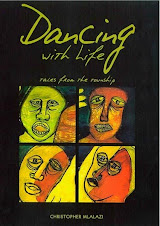
The three first books featured are Bryony's This September Sun (published by 'amaBooks), Chris' Dancing with Life: Tales from the Township (published by 'amaBooks) and Raisedon's Tomorrow's People (published by Homegrown Arts).

Wednesday, November 18, 2009

Meet Owen Sheers in Bulawayo


The British Council in Bulawayo are organising a Management Express meeting for Friday 20 November at 5.30pm at the Bulawayo Rainbow, where Owen Sheers will talk about his own work and links with Zimbabwe, and read from his books. Owen is a poet, novelist, playwright, actor and BBC TV presenter from Wales. He is best known in Zimbabwe for his semi-fictionalised account The Dust Diaries, recounting the life of his great-great uncle, Arthur Shearly Cripps, maverick missionary to Southern Rhodesia. The event will also recognise the achievements of three Bulawayo graduates of the British Council Crossing Borders creative writing project, Bryony Rheam, Christopher Mlalazi and Raisedon Baya, who have all recently had books published. All are welcome.