Showing posts with label Textures. Show all posts

Sunday, February 26, 2023

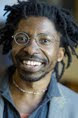
Togara Muzanenhamo wins the 2022 Luschei Prize for African Poetry


Togara Muzanenhamo has won the 2022 Luschei Prize for African Poetry for his book Virga published by Carcanet. 
To read the Luschei Prize's guest judge @matthewshenoda's comments and learn more about the finalists, visit: https://t.co/ZmT2CiuYVn 

Togara's poetry was published in Zimbabwe by amaBooks in the anthology Textures, together with poetry from John Eppel.  Textures won the Zimbabwe National Arts Merit Award for Outstanding Fiction in 2016. It is available in Zimbabwe through Inganu Bookshop at the Orange Elephant, River Estate, 12th Avenue Extension, Bulawayo (WhatsApp +263 772 851 609)   and in the United Kingdom and North America through  the African Books Collective (https://www.africanbookscollective.com/books/textures).


Sunday, June 16, 2019

Togara Muzanenhamo in Amsterdam


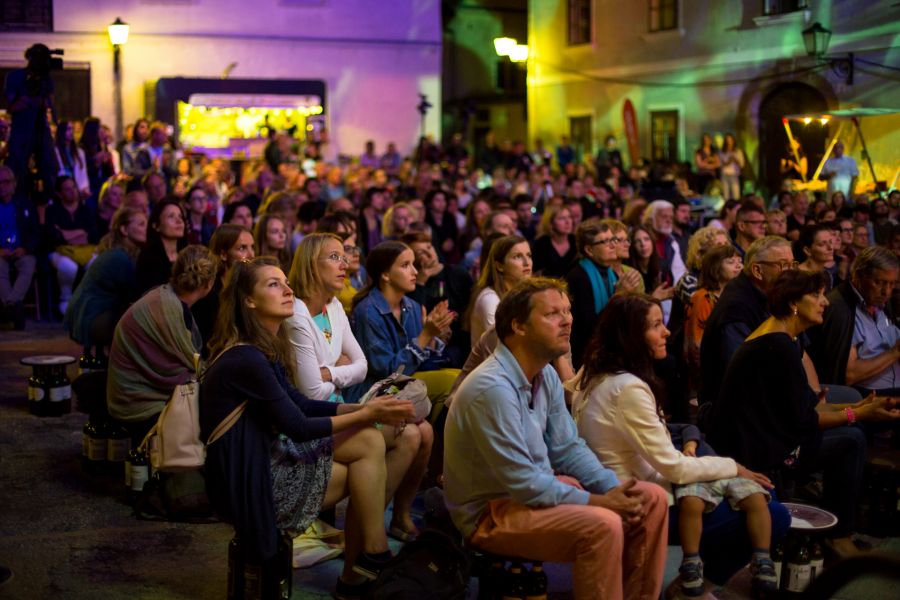
Waterstones are to welcome two outstanding poets to their bookshop at Kalverstraat 152, 1012XE, Amsterdam, on Tuesday 18 June at 19.00.

Togara, from Zimbabwe and Thomas, from The Netherlands will be reading from their work and answering your questions.

To reserve a seat for this free event please contact Amsterdam@waterstones.com
Entry is by reservation only. Please book early as places are limited.

Togara Muzanenhamo was born to Zimbabwean parents in Lusaka, Zambia in 1975. He was brought up in Zimbabwe, and then went on to study in The Hague and Paris. He became a journalist in Harare and worked for a film script production company. His work has appeared in magazines in Europe, South Africa and Zimbabwe, his collections Spirit Brides and Gumiguru are published by Carcanet, and his anthology with John Eppel, Textures, is published by amaBooks.

Thomas Möhlmann has published four books of poetry in Dutch and compiled eleven poetry anthologies in the Netherlands, Macedonia, Argentina, Colombia and the UK. He teaches at the Academy of Arts in Arnhem and the Amsterdam Writers Academy, and is one of the editors of Dutch poetry magazine Awater.


Monday, March 18, 2019

amaBooks at the Earth Cafe


We are excited to be doing an event at Earth Cafe in Bulawayo organised by Hubbard's Historical Tours. As well as talking about our publishing journey there will be readings by three writers, John Eppel, Mzana Mthimkhulu and Bryony Rheam. 

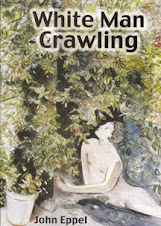
John will be reading poems from three amaBooks collections: Caruso of Colleen Bawn, White Man Crawling and Textures.  John's readings will be accompanied by the acclaimed young cellist, Emma Price. 

Bryony Rheam will read from her forthcoming novel All Come to Dust and Mzana Mthimkhulu from his humorous story, 'What's in a Name?' from the amaBooks collection, Moving On.

Books will be sold at reduced prices on the night. Tickets for the event, which includes a two-course dinner, can be booked through Liz at Earth Cafe on 0712 209 565.

The event is supported by Alliance Francaise de Bulawayo.

Wednesday, August 15, 2018

Textures reviewed in The Herald


Stanely Mushava, Literature Today, The Herald
Book: Textures
Authors: John Eppel & Togara Muzanenhamo
Publishers: amaBooks (2014)
ISBN: 978-0-7974-9498-5
When the muses refuse to smile on a poet, he runs out of inspiration but when a woman refuses to smile on him, a creative current carries him along. If not for this irony of deprivation, Dante, John Keats and Thomas Hardy may never have attained half their stature, and poetry would have been poorer for the equilibrium. John Eppel’s impassioned reminisces for lost love in “Textures” make for a Zimbabwean version of the deprivation theory.

“Textures”, the dual effort by highly regarded poets Togara Muzanenhamo and John Eppel, is a league apart for its classical forms, musical cadences and cosmopolitan depth of field.
Zimbabwean poetry, often politically themed, thrives on immediacy, rejects classical forms, branding them synonymous with colonial tradition, utilises the canon of cultural decolonisation and is almost uniformly set to free verse.
Muzanenhamo and Eppel’s joint anthology is an apparent revolt against the post-colonial canon and fares exceptionally as a new aesthetic school.
As if to confirm John Keats’s wager: “The poetry of the earth is never dead,” “Textures” won the National Arts Merit Award (Nama)’s main literary accolade this year, the second consecutive time a poetry collection has landed the honour.
With poetic thoroughbreds like David Mungoshi and Emmanuel Sigauke hunched over their keyboards this year, poetry may be bound for a third consecutive honour in the previously prose-dominated category.

Eppel’s Bulawayo sequence is set to sonnets, odes, sestinas, villanelles and Romantic references, while Muzanenhamo employs modernist frame and a cosmopolitan depth of field.
Irony of history, loss of love, sense of mortality, appreciation of beauty, invocation of forgotten feats line and the debilitating trail of war line the thematic taskbar of the two poets for the most part.
The trouble with the anthology, however, is the poems are often densely pixilated and cryptic to a fault.
While both poets ably set forth their scenes and provide the musical ambience, their ideas are sometimes buried in the aesthetics.
On first reading, the meaning flies over your head, on second attempt the jigsaws seem to come together, third time you want to be sure you got it right, and so forth.
If this is a flaw, though, then it has its side benefits. It makes the anthology more durable than the immediate ones which the reader stacks away after reading them once because there is nothing deeper.
With this anthology, after gleaning the alluvial nuggets in the beautifully structured stanzas, you have a conviction that what you see is not all there is to know and you keep coming back for more.
The esoteric tendencies of Muzanenhamo and Eppel are perhaps the occupational hazard of being too style-conscious.
In an interview with Drew Shaw, then a lecturer at NUST, Eppel explains the paradox faced by lyric poets “where they actually want to get rid of words, but the only way they can get rid of words is by using words. So there’s this movement from sense to dominating to sound dominating.”
That could explain how the reader can resonate with the flow and the scenery but still not come away wiser for the exercise.
Sometimes, especially in Muzanenhamo’s case, you feel that imagist economy could have worked neater but potency of diction eventually carries the day.
Texture is generally defined as the feel, appearance, or constancy of a surface or a substance but has different renderings in music, visual art and textiles.
“Both poets considered musical metaphors for the title of this collection but chose the more visual name ‘Textures’, which is appropriate, Eppel said, ‘because the word text is from the Latin texere, which basically means to weave hence the word textile… and the idea of the woof and the warp is appropriate for poets who are interweaving their texts in one book’,” Shaw relates.

Some of Eppel’s poems are double-layered where you have a visual sequence preceding a personal emotion.
And because “none throws away the apple for the core”, as John Bunyan said, each layer is meticulously attended sensory stimuli retaining appeal to the point of emotional disclosure.
The opening poem, for example, sets out a suburban setting, lonely but for the routine ambience of nature, in the first stanza. The second stanza, switched to another rhyme scheme, seems to recall lost love and the departed companion is imagined “smiling at him the way you smiled at me”.
“Only Jacarandas” seems to give a nod to the resilience of natural beauty; whereas displays are set for other forms to shine, “jacarandas/ can take their reflection/ from the dull sky of tarmac”.
The elderly poet is at it again in his sonnet sequence, “The Hillside Dams in Bulawayo,” reminiscing about lost love with more “you sections”.
One recalls Hardy (I gather some place that he is Eppel’s favourite poet) in his futile quest for Emma and the beautiful poetry occasioned, among listless sceneries, by his recollections of the “woman much-missed”.
The third entry in “Four Villanelles” and third poem, “Looking for You”, also seems to recall his Beatrice, Emma or Fanny, although the poet’s esoteric tendency does not allow for solid grounds.
The first villanelle on man’s conquest of woman has a political drift. “Davids are Goliaths in waiting/the corrupting effect of power/it’s a maxim worth restating”, the poet observes.
“In Beauty is Truth, Truth Death”, the poet reflects of the brevity of beauty, its subservience to the cycle of seasons, and in that thread, invokes a sense of mortality.
“Appropriating the Land”, a colonial reconstruction satirises a minority dispensation closer to nature than to the people, hence “bossy warnings/with words like ‘forbidden’ / and ‘only…’”
Suburban Eppel only ever gets out of Bulawayo with the poem “Dorothy Recollects”, a reconstruction of the Romantic poets William Wordsworth and Samuel Coleridge.

By contrast, young Muzanenhamo is cosmopolitan, globalist and modernist. His settings are as varied as USA, UK, Norway, France, Peru, Mozambique, Somalia and Zimbabwe, almost as an afterthought.
Muzanenhamo articulates the universality of human experience and the transcendence of literature, a view also espoused by Dambudzo Marechera and Wole Soyinka.
“It fascinates how similar people are,” Muzanenhamo says in an interview with Dr Shaw. “You go to any country and find that we all possess the same emotions; we speak different languages, and there’s a different landscape, but the baseline of all humanity strums at the same rhythm.”
“Gondershe”, a poem about a child soldier surrounded by his dead comrades on a Somalian beach, himself waiting to die is a forceful indictment on war.
“Having never fired a gun before, he held the rifle/as though the weapon were a dying child about to say something/ only they could share… Come dawn there would be no escape/He would die. Even the sea would burn,” Muzanenhamo relates.
“Zvita”, an anatomy of death, is singularly unsettling. Whereas December is the cropping season, synonymous with new life, Muzanenhamo appropriates the last month as a symbol of the end of life.
In “Mercantile Rain”, Muzanenhamo reconstructs the vagaries of war. Through a war that came with “loud with every death, dark with every monstrous fear”, a surviving soldier will never get over the loss his wife and family.

Unfortunately, Muzanenhamo occasionally comes across as gross, sometimes too enigmatic. But he has already staked his claim as one of the most sophisticated Zimbabwean poets writing today.

Monday, May 14, 2018

'Textures' published in North America


Textures, poetry by John Eppel and Togara Muzanenhamo, is now available across North America through Canadian publisher Guernica Editions.

Textures was published in Zimbabwe by amaBooks in 2014, and is available elsewhere in the world through the African Books Collective. The book won a Zimbabwe National Arts Merit Award for Outstanding Fiction.

Dan Wylie, Professor of English at Rhodes University, in his review of Textures, commented that:


"In a way, the two poets are united by so high a degree of craft that almost every poem – they are not all equally weighty or felicitous – serves as a kind of meta-meditation upon poetry itself."
Togara Muzanenhamo reads 'Gondershe' from Textures, with Leo Svirsky.
Togara Muzanenhamo:
Born in 1975, Togara Muzanenhamo studied Business Administration in the Netherlands and in France. He has worked as a journalist and a film script editor. His poems have appeared widely in international magazines, journals and anthologies. In 2006 his debut collection of poems, Spirit Brides, was published by Carcanet Press and shortlisted for the Jerwood Aldeburgh First Collection Prize. The Times Literary Supplement welcomed the poet as a young writer of solid distinction: ‘he can be “cool” but seldom “light”. His best writing makes no reference to itself, does not allow itself to be damaged by over exuberant metaphor.’ In 2012 Muzanenhamo was chosen to represent Zimbabwe at Poetry Parnassus in London, ‘the biggest gathering of poets in world history’, where he read at the gala event with Seamus Heaney, Kim Hyesoon, Bill Manhire, Kay Ryan and Wole Soyinka at the Royal Festival Hall. Poetry Parnassus was part of the Cultural Olympiad that preceded the 2012 Olympic Games. His second collection, Gumiguru, is published by Carcanet Press. Muzanenhamo's short story 'The Silt Path' is published in Moving On and Other Zimbabwean Stories (2017).


John Eppel reads 'A Suburban Night in August' from Textures
John Eppel:
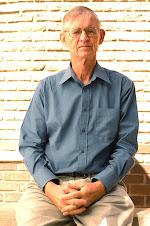
John Eppel is an award-winning poet and novelist. His first novel, D.G.G. Berry’s The Great North Road (1992), won the M-Net Prize in South Africa. His second novel, Hatchings (1993), was short-listed for the M-Net Prize and his third novel, The Giraffe Man (1994), has been translated into French. His other novels are The Holy Innocents, The Curse of the Ripe Tomato, Absent: The English Teacher and Trafickings.
His first poetry collection, Spoils of War (1989), won the Ingrid Jonker Prize, and his collection Landlocked was recently published in the UK. His short story and poetry anthologies are The Caruso of Colleen Bawn, White Man Crawling and Together (with Julius Chongono). Other poems have been featured in anthologies that include The Heart in Exile: South African Poetry in English 1990-1995 (1996) and Intwasa Poetry (2008), while his short stories have appeared in anthologies that include Short Writings from Bulawayo (2003), Short Writings from Bulawayo II (2005). Writing Now: More Stories from Zimbabwe (2005), Short Writings from Bulawayo III (2006), Laughing Now (2008), Long Time Coming: Short Writings from Zimbabwe (2008), Where to Now? (2012) and Moving On and Other Zimbabwean Stories (2017). 


Monday, August 21, 2017

Poetry, Wine and Togara Muzanenhamo in Slovenia


If you are interested in poetry and wine, and happen to be in Slovenia this week, why not pop along to the 'Days of Poetry and Wine Festival', featuring, amongst others, Zimbabwean poet Togara Muzanenhamo.

On Tuesday 22 August, Togara will read from his work with China's Ouyang Jianghe and India's Sharmistha Mohanty at the Villa Podvin in Radovljica from 19.00 to 22.00.
As well as poetry, there will be tasting of Marof wines, with dishes by Chef Uros Stefelin.
Entrance: 5 EUR, includes 2 glasses of wine.


On Friday 25 August at 8pm, there will be another reading by Togara, this time with America's Ani Gjika and Mexico's Pura Lopez Colom, at Franc Ksavar's Meska Ormoz Library, again as part of the 'Days of Poetry and Wine Festival'.


Tuesday, September 27, 2016

The African Books Collective has launched 'Read African Books'


 Read African Books offers a place where people can come to read about the latest books, news, reviews and comment, on African publishing.

The extracts section contains samples of John Eppel and Togara Muzanenhamo's poetry from Textures. You will also find a poem from each of the poets in Textures below.

African Books Collective (ABC) was founded in 1989 by a group of African publishers to supply libraries and other book buyers worldwide with African published books. ABC was established as a 'non-profit', covering its overheads only, and remitting sales income to African publishers. On the one hand, ABC addresses the hurdles for Northern libraries in acquiring books from Africa; and on the other, strengthens African publishers by providing international exposure and valuable sales income.

Read African Books is intended to help grow awareness of the issues affecting African books and publishing - to celebrate its diversity - and to increase the visibility of African books worldwide.

 See more at: http://www.readafricanbooks.com/about#sthash.vDdwahYa.dpuf


Friday, April 1, 2016

Ten Contemporary Poets in Sub-Saharan Africa : Writivism

Togara Muzanenhamo
from:http://writivism.org/2016/03/21/1076/
By: Samira Sawlani
Writer’s note: This list is just a snapshot of the poetry talent currently thriving in the African Continent, not included are the numerous poets whose poetry takes form in African languages or those that are based in Francophone Countries.

Across the African continent, poetry has been part of tradition embedded in various cultures and histories and passed down through generations.
Indeed many of the World’s most renowned poets throughout history have been from Sub-Saharan Africa. Some examples include Somalia’s Hadrawi (Mohamed Ibrahim Warsame); Chinua Achebe and Mabel Segun of Nigeria; Kofi Awonoor and Ama Ata Aidoo from Ghana; Sudan’s Mahjoub Sharif; and Keorapetse Kgositsile of South Africa.
Be it colonialism, independence, apartheid, love, motherhood, war, peace, relationships, these individuals and many more have narrated their experiences through the power of the poetic pen.
Similarly, poets in the African Diaspora like Warsan Shire, Nayyirah Waheed, Safia Elhillo, JJ Bola and Tapiwa Mugabe (and many more) are creating magic with their words and receiving the accolades to prove it.
Not to be outdone, the literary scene across Sub-Saharan Africa is overflowing with talented poets. One only has to attend any of the numerous literary festivals, book fairs and spoken word events taking place across the continent to spot these individuals or discover their musings via the internet.
Their poetry is not just art– it gives voice to the challenges and unjustness faced by so many. It articulates both individual and collective struggles and promotes self-acceptance, self-love, and self-adoration in the face of a global order which constantly tells us we are not enough.
So without further ado, here is a list of ten poets in Sub-Saharan Africa challenging the world, one poem at a time.
 1. Ijeoma Umebinyuo (Nigeria)
Once in a while a poet comes along and one finds that there are not enough words in the dictionary to do justice to the exquisiteness of them and their work.
Ijeoma Umebinyuo is that poet.
Born and raised in Lagos, her poetry collection ‘Questions for Ada’ left me speechless. As I devoured each poem I realised I had been holding my breath, simultaneously dismantled and invigorated by her work. Weeping, smiling, softened, hardened all in one.
In Diaspora Blues she writes words that pierce like arrows at the reader’s softest parts:
‘So, here you are
too foreign for home
too foreign for here.
Never enough for both’
There are also messages of self-love and self-acceptance in the poetry of Ijeoma Umebinyuo:
 ‘You are breathing
Perhaps a bit hurt
Perhaps a bit pained
But
You are breathing
And that’s enough to wake the angels still living in your chest’
               
It is a bible for women, a celebration and reminder throughout such as ‘The woman alone, finding parts of herself she never knew existed, will always be more powerful.’
These are poems for the lost, for the found, for the brokenhearted, for the lover, for those drowning in home– they are for all of us.
 2. Michael Onsando (Kenya)
Michael is one of those rare writers whose work– be it poetry, politics, fiction or non-fiction—hits a standard of perfection which many can only dream of.
Based in Nairobi, his book ‘Something Quite Unlike Myself’ has made waves since its release last year, he describes it as being about ‘being a stranger in your own body. Being a stranger in your own city, your own country. So while the book is much about looking, and failing, to find oneself, it is also about the state of affairs in the country and reconciling the idea that somehow things will get better with the reality that – without any real work from us – they won’t.’
In ‘Still’ he explores the stereotypes which lead to the idea of the ‘Big, Black Kenyan Man’ being invincible:
‘And then a word
and then a cut
and then another.
And then pain. 
 And display of pain. 
Still, it’s okay. It’s a big black Kenyan man.
A big black Kenyan man.
And the big black Kenyan man is…
invincible’
The use of poetry to express the realities of the world around us is almost as old as the tradition of poetry itself, and it is in this that Onsando really excels. There is no topic he does not touch– from political oppression to extra-judicial killings to the words and acts of Kenyan politicians.
Michael Onsando’s style of writing can best be described as innovative, and of everything he has written, the one line which says so much is ‘She asked me about my blistered feet, I asked her about her manicured hands’.
 3. Liyou Libsekal (Ethiopia)
‘Heavy beauty’ is the phrase which encapsulates the poetry of Liyou Libsekal, winner of the Brunel African Poetry Prize 2014. Born in Ethiopia in 1990, she spent a number of years travelling, living and studying in the US before returning to Addis Ababa. Perhaps this is why every word, every line of Libsekal’s poetry left me yearning, weighed down and mesmerised. For it explores identity, displacement and the reality of growing up away from home and in all this the self and the body are presented as bearing the consequences.
Her words have a rhythm, in ‘Childhood was mud-play and dirty fingernails’ she writes
 ‘I was born to a woman whose hands are washed with ritual
balancing act
temperatures and tempers
home grown versus raised afar,
cleansing finales’
 While vivid descriptions loudly echo off the page in ‘My Father Calls me Bibish’
‘Squeezing ear ready to split wild
of gunshots hailing an end to terrors red
twenty-three times three six five
each into strands/into pores of even hands’
To do justice to Libsekal’s work requires a separate article in itself, perhaps my experience of it can be summed up in a line from her poem ‘As a Child I practiced Walking with My Eyes Closed’:‘And everything pours out of my ribs’.
4. Lebogang Mashile (South Africa)
Very few poetry lovers are unfamiliar with the work of Lebogang Mashile. Writer, poet, producer, actress and winner of numerous awards including the prestigious Noma Award for Publishing in Africa 2006. Her poems so powerful you almost forget to breathe.
In I smoked a spliff with Jesus Christ last night there is humour, yet underlying pain and darkness as she writes:
‘But he was Jesus, and I’m a sister, so I’ve been through more shit.
Cuz I’m black, and life in hard in Jozi when you’ve got tits’
‘HIV Test Number Six’ hits the reader so hard that no analysis or description will do it justice:
‘I can no longer keep count of the women you put inside of me. They are white noise on a black screen. Familiar tastes on a foreign tongue’
There is a feeling of empowerment which permeates through Mashile’s poetry as she explores race, love, and feminism. Perhaps this excerpt from ‘There is a me that I could be…’ captures it best:
‘tomorrow is an infinite portal with no ceiling and no floor. There is only the ledge that beckons us and wings designed for us to soar’
5. Ketty Nivyabandi (Burundi)
Most recently Ketty Nivyabandi made headlines when she led protests in Bujumbura, partaking in what she called ‘Burundi Activism’. This passion is not just reserved for her country, for it permeates through her dazzling poetry, which also serves as a channel for her activism. The poems take various forms, in English, in French, some translated, some not. The dynamism of this masters of words, the poignancy to#Burundi2015, a tribute to her Country:
‘may you be more than a game of cards
may you be more than dry bones
may you have flesh, lovehandles and curves…
may you be more than sour beans
may you be sumptuous feast
feeding me to sweet peace
for I (Burundi)
am a queen’
Then this lyrical summary, ‘Of love’, juxtaposing both love and loss of it:
 ‘Falling in love :
A flowering of the heart.
An opening. A stretch, out to the world. A sunflower courting the sky. Two eyes closed. A tongue, searching the sky for a drop of rain. And the way it curls after finding it…
Falling out of love :
A shedding of the heart.
A soft wrinkling.  A scar. The crisp cool air that licks the musty room clean, after a storm. A closing window too. Which must be reopened. For the heart to breathe…
All dying isn’t sad. There is the dying that precedes the living. And that’s the sacred kind…’
Kitty Nivyabandi forms part of a genre of poets whose work can best be described as compelling, and one imagines it being written while sitting in the middle of the city of Bujumbura or while dreaming.
6. Harriet Anena (Uganda)
Born and raised in Northern Uganda and currently living in the capital Kampala, Harriet Anena recently released her collection of poetry ‘A Nation in Labour’. Following the release of the book Anena gave an interview in which she was asked if ‘poetry should be separate from politics’ and her response was ‘For me, life is political.’
Evidence of this can be seen from ‘Kampala is a lover with bad breath’, the latest offering on her website. As Uganda continues to undergo its own post-election turmoil, she writes
 ‘Kampala is a lover with bad breath,
Edible lips, Firm hands that know how to cup a face before a kiss
Then He’ll breathe that thing Besigye hates into your eyes
But…
You’ll love the pearl of seven hills that dot his compound’
A Nation in Labour is an apt title for her poetry collection for the book channels anger, pain and dissatisfaction, exploring the reality of living through war and under the weight of political mistakes:
 ‘The Republic is like a headless chicken
With a body that can only flip and flap in labour
Cursing the future for coming too soon
And clinging to a grandfather clock
 That’s out of tune
Hoping time will do all
To correct a future that has gone askew’
7. Saddiq Dzukogi (Nigeria)
Saddiq is a known name in poetry circles what with him having written three collections and his work consistently published in a variety of publications includingThe Bombay Review and Deep Water Literary Journal. He has also appeared at events including the Nigerian-Korean Poetry feast and the Writivism Festival.
If there was one word to describe his poems it would be ‘versatile’ for there are no set themes and no one style. There is, however, an emotion invoking simplicity.
The finest example of this is ‘Something about Dreams’ in which he writes:

 ‘There is something about dreams
that break when I open my eyes
a whole castle had taken seconds long to build
but falls and vanishes
like smoke’

Explore his poetry further and one will discover poems of greater depth, the most blistering being ‘I am learning to love my child’:

‘I am learning to love me child
whose father split my legs
into an opened brochure
to read hallowed letters of a sacred light…’

The ease with which Dzukogi’s poetry is read, absorbed and understood combined with the impact it has is indicative of the abundance of talent he possesses. With two poetry manuscripts in the offing, he is certainly is one to watch.

8. Togara Muzanenhamo (Zimbabwe)
Born to Zimbabwean parents in Zambia before moving back to Zimbabwe, Togara Muzanenhamo has an impressive CV: poet, journalist, film script editor, and farmer. Accolades are nothing new for this man! His work has appeared in numerous publications, he represented Zimbabwe at the 2012 Poetry Parnassus and his second collection of poetry (following the impressive spirit brides) Gumiguru not only received rave reviews, but was also nominated for the 2015 Luschei Prize.
Muzanenhamo’s poetry, particularly in Gumiguru, creates a feeling of homesickness for Zimbabwe, even for those of us for whom it is not home.
Imagery features heavily in his work, in ‘Gates of Dawn’ he writes: ‘..the heat at work on the tar.. the city’s streets slow and soft with submission’ while ‘Facsimile of a Quiet Country’ ends with:
‘The sun a red miserable glow with a faint of silence this season gives, a spiritual silence wet with flying ants staining broken glass, the delicate song of rain singing through broken trusses, up to where pain opens its wings to soar through skies quietened by height.’
In ‘Textures’ a collaboration with fellow poet John Eppel, his poetry exudes a different type of magnificence, for example the spellbinding yet cryptic ‘Game of Twelve Moons’ :

‘She had been playing the game with her shadow
the game of twelve moons-
listing floorboards in the kitchen,
whispering hurriedly to herself.
The sun would rise soon,
the smell of the air would change,
as would everything else
in the forest’

Zimbabwe has birthed a number of literary greats and Togara Muzanenhamo certainly is one of them.
9. TJ Dema (Botswana)
Famous for her spine tingling spoken word performances, TJ Dema is a well-known name on both the Botswana and global poetry scene. Over the years she has represented Botswana at the London 2012 Poetry Parnassus, read and performed her work to a global audience, and was an Honorary Fellow of the University of Iowa’s International Writing Programme.
While her spoken word leaves the audience wanting more, creating an electric atmosphere in the room, her poetry on paper is no less powerful. Her most haunting poem Dreams, begins with:
‘Dreams are evil
I prefer nightmares
They show you what goes on in here
Reflects what goes on out there’
And as one continues through the poem there is no respite, the reader’s attention is held:

‘Nothing is less faithful.
Less real
Or more untrue than a dream
And does every waking moment have to be so hard’
These poems are pain inducing, seemingly birthed from a place deep inside, and just when you think the agony of words have ended, another poem is discovered:

‘Because I know you are going to ask
where I am,
I have long left the place I was
to walk slow between the trees
Where your greedy eye cannot reach me’

TJ Dema weaves her words into the minds and hearts of poetry lovers everywhere, be that through the pen or her voice.
10. Sonya Kassam (Kenya)
‘Melodious’ is the best way to describe the poetry of Sonya Kassam. In each line there is wisdom, insight, depth while each word carries some form of emotion, be it sorrow, joy, or longing.
The blog on which she posts her poetry is a treasure trove, in which many a lover can drown.
You live in my prayer begins with:

‘You live in my prayer… So frequently I plead for you
That He knows your name… Better than any of His prophets’

While Ever Met you is one of those poems which awakens in the reader a sigh of yearning or perhaps a moment of nostalgia:

‘strength never felt strong
night never saw darkness
love never tasted sweetness
words never spoke the truth
before I had ever met you’

Sonya Kassam’s poems capture the essence of good love, romantic love, painful love, spiritual love. Her work exudes a gentleness and is ultimately a tribute to the rawest of emotions within us humans, those of love and faith.