Showing posts with label zimbabwe poetry. Show all posts

Wednesday, August 15, 2018

Textures reviewed in The Herald


Stanely Mushava, Literature Today, The Herald
Book: Textures
Authors: John Eppel & Togara Muzanenhamo
Publishers: amaBooks (2014)
ISBN: 978-0-7974-9498-5
When the muses refuse to smile on a poet, he runs out of inspiration but when a woman refuses to smile on him, a creative current carries him along. If not for this irony of deprivation, Dante, John Keats and Thomas Hardy may never have attained half their stature, and poetry would have been poorer for the equilibrium. John Eppel’s impassioned reminisces for lost love in “Textures” make for a Zimbabwean version of the deprivation theory.

“Textures”, the dual effort by highly regarded poets Togara Muzanenhamo and John Eppel, is a league apart for its classical forms, musical cadences and cosmopolitan depth of field.
Zimbabwean poetry, often politically themed, thrives on immediacy, rejects classical forms, branding them synonymous with colonial tradition, utilises the canon of cultural decolonisation and is almost uniformly set to free verse.
Muzanenhamo and Eppel’s joint anthology is an apparent revolt against the post-colonial canon and fares exceptionally as a new aesthetic school.
As if to confirm John Keats’s wager: “The poetry of the earth is never dead,” “Textures” won the National Arts Merit Award (Nama)’s main literary accolade this year, the second consecutive time a poetry collection has landed the honour.
With poetic thoroughbreds like David Mungoshi and Emmanuel Sigauke hunched over their keyboards this year, poetry may be bound for a third consecutive honour in the previously prose-dominated category.

Eppel’s Bulawayo sequence is set to sonnets, odes, sestinas, villanelles and Romantic references, while Muzanenhamo employs modernist frame and a cosmopolitan depth of field.
Irony of history, loss of love, sense of mortality, appreciation of beauty, invocation of forgotten feats line and the debilitating trail of war line the thematic taskbar of the two poets for the most part.
The trouble with the anthology, however, is the poems are often densely pixilated and cryptic to a fault.
While both poets ably set forth their scenes and provide the musical ambience, their ideas are sometimes buried in the aesthetics.
On first reading, the meaning flies over your head, on second attempt the jigsaws seem to come together, third time you want to be sure you got it right, and so forth.
If this is a flaw, though, then it has its side benefits. It makes the anthology more durable than the immediate ones which the reader stacks away after reading them once because there is nothing deeper.
With this anthology, after gleaning the alluvial nuggets in the beautifully structured stanzas, you have a conviction that what you see is not all there is to know and you keep coming back for more.
The esoteric tendencies of Muzanenhamo and Eppel are perhaps the occupational hazard of being too style-conscious.
In an interview with Drew Shaw, then a lecturer at NUST, Eppel explains the paradox faced by lyric poets “where they actually want to get rid of words, but the only way they can get rid of words is by using words. So there’s this movement from sense to dominating to sound dominating.”
That could explain how the reader can resonate with the flow and the scenery but still not come away wiser for the exercise.
Sometimes, especially in Muzanenhamo’s case, you feel that imagist economy could have worked neater but potency of diction eventually carries the day.
Texture is generally defined as the feel, appearance, or constancy of a surface or a substance but has different renderings in music, visual art and textiles.
“Both poets considered musical metaphors for the title of this collection but chose the more visual name ‘Textures’, which is appropriate, Eppel said, ‘because the word text is from the Latin texere, which basically means to weave hence the word textile… and the idea of the woof and the warp is appropriate for poets who are interweaving their texts in one book’,” Shaw relates.

Some of Eppel’s poems are double-layered where you have a visual sequence preceding a personal emotion.
And because “none throws away the apple for the core”, as John Bunyan said, each layer is meticulously attended sensory stimuli retaining appeal to the point of emotional disclosure.
The opening poem, for example, sets out a suburban setting, lonely but for the routine ambience of nature, in the first stanza. The second stanza, switched to another rhyme scheme, seems to recall lost love and the departed companion is imagined “smiling at him the way you smiled at me”.
“Only Jacarandas” seems to give a nod to the resilience of natural beauty; whereas displays are set for other forms to shine, “jacarandas/ can take their reflection/ from the dull sky of tarmac”.
The elderly poet is at it again in his sonnet sequence, “The Hillside Dams in Bulawayo,” reminiscing about lost love with more “you sections”.
One recalls Hardy (I gather some place that he is Eppel’s favourite poet) in his futile quest for Emma and the beautiful poetry occasioned, among listless sceneries, by his recollections of the “woman much-missed”.
The third entry in “Four Villanelles” and third poem, “Looking for You”, also seems to recall his Beatrice, Emma or Fanny, although the poet’s esoteric tendency does not allow for solid grounds.
The first villanelle on man’s conquest of woman has a political drift. “Davids are Goliaths in waiting/the corrupting effect of power/it’s a maxim worth restating”, the poet observes.
“In Beauty is Truth, Truth Death”, the poet reflects of the brevity of beauty, its subservience to the cycle of seasons, and in that thread, invokes a sense of mortality.
“Appropriating the Land”, a colonial reconstruction satirises a minority dispensation closer to nature than to the people, hence “bossy warnings/with words like ‘forbidden’ / and ‘only…’”
Suburban Eppel only ever gets out of Bulawayo with the poem “Dorothy Recollects”, a reconstruction of the Romantic poets William Wordsworth and Samuel Coleridge.

By contrast, young Muzanenhamo is cosmopolitan, globalist and modernist. His settings are as varied as USA, UK, Norway, France, Peru, Mozambique, Somalia and Zimbabwe, almost as an afterthought.
Muzanenhamo articulates the universality of human experience and the transcendence of literature, a view also espoused by Dambudzo Marechera and Wole Soyinka.
“It fascinates how similar people are,” Muzanenhamo says in an interview with Dr Shaw. “You go to any country and find that we all possess the same emotions; we speak different languages, and there’s a different landscape, but the baseline of all humanity strums at the same rhythm.”
“Gondershe”, a poem about a child soldier surrounded by his dead comrades on a Somalian beach, himself waiting to die is a forceful indictment on war.
“Having never fired a gun before, he held the rifle/as though the weapon were a dying child about to say something/ only they could share… Come dawn there would be no escape/He would die. Even the sea would burn,” Muzanenhamo relates.
“Zvita”, an anatomy of death, is singularly unsettling. Whereas December is the cropping season, synonymous with new life, Muzanenhamo appropriates the last month as a symbol of the end of life.
In “Mercantile Rain”, Muzanenhamo reconstructs the vagaries of war. Through a war that came with “loud with every death, dark with every monstrous fear”, a surviving soldier will never get over the loss his wife and family.

Unfortunately, Muzanenhamo occasionally comes across as gross, sometimes too enigmatic. But he has already staked his claim as one of the most sophisticated Zimbabwean poets writing today.

Monday, May 14, 2018

'Textures' published in North America


Textures, poetry by John Eppel and Togara Muzanenhamo, is now available across North America through Canadian publisher Guernica Editions.

Textures was published in Zimbabwe by amaBooks in 2014, and is available elsewhere in the world through the African Books Collective. The book won a Zimbabwe National Arts Merit Award for Outstanding Fiction.

Dan Wylie, Professor of English at Rhodes University, in his review of Textures, commented that:


"In a way, the two poets are united by so high a degree of craft that almost every poem – they are not all equally weighty or felicitous – serves as a kind of meta-meditation upon poetry itself."
Togara Muzanenhamo reads 'Gondershe' from Textures, with Leo Svirsky.
Togara Muzanenhamo:
Born in 1975, Togara Muzanenhamo studied Business Administration in the Netherlands and in France. He has worked as a journalist and a film script editor. His poems have appeared widely in international magazines, journals and anthologies. In 2006 his debut collection of poems, Spirit Brides, was published by Carcanet Press and shortlisted for the Jerwood Aldeburgh First Collection PrizeThe Times Literary Supplement welcomed the poet as a young writer of solid distinction: ‘he can be “cool” but seldom “light”. His best writing makes no reference to itself, does not allow itself to be damaged by over exuberant metaphor.’ In 2012 Muzanenhamo was chosen to represent Zimbabwe at Poetry Parnassus in London, ‘the biggest gathering of poets in world history’, where he read at the gala event with Seamus Heaney, Kim Hyesoon, Bill Manhire, Kay Ryan and Wole Soyinka at the Royal Festival Hall. Poetry Parnassus was part of the Cultural Olympiad that preceded the 2012 Olympic Games. His second collection, Gumiguru, is published by Carcanet Press. Muzanenhamo's short story 'The Silt Path' is published in Moving On and Other Zimbabwean Stories (2017).


John Eppel reads 'A Suburban Night in August' from Textures
John Eppel:
John Eppel is an award-winning poet and novelist. His first novel, D.G.G. Berry’s The Great North Road (1992), won the M-Net Prize in South Africa. His second novel, Hatchings (1993), was short-listed for the M-Net Prize and his third novel, The Giraffe Man (1994), has been translated into French. His other novels are The Holy Innocents, The Curse of the Ripe TomatoAbsent: The English Teacher and Trafickings.
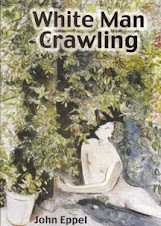
His first poetry collection, Spoils of War (1989), won the Ingrid Jonker Prize, and his collection Landlocked was recently published in the UK. His short story and poetry anthologies are The Caruso of Colleen Bawn, White Man Crawling and Together (with Julius Chongono). Other poems have been featured in anthologies that include The Heart in Exile: South African Poetry in English 1990-1995 (1996) and Intwasa Poetry (2008), while his short stories have appeared in anthologies that include Short Writings from Bulawayo (2003), Short Writings from Bulawayo II (2005). Writing Now: More Stories from Zimbabwe (2005), Short Writings from Bulawayo III (2006), Laughing Now (2008), Long Time Coming: Short Writings from Zimbabwe (2008), Where to Now? (2012) and Moving On and Other Zimbabwean Stories (2017). 


Monday, August 21, 2017

Poetry, Wine and Togara Muzanenhamo in Slovenia


If you are interested in poetry and wine, and happen to be in Slovenia this week, why not pop along to the 'Days of Poetry and Wine Festival', featuring, amongst others, Zimbabwean poet Togara Muzanenhamo.

On Tuesday 22 August, Togara will read from his work with China's Ouyang Jianghe and India's Sharmistha Mohanty at the Villa Podvin in Radovljica from 19.00 to 22.00.
As well as poetry, there will be tasting of Marof wines, with dishes by Chef Uros Stefelin.
Entrance: 5 EUR, includes 2 glasses of wine.


On Friday 25 August at 8pm, there will be another reading by Togara, this time with America's Ani Gjika and Mexico's Pura Lopez Colom, at Franc Ksavar's Meska Ormoz Library, again as part of the 'Days of Poetry and Wine Festival'.


Tuesday, January 3, 2017

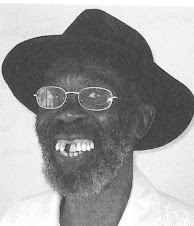
Remembering Julius Chingono, 6 years gone


 Tired Feet

A man arrived
in a park,
kicked off shoelace-less shoes
from his fetid feet.
Tired feet stared
at a notice written –
‘stay off the grass’.
Lush grass sneezed,
the smell of dirty feet
choked its shoots.
The legs bent and creaked –
we cannot go further.
The man dropped
to sleep 
on an empty stomach.


and then there was his humour...

Drunk

In the photograph
I was so drunk
that I would stagger
out of the picture.


(both from Together, Julius Chingono and John Eppel, 2011)


Getting Together, poems and short stories by John Eppel and Julius Chingono ready for publication was a cooperative effort. Getting the work from John went smoothly as John lives in Bulawayo, our base, and is online. Julius lived in Norton, outside Harare, and did not have access to a computer. It was 2010 and time to call in the help of friends. The poet, Togara Muzanenhamo, didn't live far from Julius and offered to get the poems from Julius, type them up and email them to us. This worked well, we made suggested edits, sent them back to Togara, which he then shared with Julius. And so we progressed... The same routine was adopted for the short stories. The writer Tinashe Muchuri came to the rescue. He took on the task of typing Julius' stories from which we selected those which we chose to include in the collection and proceeded to edit them with Tinashe kindly acting as the go-between. In this way the anthology, Together, came into being.

The book now complete, we negotiated co-publishing deals with the the University of Kwa-Zulu Natal and the University of New Orleans. All was going well and then we received the tragic news that Julius had died on January 2nd, 2011, before we had brought the collection out. So the launch became a tribute to Julius, where we played a video of him reading his work.

We will remember Julius.

Monday, February 15, 2016

'Textures' wins the 2016 National Arts Merit Award for Outstanding Fiction


John Eppel and Togara Muzanenhamo's poetry collaboration Textures has won the 2016 Zimbabwe National Arts Merit Award for Outstanding Fiction. The winners were announced at the awards on Saturday 13 February at 7Arts in Harare, and Togara was present to accept the award on behalf of the two writers. 

The other shortlisted books were:
Dzinonyandura coordinated by Rabson Shumba [263 Nhetembo] 
Ties that Bind by Phillip K. Chidavaenzi [New Heritage Press] 
The Book of Memory by Petina Gappah [Faber and Faber]

The list of winners in all categories can be found at http://newsvyb.com/here-are-your-2016-nama-winners/

Thursday, February 11, 2016

Eppel and Muzanenhamo's 'Textures' reviewed in The European English Messenger

John Eppel and Togara Muzanenhamo 2014. Textures.
Bulawayo: 'amabooks, 91 + viii pages
ISBN 9 780797 494985 (soft cover).
John A Stotesbury
University of Eastern Finland, Joensuu, Finland
The European English Messenger, 24.2 (2015)

In material terms this small volume of poetry by two Zimbabwean poets, John Eppel and Togara Muzanenhamo, appears modest in its scope. Its title is unpretentious: simply “Textures”, which both Eppel and Muzanenhamo explain in the Introduction in terms of its etymological and metaphorical links with weaving. There are a fair number of poems, 43 in all, numerically speaking a majority of them by the elder poet, Eppel, in contrast to the sixteen by Muzanenhamo, although they vary in length, and several of Muzanenhamo’s are more expansive and perhaps more demanding than Eppel’s.

Inevitably, a number of too easy contrasts can be drawn up between the poets themselves. Eppel is a Zimbabwean whose South African roots were transplanted in early childhood into Bulawayo soil, a city – and its gardens – a location that has grown and sustained him for many decades, a place where he continues to teach literature in English to a schoolboy clientele whose ethnicity is now 90 per cent black. As other commentators have noted, Eppel’s rootedness in Bulawayo has given him access to a full range of references to the natural environment, in particular the abundant flowers and birds that frequently find their place in his poetry.

Muzanenhamo, for his part, is a full generation younger, and grew into young adulthood along with the emergence after 1980 of the liberated Zimbabwe. To some degree, in contrast to Eppel, his subsequent education has been acquired in the First World, and unlike Eppel’s, his writing has more readily achieved recognition both within Southern Africa and also further afield – although since the 1960s Eppel has undoubtedly produced a wider range of poetic and prose writing, much of the latter subtly satirical, that would deserve wider recognition from an international audience, including one that has sometimes resorted to over-simplistic categorizations.

The generational shift represented in this collaborative volume of poems through the voluntary yoking together of two such poets – one ostensibly bearing the memory of the world of white, colonial and post-colonial “privilege”, the other perhaps a voice of contemporary Zimbabwe, with its all-too-familiar litany of implicit fractures – has been nicely subverted by the layering, or interweaving, of their poetry into eight alternating sections, although none of them is headed, and there is no clear progression or comparison to be inferred from the selections of poems, other than the final “Epilogue” of Muzanenhamo’s fourth section.

The volume itself has been usefully introduced by a fellow Zimbabwean, Drew Shaw, who points out that both poets are “dedicated to excellence in form” and to a “meticulous attention to the craft of poetry” (ii); Shaw also points out the domestic, inward-looking quality of much of Eppel’s writing, in contrast to “the more international Muzanenhamo” (iii).

It might also be of value to consider the ways in which such a volume of poetry by two poets can be read: my own approach was initially to read each poem and each alternating poet consecutively, noting small details of composition and thematic focus, and considering the similarities and differences predicted by Dash. But a later reading of each poet’s work in its entirety, first Eppel’s and then Muzanenhamo’s, more strongly emphasized some of the craftsmen’s brush-strokes that make up their connections and differences.

Eppel’s writing is very much that of an older generation, and for a reader of similar age (as this reviewer is) there is the pleasure of recognizing Eppel’s subversion of over-quoted “classics”, such as the sonnet titled “Beauty is Truth, Truth Death” (“So: put down your pen and take a deep breath”) (9), and the melancholic recognition of the failure of so many hopes for a better postcolonial world, contained in the echo of Doris Lessing’s first novel: “grass has forgotten to sing” (“Giving up on the Rains in Curious Rhyme”) (10). In somewhat more mischievous vein, in “Dorothy Recollects [a pastiche]”, he has the physically degenerating Dorothy Wordsworth repeatedly distracting her brother away from his newly-acquired bride Mary Hutchinson on their wedding-day: “I gave him the wedding ring …/from my forefinger where I had worn it the whole of the night before” (48).

Eppel’s poetic vision is also shaped by an accumulated awareness of ageing and the failure of the individual voice; poem after poem rests on an awareness of this failure – “I put down my pen, give up on the rains” (10), and “I chose to solve it, not by talking/but … by walking” (“Solvitur Ambulando”) (3). From the very start of Eppel’s selection, relationships fail (“A Suburban Night in August”), and even when walking his dog he notes: “At the Upper Dam we’ll rest/where the dead bodies of platanna bloat,/and two discarded beer bottles float” (“Looking for You”) (11).

Muzanenhamo’s work draws on a range of reference that, whilst also meticulously crafted, expresses a bitterness and a tenderness that are more generalized than Eppel’s. “Gondershe”, for instance, depicts simultaneously the innocence and unwitting victimhood of a child soldier: “Having never fired a gun before, he held the rifle/as though the weapon were a dying child about to say something/only they could share”, a poem that ends with the inevitability of the child’s death: “Come the dawn there would be no escape./He would die. Even the sea would burn.”(13). The world is a place that victimizes the young. But some, in their innocence, resist: in “The Battle of VÃ¥gen, Bergen, Norway – August 3, 1665” a young Dutch soldier who has “never seen real war,/and had no will to die”, recalls “fucking/a shy local girl”, a youthful vision that motivates him to desert his national army despite “the shame of running, the fear/of loving” (36-37).


Muzanenhamo’s writing is, if anything, more conscious of suffering, physical corruption, and death than Eppel’s. His “Zvita” invites the reader to “Study the bone” of a corpse, “The waxed coat stiff with flies./… The back’s awkward/arch parting rigid legs, pushing the pelvis forward/to give birth to death’s black oozing grease” (63). A vision of something of the horror that seemingly inevitably accompanies the struggle for both love and freedom.

Monday, February 1, 2016

'Textures' nominated for a 2016 National Arts Merit Award


John Eppel and Togara Muzanenhamo's poetry collaboration Textures has been nominated for a 2016 Zimbabwe National Arts Merit Award, in the Outstanding Fiction category.


The other shortlisted books are:

Dzinonyandura coordinated by Rabson Shumba [263 Nhetembo] 
Ties that Bind by Phillip K. Chidavaenzi [New Heritage Press] 
The Book of Memory by Petina Gappah [Faber and Faber]


This is the second recent shortlisting for Togara Muzanenhamo. His collection Gumiguru was one of the three books shortlisted for the 2016 Glenna Luschei Prize for African Poetry; the prize eventually being awarded to South African poet Kobus Moolman for his collection A Book of Rooms.


Click here to hear Togara Muzanenhamo reading 'Gondershe' from Textures, accompanied by Leo Svirsky on accordion. Thanks to: Rick Messemaker (camera), Rumbi Katedza (editor), De Niewe Ruimte, A View with a Room and Poetry International.


Other readings by Togara Muzanenhamo from Textures include Mercantile Rain  and The Art of Man.


Readings by John Eppel from Textures include A Suburban Night in August  and Only Jacarandas.

Monday, November 23, 2015

Dan Wylie reviews Textures, a poetry collaboration by Zimbabwe's John Eppel and Togara Muzanenhamo

Commemorating sight and sound


from: http://thisisaerodrome.com/review-textures-john-eppel-togara-muzenanhamo
Textures must be one of the most unusual, even ironic, poetry collaborations to have come out of Zimbabwe in recent years. Zimbabwe’s publishing industry being in a state of near-total collapse now, amaBooks in Bulawayo represents a rare light of literary trust and hope – and this is a particularly brave publication.
One limb of this attractive double-hander is John Eppel, probably now the country’s most long-standing resident poet and satirical novelist. He is vilified in government-controlled rags such as The Patriot, partly just for being white, inconveniently and persistently present, partly because his satiric tone and self-deprecating demeanour are routinely missed or misunderstood. He has now published a number of poetry volumes, beginning with Spoils of War (1988), and a swathe of satirical novellas and short-story collections. These have become a little more serious of late, approaching the seriousness of the poetry in this volume (except, to be sure, the poem “Dorothy Recollects”, in which he sends up his own ‘colonial’ Wordsworthian Romantic inheritance).
The second limb is less well-known, a younger and almost preternaturally talented newcomer, Togara Muzanenhamo. Unlike Eppel, who as far as I know has never been published in volume form overseas, Muzanenhamo has already been picked up by Carcanet Press in the UK. These two poets’ contributions (some 30 poems apiece) are arranged in interlocking groups, setting one another off in intriguing ways.
It is both ironic and heart-warming to see the white and the black, the established and the upcoming, in counterpoint and communion. Ironic also because – contrary to stereotype – it is Eppel (though South African-born) who appears the rooted local, Muzanenhamo the globally-travelled intellectual. Eppel writes about the local flora, fauna (especially birds, here), and landscapes, and of highly personalised feelings; Muzanenhamo writes mostly of anywhere but Zimbabwe – Peru, the USA, Norway, Mozambique – alongside apparently wholly unlocatable, almost fantasial scenarios.
The volume is prefaced with a perceptive introduction by Drew Shaw, then lecturer at Zimbabwe’s National University of Science and Technology. He quotes a revealing and poignant comment by Eppel:
[A]s you get older you have a much more powerful sense of mortality, so you don’t take being alive for granted anymore. But you don’t see life and death in nature; you just see one form of energy changing into another form of energy, in nature time is cyclical. And somehow I think there’s consolation for ageing poets to spend more time observing the minutest details out there.
Those details, however, are always turned to inner psychological capital, with mythic resonances, as in one of the several bird poems, “Brown-Hooded Kingfisher”:
                                    You have been immobilized
by instinct, by a chronic state of bliss.
You once fished in waters above the sky,
in the firmament of death and desire.
… Impossible beak,
orange legs, reddish feet glued to a tree;
Dickensian eyebrows, unnerving shriek
shadowed by a gentling, ‘pity for me’.
This exemplifies a number of characteristic features of Eppel’s poetry: the intimate, almost scientific detail, the precise rhythms and stanzaic rhymes, and a certain intrusive note of the maudlin. Also, the hint at his wide reading in the allusion to Dickens; such referencing – a trait he shares with his companion poet – gets quite dense on occasion:
Can’t get that dangling girl out of my mind,
nor the jealousy that provoked it. Why
are pampered Olympians so unkind
to mortals who challenge them, vivify
them in the first place? Athene, mistress
of weaving, versus the Lydian wench,
Arachne, who dares to make Olympus
say yes to human pain. How do the French
put it: la Terre détruit le Ciel?
It’s a story Sartre might want to tell. (“Golden Orb Spider”)
A jocular tone wrestles with nostalgia for the entanglements of thwarted or lost love – perhaps his presently most common theme – and the colloquial ironically counterbalances the careful form. The hyper-local is viewed with affectionate wryness through the lens of world literatures. These are subtleties typical of Eppel at his best.   He works persistently with ‘traditional’ European forms – four-line stanzas, villanelles, and especially sonnets, as in the sequence here of five sonnets exploring the environs and sentimental meanings of Bulawayo’s Hillside Dams. Here, childhood memories, lost loves and everyday textures mingle in intimately realised scents and sounds.
Muzanenhamo, by contrast, tends to utilise the limber and fragmented forms characteristic of late Modernism: he combines, one might say, the intellectual prism of an Auden with the vivacity of a Neruda. Like Eppel, though, Muzanenhamo reveals an extraordinary range of reading, often glimpsed in his poems’ epigraphs, which come from unlikely sources, ranging from a cricketer and a Tour de France cyclist to quotation from the Pittsburgh Post-Gazette. A lot of his reading, and so his subject-matter, is historical: so he manages to derive strangely universal meaning from locales ranging from a car mechanic’s workshop to a sailboat to a cemetery in Lexington, USA. In almost every case the technical terms are wielded with complete confidence. Yet most remains visceral and vivid: a poem about a typically abstruse subject, the 1665 Battle of VÃ¥gen in Bergen, Norway, includes this segment:
Cannon fire thundered with the heavy vibrato of war.
From his vantage point he could see the crafts
shivering after bouts of light hung
long then rang with distant noise.
In his mind, the thought
of men dying could not be reconciled
with what he viewed. Rain coursed down his face
salted with tears he could not hold back…
Muzenanhamo has an enviable ability to imagine himself into such an historical situation. Other of his poems also seem to displace the ‘personal’ emotional life at one remove into imagined scenarios; some read like snatches from South American magic-realist novels. “Peruvian Sunsets” opens thus:
Xalvadora stumbled back after Alvaro removed his boots. It wasn’t that Alvaro’s foot was metallic, nor was it the foot’s cold mercurial glow that caused her to panic and suddenly retreat with fear; no – it wasn’t that at all. When Xalvadora looked down again at Alvaro’s bloodless ankle, she saw her own face staring back…
It’s all rather mysterious yet, within its own world, weirdly persuasive. Muzenanhamo’s final twenty-poem sequence, “Game of 12 Moons” – an extended collection to balance Eppel’s Hillside Dams series – is more poetically lyrical but equally cryptic, like overheard segments from lost folktales:
She had been playing the game
with her shadow,
the game of twelve moons –
lifting floorboards in the kitchen,
whispering hurriedly to herself.
The sun would rise soon,
the smell of the air would change,
as would everything else
in the forest.
This is airy and simple, compared to most of his poetry, which incorporates a rare and cerebral sophistication. Nothing could be further from the run-of-the-mill Zimbabwean fare which deals obsessively and dully on common themes, reducing poetry to obvious proverbial mantras and demonstrating a tentative grasp on linguistic accuracies. Eppel writes more accessibly, perhaps, though the loops of his thought, self-consciously yet conversationally threaded through careful patterns of rhyme and syllabics, present enough density to reward many re-readings.
In a way, the two poets are united by so high a degree of craft that almost every poem – they are not all equally weighty or felicitous – serves as a kind of meta-meditation upon poetry itself. As Eppel writes in the poem “Tortoise”:
[T]hose who commemorate sight and sound –
poets, composers, and picture-makers –
will complete the work of undertakers,
and begin the work of he ‘who with his finger wrote on the ground.’
Textures is published by amaBooks.
Dan Wylie is professor of English at Rhodes University.