Showing posts with label African Books Collective. Show all posts

Wednesday, July 26, 2023

Read 'Potholes', from 'Whatever Happened to Rick Astley?', in Wales Arts Review


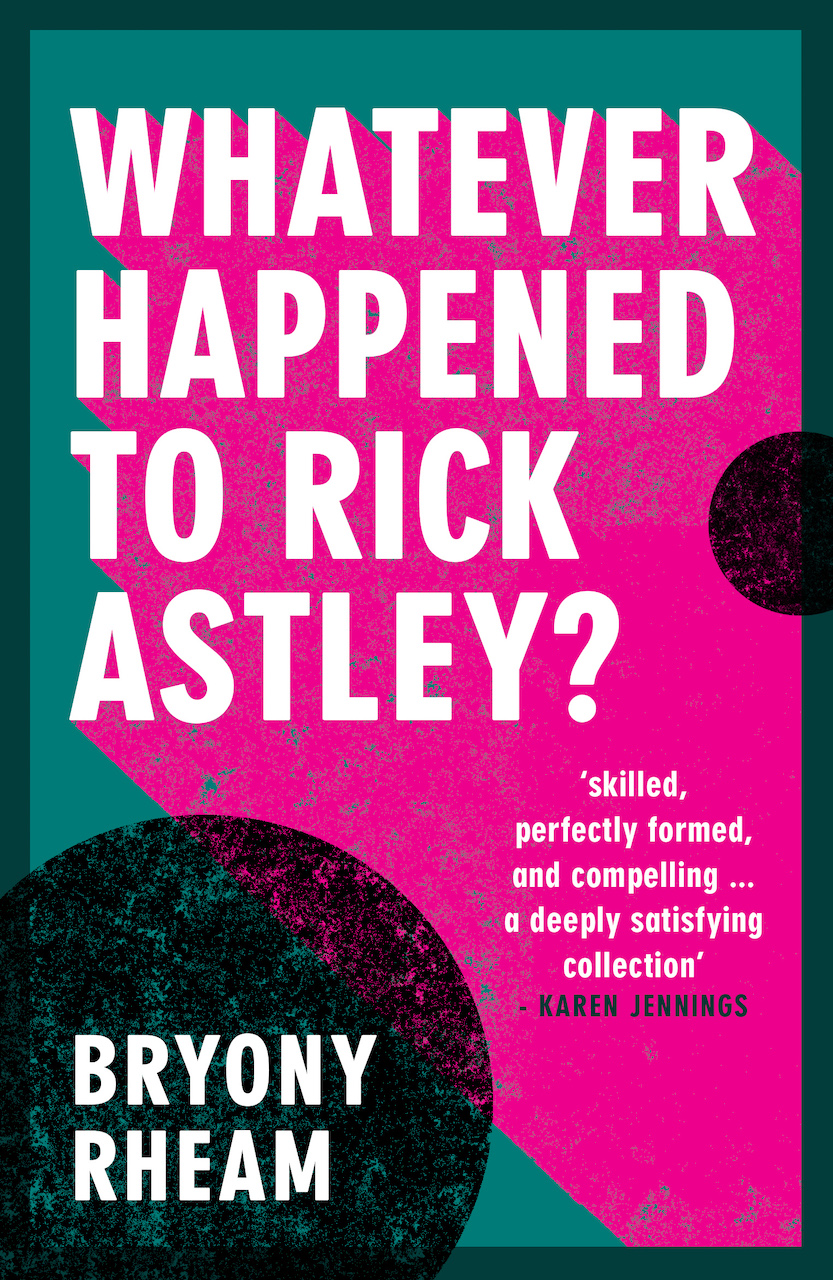
 'Potholes', from Bryony Rheam's short story collection Whatever Happened to Rick Astley?, is reproduced in Wales Arts Review.

Please click here to read the story 

If you enjoy this story, the collection of 16 short stories can be bought in the UK through Parthian Books, in North America through the African Books Collective and through the Orange Elephant in Bulawayo.


Tuesday, February 1, 2022

Britain Zimbabwe Society Review of All Come to Dust

 Reproduced from www.britainzimbabwe.org.uk/wp-content/uploads/2022/01/BZS-Review_Dec21.pdf


British Zimbabwe Society Review: Issue 21/4 December 2021


Pat Brickhill on a Bulawayo-based detective story 


All Come to Dust, by Bryony Rheam 


Bryony Rheam has written a ground-breaking book – a captivating detective story set entirely in present-day Bulawayo, Zimbabwe. Rheam explores a different writing style from her debut novel, This September Sun, and presents the reader with a story that is more than the traditional detective genre (and which perhaps embraces several genres). The novel opens as we meet Chief Inspector Edmund Dube shortly after a murder has been committed in the leafy inner suburbs of Bulawayo. Marcia Pullman, a wealthy but unpopular socialite, has been discovered dead in her bedroom. Dube, who is an apparently high-ranking policeman, is in on the case (despite a lack of co-operation from his colleagues) . Reminiscent of Agatha Christie All Come to Dust is reminiscent of Agatha Christie’s work, as Bryony Rheam leaves tantalising clues and red herrings, leading the reader down several cul-de-sacs. The initial pace of the novel was slow but I enjoyed the book more as the pace increased. Chief Inspector Dube meets Craig Martin on the day of the murder and commandeers his battered Renault to reach the scene of the crime. Martin is destined to play a central, sometimes comical role. The eccentric Edmund Dube appears even more of an enigma than Agatha Christie’s Hercule Poirot. At times it was difficult to fully accept his role as the protagonist and, in spite of the difficulties he grappled with as a child and now as an adult, I struggled to feel compassion or much fondness for him. On the other hand, the oddball Craig Martin is far more developed as a character. He almost demands our attention as we find out about his struggles with life. Flashbacks reveal both men’s childhood experiences: Edmund Dube has grown up straddling two cultures, and feels unaccepted by both the black and white communities, while Craig Martin has survived an unhappy and sometimes tragic childhood.  

I applaud the author’s decision to weave social commentary through her story. She refers to the realities, inequalities and prejudices familiar to anyone who grew up in Rhodesia and after 1980 Zimbabwe when, among other changes, facilities previously reserved for whites were opened to all races. Bryony Rheam shares her knowledge of the majestic Bulawayo landscape with striking portrayal of the everyday life and struggles that have affected so many Zimbabweans, especially in the last 20 years. She handles her subject sensitively, though strongly enough to make the reader aware that all was not well in society when Edmund Dube was a boy. This state of affairs affected not only his immediate family (his father goes to join the struggle and his mother has to support him by working a domestic worker in town) but also the country as a whole. Edmund, fairly unusually, is taken into the home and under the wing of a Scottish couple, the MacDougals, who employ his mother. They appear to do all they can to provide opportunities which, otherwise, he might not have had. Archibald MacDougal is also a policeman, a Detective Inspector, and this seems to provide the inspiration for Edmund’s later career choice. Another legacy of the MacDougals is Edmund’s unusual passion for fictional and television British detectives. 

Very cleverly, the reader is left guessing, almost to the end of the book, as to the reason for the crime or identity of the murderer. Edmund Dube – like Poirot – gathers the potential murderers together and questions each in turn to identify the real culprit. Bryony Rheam’s story telling is gripping, very clever, sometimes sad, often amusing, but very occasionally I felt was not totally credible. I found the closing pages of the book as she tied up all the loose ends a little too neatly and the convenient connections slightly unconvincing – perhaps because she presented us with rather too many potential murderers and a victim without a single redeeming quality. While this may not be have been completely my cup of tea, I congratulate Bryony Rheam on her achievement and I am sure we have not seen the last of this Zimbabwean writer. I think fans of the traditional detective story will enjoy this book. 


NB Magazine Review of All Come to Dust

 Reproduced from NB Magazine's January Crime Fiction Round Up


All Come to Dust by Bryony Rheam


An intriguing Zimbabwean murder mystery, Rheam’s Bulawayo set crime novel is at once comforting for its cosy crime scenario but also disturbing for its subversion of the associated tropes creating a more complex and relevant read. The writing is easy, hinting at a golden age style tale of skulduggery, opening with a woman found dead in her bedroom, stabbed with a letter opener. However, this is Zimbabwe not Surrey and Rheam explores themes of racism and the colonial legacy and how those things haven’t changed enough while policing has got harder and poorer.

Marcia Pullman of 274 Clark Road does all her own cooking for her little social gatherings, there is one today. She deems the ‘girl’ Dorcas useless and the gardener, Malakai, had to be fired for incompetence and laziness. Food prepared, Dorcas sent out for the afternoon, Marcia lies down for a rest before book club. Later when the first guest arrives and Dorcas returns they are surprised there’s no sign of Marcia downstairs. Eventually venturing to the mistress's bedroom Marcia’s body is found.

Chief Inspector Edmund Dube of the Bulawayo central police station is grappling with another report, there are no Ss or Rs on his typewriter. He dreams of solving a real crime so, when a constable comes looking for super Detective Inspector Khumalo, Edmund jumps in to take the case. A white woman in the suburb has been killed and the missing gardener is the prime suspect. Edmund has to get a lift to the crime scene from a citizen outside the station. When Dorcas sees the commandeered driver she says he is the killer, she saw him argue with Marcia before, Edmund will have to follow that up. Meanwhile, Mr Pullman is indignant that the very clever detective Khumalo isn’t on the case but Edmund holds his ground. The strange thing is that Marcia was found inside a locked house and there are no unaccounted for keys. She was also dead when the would be killer stabbed her. A mystery indeed.

There are several interesting characters, a healthy dose of humour, often arising from misinterpretation, misunderstanding and jumping to conclusions. There’s also the serious aspects of modern Zimbabwe’s troubled society and its past trauma. This is genuinely subversive and fun.

https://nbmagazine.co.uk/the-verdict-january-crime-fiction-round-up/


All Come to Dust is published in Zimbabwe by amaBooks, and in the UK by amaBooks and Parthian Books, where it is available through www.parthianbooks.com/products/all-come-to-dust .


Friday, July 16, 2021

All Come to Dust in the USA, Australia and New Zealand

 Bryony Rheam's All Come to Dust is now available as an ebook

in North America: https://www.amazon.com/All-Come-Dust-Bryony-Rheam-ebook/dp/B094RJHMCJ

and in Australia and New Zealand: https://www.amazon.com.au/All-Come-Dust-Bryony-Rheam-ebook/dp/B094RJHMCJ


The book is also available in print in North America through the African Books Collective: https://www.africanbookscollective.com/books/all-come-to-dust


Monday, May 14, 2018

'Textures' published in North America


Textures, poetry by John Eppel and Togara Muzanenhamo, is now available across North America through Canadian publisher Guernica Editions.

Textures was published in Zimbabwe by amaBooks in 2014, and is available elsewhere in the world through the African Books Collective. The book won a Zimbabwe National Arts Merit Award for Outstanding Fiction.

Dan Wylie, Professor of English at Rhodes University, in his review of Textures, commented that:


"In a way, the two poets are united by so high a degree of craft that almost every poem – they are not all equally weighty or felicitous – serves as a kind of meta-meditation upon poetry itself."
Togara Muzanenhamo reads 'Gondershe' from Textures, with Leo Svirsky.
Togara Muzanenhamo:
Born in 1975, Togara Muzanenhamo studied Business Administration in the Netherlands and in France. He has worked as a journalist and a film script editor. His poems have appeared widely in international magazines, journals and anthologies. In 2006 his debut collection of poems, Spirit Brides, was published by Carcanet Press and shortlisted for the Jerwood Aldeburgh First Collection Prize. The Times Literary Supplement welcomed the poet as a young writer of solid distinction: ‘he can be “cool” but seldom “light”. His best writing makes no reference to itself, does not allow itself to be damaged by over exuberant metaphor.’ In 2012 Muzanenhamo was chosen to represent Zimbabwe at Poetry Parnassus in London, ‘the biggest gathering of poets in world history’, where he read at the gala event with Seamus Heaney, Kim Hyesoon, Bill Manhire, Kay Ryan and Wole Soyinka at the Royal Festival Hall. Poetry Parnassus was part of the Cultural Olympiad that preceded the 2012 Olympic Games. His second collection, Gumiguru, is published by Carcanet Press. Muzanenhamo's short story 'The Silt Path' is published in Moving On and Other Zimbabwean Stories (2017).


John Eppel reads 'A Suburban Night in August' from Textures
John Eppel:
John Eppel is an award-winning poet and novelist. His first novel, D.G.G. Berry’s The Great North Road (1992), won the M-Net Prize in South Africa. His second novel, Hatchings (1993), was short-listed for the M-Net Prize and his third novel, The Giraffe Man (1994), has been translated into French. His other novels are The Holy Innocents, The Curse of the Ripe Tomato, Absent: The English Teacher and Trafickings.
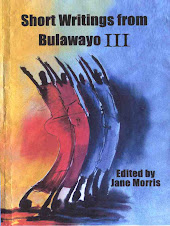
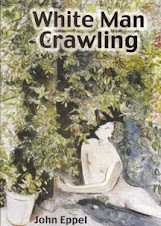
His first poetry collection, Spoils of War (1989), won the Ingrid Jonker Prize, and his collection Landlocked was recently published in the UK. His short story and poetry anthologies are The Caruso of Colleen Bawn, White Man Crawling and Together (with Julius Chongono). Other poems have been featured in anthologies that include The Heart in Exile: South African Poetry in English 1990-1995 (1996) and Intwasa Poetry (2008), while his short stories have appeared in anthologies that include Short Writings from Bulawayo (2003), Short Writings from Bulawayo II (2005). Writing Now: More Stories from Zimbabwe (2005), Short Writings from Bulawayo III (2006), Laughing Now (2008), Long Time Coming: Short Writings from Zimbabwe (2008), Where to Now? (2012) and Moving On and Other Zimbabwean Stories (2017). 


Tuesday, September 27, 2016

The African Books Collective has launched 'Read African Books'


 Read African Books offers a place where people can come to read about the latest books, news, reviews and comment, on African publishing.

The extracts section contains samples of John Eppel and Togara Muzanenhamo's poetry from Textures. You will also find a poem from each of the poets in Textures below.

African Books Collective (ABC) was founded in 1989 by a group of African publishers to supply libraries and other book buyers worldwide with African published books. ABC was established as a 'non-profit', covering its overheads only, and remitting sales income to African publishers. On the one hand, ABC addresses the hurdles for Northern libraries in acquiring books from Africa; and on the other, strengthens African publishers by providing international exposure and valuable sales income.

Read African Books is intended to help grow awareness of the issues affecting African books and publishing - to celebrate its diversity - and to increase the visibility of African books worldwide.

 See more at: http://www.readafricanbooks.com/about#sthash.vDdwahYa.dpuf


Wednesday, March 11, 2015

Tendai Huchu interviewed on 'Reading Has Purpose'

Welcome Tendai! I’m glad you stopped by Reading Has Purpose! Your first novel, The Hairdresser of Harare, is on my to-read list. Before I could even read it, you’re back with novel number two! So let’s get to it!


RHP: Is The Maestro, The Magistrate, & The Mathematician a book you’ve wanted to write for some time or did the idea just come to you?
TH: It took about three years from conception to finish. There was a lot of refinement and fine tuning needed. One of the most important parts of the process was working with my editor Jane Morris from amaBooks who completely understood the scope of my ambition for the text and was instrumental in helping me tweak. In certain ways I’m, perhaps, a very old fashioned writer in that my fiction is a vehicle for the dissection and dissemination of ideas which are important to me.

RHP: After releasing one novel, what’s the biggest lesson you learned and applied to the writing or marketing of this book? And how’s that working out for you?
TH: The reality is when you’re an unknown writer without the benefits and resources of a corporate PR machinery, then marketing is going to fall on your shoulders. Book bloggers like yourself, Shannon, are essential, because they are willing to look at work on its own merit wherever it’s coming from. But I still maintain a naïve belief in word of mouth, that if my work is good enough then readers will recommend it to their friends and family.

RHP: Is there anything you were particularly nervous or worried about with the release of The Maestro, The Magistrate, & The Mathematician?
TH: There is always going to be a bit of anxiety before a book goes on sale. Your internal editor goes into overdrive: “Is it good enough?”, “Did I miss something?”, “Will anyone even read it?” I could go on and on, but in the end, you just take a chill pill and let go, because once it’s out there, what else can you do?

RHP: Tell us why we’re going to love the new book!
TH: I’m obviously biased in this regard, but I think it’s an interesting book about love, friendship, identity, ideas and some of the big questions we have in life. Outside the thematic elements, the reader may well be enticed by the structure of the book which works as three interlinking novellas.

RHP: You seem to keep a pretty low profile. I couldn’t find you on Twitter, Instagram, or Facebook.  Is this intentional or are you getting ready to make a grand entrance into social media!?
TH:  I think you’ve been looking in the wrong places:
https://www.facebook.com/tendai.huchu.12  and on Twitter I’m @TendaiHuchu.

RHP: What, if anything, do you miss about living in Zimbabwe?
TH: The strong sense of community, that each individual is tied to the next and this bond is important. I suppose that and the sunshine!
 
RHP: Further to my previous question. Sometimes I sit back and think about the stories that are missing. Being African American, I wonder when stories will start to emerge about being the child, grandchild, or great-grandchild of a participant in The Great Migration. What was it like being sent South for the summers? What was it like being hundreds or thousands of miles away from the rest of the family? So many questions come to mind. What does that look like from your experience? What stories, and essentially history in the making, do you think are missing?
TH: If I think exclusively of the Zimbabwean experience, then I have to recognize that we have only been a literate society for the last 140 or so years; that’s nothing in historical terms. A lot has been said about the colonial and post-colonial periods, but I reckon the pre-colonial period is much more interesting, especially when you think of the great trading empires, Munhumutapa, Great Zimbabwe, or even the Rozvi much further back. Piecing out what life was like for these folks would be very rewarding.

RHP: We all know the big names in literature, old and new. Well... we do here at Reading Has Purpose! But I love reading books by authors that fly under the radar as well. You’ll even find reviews here for books that are out of print. Are there any books or authors that you think people are missing out on?
TH: For anyone who wants to read something new outside the mainstream, I recommend visiting The African Books Collective. They have an awesome collection of both fiction and non-fiction by 150 independent publishers across the continent.

RHP: Anything else you like for us to know about you or The Maestro, The Magistrate, & The Mathematician here at Reading Has Purpose?
TH: Nah, but I think I’ll reproduce the [book's] blurb for you:

“Three very different men struggle with thoughts of belonging, loss, identity and love as they attempt to find a place for themselves in Britain. The Magistrate tries to create new memories and roots, fusing a wandering exploration of Edinburgh with music. The Maestro, a depressed, quixotic character, sinks out of the real world into the fantastic world of literature. The Mathematician, full of youth, follows a carefree, hedonistic lifestyle, until their three universes collide. 

In this carefully crafted, multi-layered novel, Tendai Huchu, with his inimitable humour, reveals much about the Zimbabwe story as he draws the reader deep into the lives of the three main characters.”

from: http://readinghaspurpose.blogspot.co.uk/2015/03/interview-tendai-huchu-author.html


Thursday, February 26, 2015

John Eppel and Togara Muzanenhamo's 'Textures' available as an ebook


'Textures' is now available as an ebook, as well as a paperback, through the African Books Collective, Amazon and many other websites.

'Textures' contains new poems by Eppel and Muzanenhamo, including Eppel's Hillside Dams in Bulawayo sonnet sequence, Christmas in Bulawayo and a section of poems about Zimbabwean birds. As well as having an international flavour,  Muzanenhamo also has poems set in his homeland of Zimbabwe including Savannah Chapel, Engine Philosophers and All the Good Help. The collection has an introduction by Dr Drew Shaw.

The book is to be launched in Bulawayo on 19 March at CBC, with follow-up readings on 20 March at Indaba Book Cafe. The Harare launch will take place at a later date.


http://www.africanbookscollective.com/books/textures

http://www.amazon.co.uk/Textures-John-Eppel-ebook/dp/B00TQBXMS6

Within Zimbabwe, copies of the book are available in Bulawayo at Induna Arts, the Orange Elephant, Phenduka Supplies, Indaba Book Cafe, Book&Bean and the National Gallery, in Harare at Avondale Bookshop, Blackstone Books, the Book Cafe and the National Gallery.


Tuesday, December 16, 2014

Textures, poems by John Eppel and Togara Muzanenhamo published


The collaboration between two of Zimbabwe's foremost poets, John Eppel and Togara Muzanenhamo, has been published.

Textures weaves together poems from the two poets, "weaving words, making some sort of music.” Drew Shaw in his introduction to the collection notes that 'To read Textures is to see how Eppel and Muzanenhamo are in many ways similar yet also interestingly different. What connects them is meticulous attention to the craft of poetry, particularly to its musical elements. As Eppel explained, “there’s this kind of paradox with lyric poets where they actually want to get rid of words, but the only way they can get rid of words is by using words. So there’s this movement away from sense dominating to sound dominating.”'
 
Muzanenhamo's 'Engine Philosophers' begins:


The smell of steel and oil is the incense of our labour.
In fields shot green with growth, brittle with grain,
or bare as anvils – we extend our hands over the iron altar.
Sometimes visions are lost through the slip of a spanner,
a misplaced nut collapses a thought like a faulty jack.
But no real workman worth his salt jumps in straight off the bat
to rotate a shaft or turn a bolt. Down to changing a wheel,

a moment’s silence honours an established principle.

Aptly one of Eppel's poems is titled, 'Christmas in Bulawayo':

A hallelujah of Heughlin's robins

wakes me from a troubled sleep, troubled not

by regrets or misgivings but by hymns,

hymns of mosquitoes, high-pitched; prick

of crickets, strident cicadas, squirrels

bickering; and the blessing of soft rain

on a tin roof.


Textures is available at outlets in Harare and Bulawayo, as well as online through www.african bookscollective.com, and, soon, through megabooks.co.za in South Africa.

Thursday, May 1, 2014

Small Friends: Stories and Poems by Students of King George VI School and Centre for Physically Disabled Children Published

The short stories and poems in this collection were written by students at King George VI School and Centre for Physically Disabled Children in Zimbabwe's second city, Bulawayo. HIV and AIDS have had a devastating effect on all the communities of Zimbabwe, and those with disabilities have not been exempt from the effects of the virus, as is reflected in many of the pieces in this collection. The book clearly demonstrates both the talent of the students and their concern about the issues facing their community and wider society. Some of the stories and poems tell the stories of their lives, some come straight from their imagination, and some simply speak of their dreams for a better future.

The book is available at outlets in Bulawayo and Harare, as well as online  through the African Books Collective (http://www.africanbookscollective.com/books/small-friends-and-other-stories-and-poems)

Monday, March 10, 2014

Siqondephi Manje?, the translation into Ndebele of Where to Now?, published

Siqondephi Manje? Indatshana zaseZimbabwe is the translation, by Dr Thabisani Ndlovu of Witwatersrand University, into Ndebele of Where to Now? Short Stories from Zimbabwe.
The collection features stories by sixteen writers: Raisedon Baya, NoViolet Bulawayo, Diana Charsley, Mapfumo Clement Chihota, Murenga Joseph Chikowero, John Eppel, Fungai Rufaro Machirori, Barbara Mhangami-Ruwende, Christopher Mlalazi, Mzana Mthimkhulu, Blessing Musariri, Nyevero Muza, Thabisani Ndlovu, Bryony Rheam, Novuyo Rosa Tshuma, Sandisile Tshuma.

The translation was supported by the Open Society Initiative for Southern Africa, and the original publication by the Beit Trust.


Siqondephi Manje? is available in South Africa through Mega Books (http://megabooks.co.za/product/siqondephi-manje-indatshana-zasezimbabwe/) and outside of Africa through the African Books Collective (http://www.africanbookscollective.com/books/siqondephi-manje-indatshana-zasezimbabwe).
It will be launched in Zimbabwe at the end of March 2014, and will be available as an ebook in the near future.

Indatshana eziqoqwe lapha ziyasinda, zizwisa usizi lobuhlungu, kanti zibuye zihlekise. Zonke zithathela kusimo esibi esake saba khona eZimbabwe esaziwa ngokuthi “iminyaka elitshumi eyalahlekayo.” Kwakuyisikhathi sokuphela kwemali amandla lokuqonga kwentengo okungakaze kubonakale; isikhathi sodlame lobudlwangudlwangu; esokutshabalala kwenotho yelizwe kanye lokuphuma kwabantu ngobunengi besiya phephela kwamanye amazwe. Ngemva kwalokho bonke abantu beZimbabwe sebezibuza – Siqondephi Manje? Bonke abalendatshana lapha yizizalwane zeZimbabwe. Noma nje abanye babo beloba bephandle kwelizwe, ugqozi lwabo luphuma khona eZimbabwe, lendatshana zabo zikhuluma ngalo leli lizwe.
Emakhasini alolugwalo uzahlangana lolondindwa onyomuka emjibileni wabanewakhe okumendisa engafuni; umama owendileyo ophunyuka ecaleni lokulala lenye indoda; iqhawe eligqxumukela embizeni enkulu yamasese lifele lapho; imbongi engatholi sikhathi sokuhaya inkondlo yayo. Azipheleli lapho. Zikhona ezinye ezinengi.
Reviews of Where to Now? can be found elsewhere on amabooksbyo.blogspot.com.

Saturday, September 28, 2013

More amaBooks as ebooks

Books from the amaBooks backlist have now been added to the list of titles available as ebooks through the African Books Collective.


https://www.africanbookscollective.com/publishers/amabooks

Thursday, January 24, 2013

Tendai Huchu reviews This September Sun


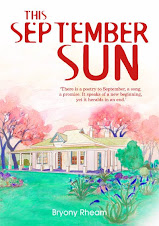
‘On the 18th of April 1980, my grandfather burnt the British flag.’ So begins Bryony Rheam’s genre blending debut novel. Ellie, the main protagonist, is a young girl searching for identity in the self-absorbed, often neurotic postcolonial settler community in Zimbabwe. Her relationship with Evelyn, her grandmother whose cupboard has more skeletons than most, provides a back drop to a narrative that sweeps right from the Second World War through to the early 2000’s. Evelyn leaves her husband, Ellie’s grandfather, and strikes out on her own late in life, forming a new partnership with Miles, a man with his own difficult past, trying to eke a living on a small dust bowl outside of Bulawayo. Through Ellie’s observations we learn of the lives of the small closeted, white Zimbabwean society, dirty laundry is aired, nothing is spared, the illicit affairs, alcoholism, racism, misogyny, hopes, dreams and fears that linger long after the sun has set on the British Empire. Is there still a place for the white man in Africa and how to find a place on a changing continent is one of this novel’s central themes. Rheam masterfully crafts a novel that runs back and forth in time, using elements of the first person and epistolary to stitch a work that reads and feels more like a memoir than a conventional novel. This September Sun’s bold narrative successfully focuses on grand events, two wars, and the very small, minutiae of everyday life, four o’clock tea, cross generational relationships between grandmother and granddaughter in a changing world. Rheam’s Africa is not the Africa of the media - that is a continent reduced to nothing more than poverty and strife, it is a place where real people live with everyday worries and regular problems and the novel strikes an optimistic tone missing in most African Literature. 
Tendai Huchu is the author of The Hairdresser of Harare


This September Sun is available throughout Zimbabwe and in selected outlets in South Africa and Zambia. Please contact amaBooks if you have problems finding it.

It is also available in the United Kingdom through our partner Parthian Books, and as a Kindle ebook.

In North America, it can be obtained through the African Books Collective.

Sunday, June 5, 2011

This September Sun available in North America


Bryony Rheam's novel This September Sun is now available in North America through the African Books Collective. It can be purchased online through www.africanbookscollective.com, www.amazon.com, www.barnesandnoble.com and others.

The book will be published in the United Kingdom by Parthian Books in September 2011.