Thursday, October 30, 2014

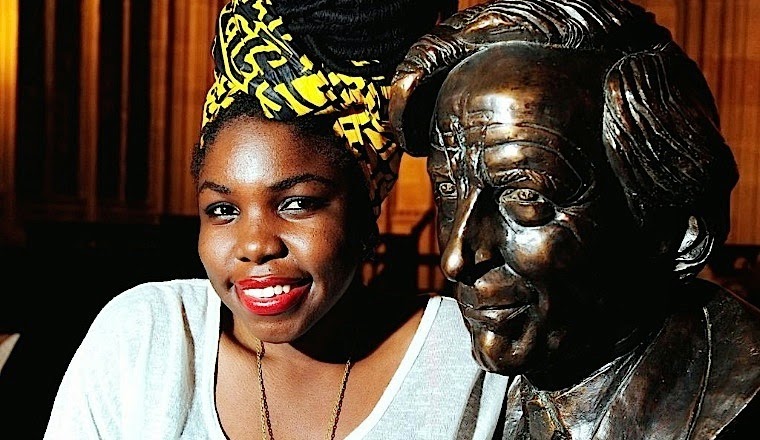
Bryony Rheam at the 2014 Ake Festival


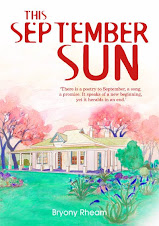
Zimbabwean writer Bryony Rheam will be one of the writers at this year's Ake Festival in Nigeria. Her debut novel, This September Sun, published by 'amaBooks in Zimbabwe, is a set text for 'A' level literature in English students in Zimbabwe and, last year, it topped the sales charts on Amazon in the United Kingdom. 'amaBooks have published the last three Caine Prize anthologies, African Violet, A Memory This Size and The Gonjon Pin, and Bryony's story 'Music From A Farther Room' is amongst the stories in The Gonjon Pin. At Ake, Bryony will feature in the discussions 'Writing Back/Writing Forward: Representations of Africa in New Fiction' and 'Room for All: Celebrating Otherness in Modern Africa'.


One of Africa’s largest literary events, the Ake Arts and Book Festival, will run over five days from 18th-22nd November in Abeokuta, Ogun State, Nigeria. The theme of Ake’s second ever festival is ‘Bridges and Pathways’, with discussions focusing on ‘building bridges between Africa peoples, especially along language, ethnic and gender lines, and charting new paths with the aim of creating synergy and cultural cross fertilisation on the African continent.’

The exciting line up includes several writers who have been part of the Caine Prize journey over the years, including Caine Prize Patron, Nobel Laureate, Wole Soyinka; three Prize winners, Binyavanga Wainaina (2002), Olufemi Terry (2010) and Rotimi Babatunde (2013); three shortlisters, Florent Couao-Zotti (2002), Mukoma Wa Ngugi (2009) and Abubakar Ibrahim (2013); and several workshop participants, including Ayodele Morocco-Clarke (2011), Bryony Rheam (2014) and Clifton Gachagua (2014); and former judge, Bernardine Evaristo (2012). Caine Prize Director Lizzy Attree will also feature in the programme, in the panel discussion entitled “What are publishers looking for?”

The festival will involve 13 panel discussions with stimulating topics ranging from "Writing Back/Writing Forward: Representations of Africa in New Fiction”, chaired by Lizzy Attree, to “Slave Narratives and the Burden of Memory,” featuring the Jamaican poet Kei Miller, who has recently won the prestigious Forward Prize for the best poetry collection of 2014, for The Cartographer Tries to Map a Way To Zion, based on dialogue between a mapmaker striving to impose order on an unfamiliar land and a Rasta-man who queries his project.

Other activities include master classes on science fiction writing, comic drawing and documentary making from distinguished professionals; art exhibitions; drama displays; documentaries; poetry readings; school visits; and book chats. Ten books have been chosen for discussion, giving the audience the chance to interact with the authors. One of the books up for discussion this year isChildren of Paradise written by acclaimed British-Guyanese poet, novelist and playwright Fred D'Aguiar, the novel explores the events surrounding the Jonestown tragedy.

The festival will also screen a new documentary, made by Yaba Badoe, about the Ghanaian writerAma Ata Aidoo.  The Art of Ama Ata Aidoo celebrates Aidoo and her work as one of Africa’s foremost women writers, and brings it to new audiences.

On the sidelines of the festival, an annual multi-lingual, cross cultural literary journal called Ake Review aims to create a platform for showcasing and discussing current trends in African arts and culture. Kola Tubosun recently interviewed Caine Prize Director Lizzy Attree for Ake Review about how the Prize has developed over its fifteen year history – A Prize is Only As Good as Those Who Enter.

With the extraordinary line up of authors, and broad ranging topics for discussion, participants are in for an exhilarating few days in Abeokuta this year.


Adapted from http://caineprize.blogspot.com/2014/10/outstanding-line-up-at-nigerias-2014.html?spref=fb


Tuesday, October 28, 2014

Tendai Huchu: Something about my new book

I suppose this writing thing revolves on some sort of twin axis; A is made up of faith and B, doubt. You are in your garret; you scribble away, or, in my case, pound on a keyboard for a couple of years. You hope the words you’re producing and grouping together in the form of sentences, paragraphs and chapters have some meaning, a deeper core to them. But you’re not smart enough to decipher this core, in fact, you have no control over whether it even exists or not. You are no different to a panner laden with a rucksack, pick, shovel and not much else during a gold rush. If you had any sense, you’d stop, you’d do something practical with your life, something with tangible goals – be a cleaner, an accountant, a prison guard, a sex worker – anything else at all.
That’s kinda what working on The Maestro, The Magistrate, & The Mathematician felt like to me. To be fair, most of the time I was hovering between a heightened state of paranoia and elation. On a good day, words flowed like manna from heaven, bountiful, even beautiful sometimes, IMHO. On other days everything was just meh.
I suppose the impulse that drives a writer is pretty much the same compulsion that forces dogs to pee on lamp posts, or that drove ancient man to draw in caves. By this I’m trying to say it is impossible to rationalise why we’re driven by/to art.
Is this coherent at all?
Let’s try this again. Begin with a simple premise.
There is a novel coming out called The Maestro, The Magistrate, & The Mathematician, and it is by Tendai Huchu. You are a Tendai Huchu, therefore there is a possibility that you are the guy who wrote this novel. You know of two other people with the same name (there may be more out there), but none of them claims ownership to this work (good for them) so you might as well.
Answer a simple question: WHY DID YOU WRITE THIS BOOK?
To tell a story. To explore an idea. To entertain. To impress a woman. To say something about the world we live in. For fun. Had nothing better to do. To scratch an itch that wouldn’t go away. To search for possibilities. All of the above. None of the above. Don’t know.
The problem with writing is that your main tools are words. Intuition tells you that words are the stuff of conscious thought, logical thought, that part of the human mind which you can control. Yet, instead of coming up with a rigorous work, one whose architecture you intimately understand at every level, whose every detail you have conceived and controlled, you find the subconscious has seeped in through the back door and interfered with the process so much so that you barely even recognise some of the text which you claim to have written.
This sounds too mystical, hocus-pocussy. Delete last paragraph.
Stick to the facts. Impress imagined/potential reader by quoting Dickens:
“Now, what I want is Facts. Teach these boys and girls nothing but Facts. Facts alone are wanted in life. Plant nothing else, and root out everything else. You can only form the minds of reasoning animals upon Facts; nothing else will ever be of any service to them.”
Meh – who’s gonna be impressed by that? Too common – cliché alert. You need something more obscure. How about a little known 17th century philosopher… No?
Too self-conscious here. Dude, this is embarrassing.
But how can I not be? I have a book coming out.  I’m at the mercy of the Moirai.
You write only for yourself! You don’t care about the fucking reader when you write, right?
That’s correct, man. Almost forgot that.
Bullshit, if you really believed that, you would have kept this thing in a drawer. You would have been so genuine you wouldn’t do a Kafka. You would actually destroy this shit, so no one else ever read it.
Hurrah, you know Dickens and Kafka, anyone else you wanna name drop?
Okay, that’s enough goofing around; let’s write a serious piece your publisher can put up on her blog. Twerk for the imagined/potential reader, baby!

The reason I write is… Fuck it. Let the book speak for itself.

Saturday, October 4, 2014

A Busy Month for a Zimbabwean Poet


Togara Muzanenhamo is to launch two books of poetry and to complete a reading tour of the United Kingdom. Textures, Togara's collaboration with Bulawayo poet John Eppel, is to be published in Zimbabwe by 'amaBooks Publishers, and Gumiguru is to be published in the United Kingdom by Carcanet Press.
The reading tour started on October 1 at The Barbican Library, London, in celebration of National Poetry Day. Other events involving Togara include readings on 5 October at Ilkley Playhouse, as part of Black History Month; on 7 October at Five Leaves Bookshop in Nottingham; on 8 November at the Peter Pears Recital Room, Aldeburgh, as part of the Aldeburgh Poetry Festival; and on 14 October at Graves Gallery, Sheffield, as part of the Off the Shelf Festival, complementing the National Portrait Gallery's 'Picture the Poet' exhibition.
Togara is no stranger to participating in events in the United Kingdom. He was the Zimbabwe representative at Poetry Parnassus, ‘the biggest gathering of poets in world history’, where he read at the gala event with Seamus Heaney, Bill Manhire, Kay Ryan and Wole Soyinka at the Royal Festival Hall in London. Poetry Parnassus was part of the Cultural Olympiad that preceded the 2012 Olympic Games. He recently participated in the Worlds Literature Festival in Norwich. His first collection of poems, Spirit Brides, was also published by Carcanet Press, in 2006, and was shortlisted for the Jerwood Aldeburgh First Collection Prize. The Times Literary Supplement welcomed the poet as a young writer of solid distinction.  Carcanet published Spirit Brides in the same year as they published Chinua Achebe's Collected Poems; one reviewer, in Stand Magazine, commented that, 'these two poetry collections could almost epitomize the proud past and promising future of African poetry, insofar as the first represents a lifetime's achievement and the second a bright, new beginning.'
As Dr Drew Shaw states in the introduction to Textures, 'John Eppel and Togara Muzanenhamo epitomise the ideal of the poet dedicated to excellence in form as well as content. To read Textures is to see how Eppel and Muzanenhamo are in many ways similar yet also interestingly different. What connects them is meticulous attention to the craft of poetry, particularly to its musical elements. In their arrangement of words and creation of sounds and rhythms, John Eppel and Togara Muzanenhamo promote this classic view of poetry.'

Textures is the second collaboration involving John Eppel published by 'amaBooks, following Together, which included stories and poems by the late Julius Chingono along with those of John Eppel.

amaBooks at Amagugu

Pathisa Nyathi has opened the Amagugu International Heritage Centre at the Chapo Business Centre, at Whitewaters in the Matopos, some 60 kilometres from Bulawayo on the road to Kezi. 'amaBooks exhibited some of their books at the event held at the Centre for the Comba Indlu Ngobuciko - My Beautiful Home Prize Giving Ceremony.


Saturday, September 13, 2014

Memory Chirere reviews The Gonjon Pin

Published by amaBooks of Zimbabwe and several other publishers, The Gonjon Pin and Other Stories is a collection of short stories by African writers shortlisted for the Caine Prize 2014 and from the Caine Prize annual writing workshop held in Zimbabwe during the same year.

On receiving this anthology just before the Harare launch, I quickly notice that it is a massively solid book. I am intimidated. I am used to reading the usually thin volumes normally associated with short books in Africa. But since these are stories from one of the most prestigious awards in African literature today, I hope that quality will pay for the volume. I do not remember the last time I felt like this about a book.

I do not want to start with the shortlisted stories. I want to make my priorities right. I have been invited to anchor the discussion at the Harare launch. Some of the writers based in Zimbabwe will even give a reading.  I quickly go for the Zimbabwean stories.

Having been raised on the short stories of Luis Honwana, Charles Mungoshi and other writers from the Southern African sub region, I find Lawrence Hoba’s ‘Pam Pam’ a very comfortable landing pad. Due to my background, this is the story that speaks most directly to me. The sensitive child is snooping into the seemingly unusual world of the grownups who are also trying to come to terms with the most ‘weird’ in their midst. Muffled voice. Understatement. Power play. A surprise ending. Hoba’s deft engineering of placing one soft word on top of the other… and the other, almost like bricks, tells me that this was not easy to write.

‘The Sonneteer’ must be the ‘craziest’ story in this book! I am hoping that somebody will agree with me. I love the deluge of sonnets towards the end because it is a clever way of flourishing out after such a deep rendition on the tumultuous Zimbabwean condition. The story ends in successive loud spurts like a gas canister unleashed onto a hapless crowd. I like stories like this one, driven by silences – especially by what characters do not say to one another. We are no longer reading but are also writing the story alongside Philani Nyoni. The language is vigorously god forsaken and its rigors remind me of the late Marechera.

Later, at the launch itself, I was impressed by Isabella Matambanadzo’s views. Her ‘All The Parts of Mi’, just like Abubakar Adam Ibrahim’s and Chinelo Okparanta’s are stories about betrayal, intimacy and courage.  During the discussion, I asked Matambanadzo about what she thinks about the use of the erotica in stories. Her candid answer sent the audience roaring in approval. It took us a while to return to silence.

‘The Intervention’ by Tendai Huchu is part of the short list. It confirms my thoughts about his previous stories, especially the one which I have been struggling to translate from one language to the other. Here is a writer who has an eye for dramatic irony and the incongruence of human character. His stories challenge the reader to work from many points of view.

In ‘The Murder of Ernestine Masilo’ by Violet Masilo, the protagonist dies slowly from the first time you meet her. Her death is not shocking but why she dies is riveting. You are left with a feeling that a flower has withered before anyone could pluck it and place it in a vase. If only there was enough love…Typical character in typical circumstances.

‘Music From A Farther Room’ by novelist Bryony Rheam is a story filled with utmost colours and sounds  and wide spaces. It is a piece of painting or tapestry. If it were a piece of cloth, this story would flutter in the wind like a kite, landing on its nose until somebody picks it and throws it back into the sky just in order to see it and shout like a toddler! I read it over and over for the sheer serenity that it gave me.

Had it come in good time, Barbara Mhangami-Ruwende’s ‘Blood Work’ could have been shortlisted! It is filled with a delicate tension right from the statement ‘I don’t like black people’ up to the end and you are always on the edge.  I hope I am not being prescriptive but this looks like my favourite story in this book. At least for now.

I then hurry to the winning story itself, ‘My Father’s Head’. I had read elsewhere that it is story filled with sad memories. I do not disagree but I discover that it is full of sweet sadness with more of sweet. Sad but not depressing.  The kind of balance associated with kopjes. On the second and even third reading, I begin to feel that this is about a daughter’s celebration of a father’s not so happy life. The language is syrupy, describing expanses of time and dwelling on tiny-tiny details of life like the paw of a dog and the flutter of a butterfly. I agree with the judges. It was right that this story won. Maybe it is not a story after all. It is life.

Among the short listed stories, I also have lots of respect for Billy Kahora’s ‘The Gorilla’s Apprentice’. Loneliness of people, and of animals too? A unique and unfulfilled camaraderie between victims from different communities? This story could just have won.


However, in just a few of these stories here, adjectives tend to pile on top of one another; adverbs trip over each other. Colons clog the flow of even short paragraphs, and the plethora of semicolons often cause the reader to throw up his hands in exasperation. If you are able to forgive the very few overwritten pieces, the Gonjon Book is something to take with you on a journey.


from: http://memorychirere.blogspot.com/2014/09/kwachirere-reads-gonjon-pin-and-other.html

Elle Magazine reviews The Gonjon Pin

How about first impressions? Do they still count? When it comes to short stories, especially the 2014 edition of The Caine Prize for African Writing, there are 17 introductions to stories, and therefore 17 first impressions. In total, 140 stories were submitted to make this, the 15th annual Caine Prize shortlist, which was announced by Nobel Prize winner and patron of the Caine Prize, Professor Wole Soyinka, as part of the opening ceremonies for the Unesco World Book Capital 2014 celebration in Port Harcourt, Nigeria.
 All five authors on the shortlist are included in The Gonjon Pin and Other Stories, with further stories by authors who took part in the Caine Prize workshop held earlier this year. As a sample of present-day literature in Africa, The Gonjon Pin and Other Stories has pickings from writers in Nigeria, Zimbabwe, Kenya, Zambia, Ghana, Somalia and South Africa.
Okwiri Oduor
South Africa is represented by Diane Awerbuck, and Kenya by Caine Prize-winner Okwiri Oduor, with her masterful storie ‘My Father’s Head’, which deals with memory and loss, and the unspoken shame and taboos surrounding death. Isabella Matambanadzo from Zimbabwe takes you romping through a beach scene and into a kitchen, where you feel almost pressed to try a new recipe from Tanzania in the comfort of your own home, except that you can’t put this book down and so cooking dinner is neglected. With themes of isolation and homesickness, its plot reveals dictates and diaspora. Like most good stories, it confronts the reader with issues of identity, and the message becomes universal. ‘The Gonjon Pin’ by Martin Egblewogbe from Ghana is a type of pep-me-up, a tonic, infused with a spirit that Roald Dahl might have used; there’s just something frivolously happy and omnipotently offbeat about the style. It makes you smile.
Throughout the compilation, themes in Africa are still familiar: Life and death; the animal kingdom; religion as an unplanned yet entrenched heritage; questions about patriarchy, fertility, how to make a living, and hope. The Gonjon Pin and Other Stories is a must-have on the bookshelf.
More about the Caine Prize for African Writing:

The first recipient of the prize was Sudanese writer Leila Aboulela, in 2000, for The Museum. In that year, the prize attracted entries from 20 African countries, and was awarded at the Zimbabwe International Book Fair in Harare. The winner is announced in July each year, and the event affords all the candidates much media coverage and exposure. See more at caineprize.com

from: www.elle.co.za/gonjon-pin-book-review/