Friday, January 13, 2017

Stories Invited for a Zimbabwean Short Story Collection

amaBooks Publishers are planning a collection of Zimbabwean short stories, to be published in 2017.  We are inviting submissions by February 14, 2017. There are no restrictions on the length of the stories, and there is no particular theme.
Stories for consideration should be emailed as Word attachments, with no artwork or photographs included, to amabooksbyo@gmail.com. Unfortunately, we will be unable to give feedback on those stories that are not accepted for publication.
The writers whose work is accepted will each receive a copy of the book and they will retain copyright of their stories.

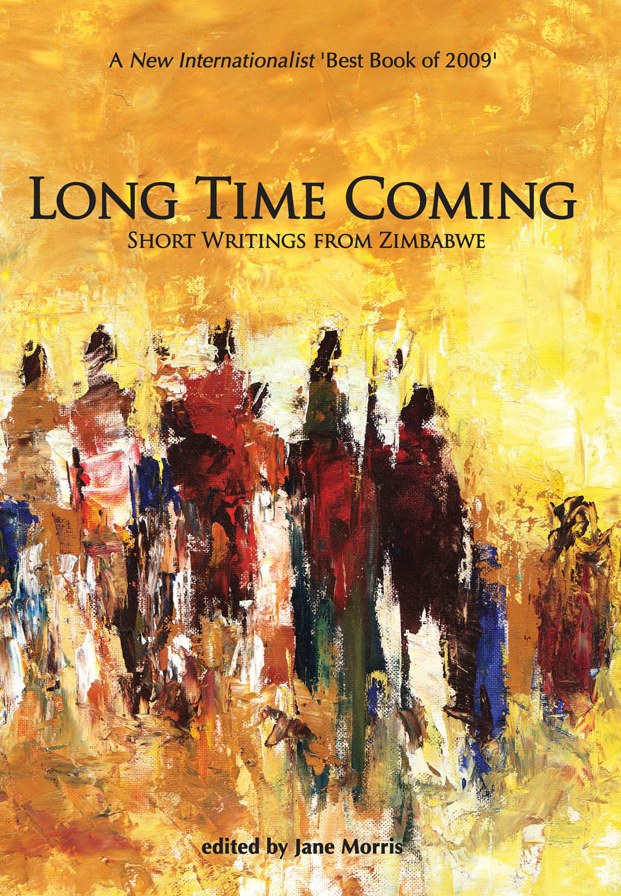
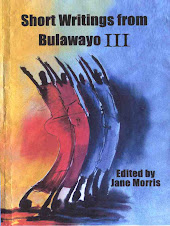
The previous collections of short writings published by amaBooks include Where to Now? Short Stories from Zimbabwe, Long Time Coming: Short Writings from Zimbabwe and Short Writings from Bulawayo I, II and III. Where to Now? was co-published by Parthian Books in the UK and was translated into isiNdebele as Siqondephi Manje?, and Long Time Coming was selected by New Internationalist as one of the two best books from across the world in 2010.


Wednesday, January 11, 2017

Why I Read by Sandisile Tshuma


Hi. My name is Sandisile Tshuma and I am an information junkie. More than ten years ago I underwent the Clifton strengths finder assessment as part of a team building exercise at the youth-focused HIV prevention organisation I had just joined.  The test revealed that one of my top five strengths was something called Input. Input was defined as having a craving to know more and people with Input like to collect and archive all kinds of information. While I normally like to convince myself that I am “a riddle, wrapped in a mystery, inside an enigma,” I had to admit that the test was spot on.  

I read because I like to know things. I love knowledge for its own sake and I hoard it in my mind, my electronic devices, journals, notebooks and a book shelf that is so heavily overloaded it teeters precariously on the verge of collapse under the weight of all manner of books, lovingly collected over years.  My insatiable appetite for information and ideas in the form of words is well documented. I can’t help myself. Reading let’s me know things and discovering new things fills my heart with unadulterated joy. Literacy is the greatest gift my parents gave me.


When I was a child my parents kept an old school trunk full of books well older than I. That black trunk was a treasure trove of books, all classics. My mind traveled from The God of Small Things and Coriolanus, to Harvest of Thorns and Petals of Blood, from Gray’s Anatomy to Toohey’s Medicine for Nurses, Charles Mungoshi to William Blake. One day while digging through the old black trunk I found a tatty old exercise book in which my father had written the first few chapters of an autobiographical creative fiction book. I knew it had to be something he wrote in his youth because the pages were almost disintegrating and the ink was faded and blurred making it hard for me to read some of his flawlessly scripted cursive. He had never once mentioned this work or expressed the desire to write. He was a military man, a man of science, a businessman, anything but an author. And yet he wrote beautifully. Lyrically. He was reflective and generous in his descriptions. I was mesmerized. We never discussed it but it completely changed the way I saw him. He revealed his complex layered thoughts and helped me understand my own dark, broody complexity. I recognized myself not only in his words but also even in the very act of writing out his life, documenting his story for an audience of unknown existence.
I read to rekindle the feeling I got when my father unknowingly shared his life with me, as do so many other authors I love. In a world where it’s hard to feel anchored my love for reading showed me a new connection to the source of my being. I read because this is a privilege.


Sandisile Tshuma is a Zimbabwean storyteller, health, development and human rights practitioner who has studied molecular and cellular biology, public health, disaster management and acting from the University of Cape Town (South Africa), the University of the Witwatersrand (South Africa), the National University of Science and Technology (Zimbabwe) and the London Academy of Music and Dramatic Art (United Kingdom).
Sandisile has a professional background in monitoring, evaluation and communication in sexual and reproductive health programmes with the United Nations and other International Organizations in East and Southern Africa. She is an award winning short story writer, the founding editor of AntuAke online magazine, and has curated a personal blog for five years. Sandisile's short stories, "Arrested Development" and "The Need" were published by amaBooks Publishing in two anthologies of Zimbabwean short stories. "Arrested Development" won an Honourable Mention for the 2010 Thomas Pringle Award in the short story category, has been translated into a number of languages and is included in an anthology titled "When The Sun Goes Down", a set book in the Kenyan English language curriculum at secondary school level. The Need has been translated into isiNdebele. Her first full length book, "Dandelion Dreaming," tells the story of marginalised youth in South Africa using the "photo-voice" methodology. 

Sandisile has a special interest in young people, particularly those made vulnerable by HIV and AIDS, and is involved in supporting the work of  Aluwani and COPESSA. Currently, she works in leadership development as the South Africa country manager of the Emzingo Group aiming to inspire responsible leadership, prepare individuals to tackle global challenges and connect business to society.

Tuesday, January 3, 2017

Remembering Julius Chingono, 6 years gone


 Tired Feet

A man arrived
in a park,
kicked off shoelace-less shoes
from his fetid feet.
Tired feet stared
at a notice written –
‘stay off the grass’.
Lush grass sneezed,
the smell of dirty feet
choked its shoots.
The legs bent and creaked –
we cannot go further.
The man dropped
to sleep 
on an empty stomach.


and then there was his humour...

Drunk

In the photograph
I was so drunk
that I would stagger
out of the picture.


(both from Together, Julius Chingono and John Eppel, 2011)


Getting Together, poems and short stories by John Eppel and Julius Chingono ready for publication was a cooperative effort. Getting the work from John went smoothly as John lives in Bulawayo, our base, and is online. Julius lived in Norton, outside Harare, and did not have access to a computer. It was 2010 and time to call in the help of friends. The poet, Togara Muzanenhamo, didn't live far from Julius and offered to get the poems from Julius, type them up and email them to us. This worked well, we made suggested edits, sent them back to Togara, which he then shared with Julius. And so we progressed... The same routine was adopted for the short stories. The writer Tinashe Muchuri came to the rescue. He took on the task of typing Julius' stories from which we selected those which we chose to include in the collection and proceeded to edit them with Tinashe kindly acting as the go-between. In this way the anthology, Together, came into being.

The book now complete, we negotiated co-publishing deals with the the University of Kwa-Zulu Natal and the University of New Orleans. All was going well and then we received the tragic news that Julius had died on January 2nd, 2011, before we had brought the collection out. So the launch became a tribute to Julius, where we played a video of him reading his work.

We will remember Julius.

Saturday, December 17, 2016

Bulawayo


She is a faded beauty, an old madame who makes her face up every morning, lipstick just that little too bold, that only serves to underline the slightly trembling lip. Potholes full of stagnant rain water, faded road markings, street kids begging at the car window, soggy posters tied to trees and stuck on dustbins, advertising everything from 'bedroom cures' to wealth and prosperity. Beautiful old buildings with long-dead owners' names still adorning them: A.D. Radowski 1910, Haddon and Sly est.1894, once purveyors of fine things now selling cheap wigs and cell phone chargers. Blocks of flats named Victory Place and Luxor House, now strung with ribbons of washing: babies' nappies, men's shirts, a child's school uniform. Hung high above the stinking sanitary lanes and the pavements where people sit and wait . . . and wait and sit, quiet, eyes fixed on nothing. Newspaper hoardings which announce the continual demise of our ancient dictator, that bond notes are here to say, that Arsenal beat Liverpool 2-1. I remember my other life: Late-night Christmas shopping at Meikles, my mum ordering the Christmas ham from the butcher, listening for the time on the City Hall clock. And I wonder whatever happened to the Cat Lady, with her long grey hair and her long brown coat, who fed the strays outside the public toilets. Long gone now, too.


Bryony Rheam. 13 December 2016

Friday, December 2, 2016

Why I Read by Christopher Mlalazi


I grew up with a natural love of story telling. This goes way back to my childhood. My father was a gifted storyteller, but not a public one as his stories were only for his family. 
My father had an amazing repertoire of folklore, usually told around the fire after the evening meal in the late 70s when we lived in Old Pumula Township. There was no electricity in houses in that township then – the only electricity was for obvious reasons for the tower lights, the police station, clinic and housing office. This was during colonial rule.
And so there we would be, sitting around the fire under the stars, with father entertaining us with his tales. I remember that most of them had dialogue and song, and he would sing the songs, and then teach us them too so that when he repeated the tale on other nights, we would sing along with him.
Sometimes when we had aunts and uncles visiting from the village, he would ask them to tell us their own tales.
This was the time that my love for stories gestated. When I grew a bit older, I started hunting for books for more stories. I read everything I could find, from first staring at pictures in comic books before I could read and trying to figure out the stories they were trying to tell, to actually reading books when I had learned how to read at school.
I was always on the hunt for a good story, especially adventures, as they were a window to far off lands for a kid coming from a poor township. Yes, I grew up in one of the poorest townships in Bulawayo, but that does not mean that the people living there were poor in thought, creativity and ambition.
As I grew older and my reading matured, I started discovering that stories carried much more than adventure and thrills. Or the chance to get an erection from a Nick Carter or James Bond novel. That was before I went to secondary school. I began to learn that behind most stories there were coded all kinds of social, economic and political commentaries. This was driven home to me when I started studying literature in high school, reading books like Things Fall Apart, Animal Farm, The Mayor Of Casterbridge, Julius Caesar and the like.

So, in a nutshell, I now read for diverse reasons, to appreciate world aesthetics, to hear the creaks of the wheel of life, and to also see and think clearly. Last but not least, sometimes I read to relax –  over a copy of Hegel’s Philosophy of Right. Lol.

Tuesday, November 29, 2016

The Maestro, the Magistrate and the Mathematician - a patchwork quilt for people-watchers

https://literarykitty.wordpress.com/2016/11/12/the-maestro-the-magistrate-and-the-mathematician-a-patchwork-quilt-for-people-watchers/


I read Tendai Huchu’s Hairdresser of Harare many years ago and the thing I remember most about it was its sense of atmosphere and colour and brightness and heat. The man makes you feel and that makes reading easy, makes you forget you’ve been on this train for an hour and a half, or that you’re tired. So I was excited to try The Maestro, the Magistrate and the Mathematician and I bumped it up my TBR list pretty soon after I received it.
The book tells the story of three Zimbabwean expats in Edinburgh. It introduces you to their family and friends, pinpoints their lives at a moment in time and watches how they run parallel, interweaving occasionally in unexpected ways. I don’t want to say too much about the plot of this book as I came to it thinking it was one thing, enjoyed it for what it was and was fascinated towards the end to find it was something else entirely.
Though Huchu’s native Zimbabwe is everywhere in his work, it never feels like a cultural lesson. Songs are not translated, terminology is not explained and I like that sort of thing. It’s not always practical perhaps but I like to learn language by context. It’s how children learn their native tongue and it’s how big readers get a good vocabulary, find words in their brains they know the meanings of even if they don’t quite know how they got there. In a world where so many half-hour TV shows offer a five-minute recap at the beginning of every episode, it doesn’t hurt not to have everything spelt out for us.

In this book, Tendai Huchu writes varied voices masterfully. I imagine him as the sort of person who listens to other people’s conversations on buses, catches snatches of them over his shoulder in coffee shops, listening to the lilts and language choices and filing them, perhaps even unconsciously, for future use. I suppose I’m one of those people too and that’s why I enjoy his work. It’s a tangled web of connections with some satisfyingly twisty turns. His characters are funny, sad and frustrating at times and his book is people-watching in paper form.

Monday, November 28, 2016

Morland Writing Scholarship – 2016 Shortlist


The shortlist for the prestigious Morland Writing Scholarship has just been announced. Among the twenty-two shortlisted writers are two Zimbabweans, Bryony Rheam and Sandisile Tshuma, both of whom have been published by amaBooks.
Percy Zvomuya is a previous Zimbabwean recipient of a Morland Writing Scholarship.


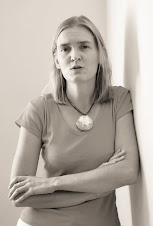
Bryony Rheam

Sandisile Tshuma
This year Nigerians dominated the list. Of the twenty-two names, eleven are from Nigeria, three from South Africa, two each from Somalia, Zimbabwe and Kenya, and one each from Gambia and Ghana.

Miles Morland said, “The standard of the shortlist is always high but this year we had an even greater depth of talent than before, making the choosing of a shortlist particularly difficult.  We had over 500 entries, up from 385 last year and they came from 37 countries, compared with 27 last year. We have two Caine Prize winners on it, and a number of writers who have received global recognition. We are pleased also to have writers early in their career who show terrific promise. We have been blown away by the talent, imagination, energy, and humour that characterises African writing. Our only disappointment is that, although we had a number of non-fiction submissions, only one made it to the short list. We are actively trying to encourage non-fiction, Africans telling Africa’s story.”

The judges, with Ellah Wakatama Allfrey from Zimbabwe in the chair, assisted by Femi Terry from Sierra Leone, and Muthoni Garland from Kenya, will meet on Dec 12th to select the five 2016 Scholars. Their names will be announced shortly afterwards. The Scholars will each receive £18,000, paid over the course of a year, to allow them to take time off to write the book they have proposed.

The shortlist follows:

Abdul Adan – Somalia
Jekwu Anyaegbuna – Nigeria
Ayesha Harruna Attah – Ghana
Rotimi Babatunde - Nigeria
Dayo Foster – Gambia
Amy Heydenrych – S Africa
Abubakar Ibrahim – Nigeria
Nneoma Ike-Njoku – Nigeria
Julie Iromuanya – Nigeria
Hamse Ismail - Somalia
William Ifeanyi Moore – Nigeria
Lidudumalingani Mqombothi – S Africa
Nick Mulgrew – S Africa
Otosirieze Obi-Young - Nigeria
Okwiri Oduor – Kenya
Adeola Opeyemi - Nigeria
Olawale Olayemi – Nigeria
Troy Onyango – Kenya
Mary Ononokpono – Nigeria
Koye Oyedeji - Nigeria
Bryony Rheam – Zimbabwe
Sandisile Tshuma – Zimbabwe