Thursday, August 28, 2025

The Maestro, The Magistrate and The Mathematician by Tendai Huchu is August's book at the Bulawayo Book Club

Tendai Huchu's novel The Maestro, The Magistrate and The Mathematician is to be discussed this weekend (30 August) at the Bulawayo Book Club.

Three very different men struggle with thoughts of belonging, loss, identity and love as they attempt to find a place for themselves in Britain. The Magistrate tries to create new memories and roots, fusing a wandering exploration of Edinburgh with music. The Maestro, a depressed, quixotic character, sinks out of the real world into the fantastic world of literature. The Mathematician, full of youth, follows a carefree, hedonistic lifestyle, until their three universes collide.


Wednesday, August 27, 2025

The first review of Ignatius T. Mabasa's The Mad

 Review by Rutendo Chichaya

Reproduced from negwande.com/post/the mad-by-ignatius-t-mabasa-translated-by-j-tsitsi-mutiti

'I tried to pick up my jacket and missed it as I stumbled. I tried to laugh at myself but what I was feeling led to self-pity. The hunger was now a real pain, like a hot brick in my belly. I decided to go to the bins, where I had often seen people in search of food. Shyness is a luxury for the well-fed, not for those who feel the way I was feeling.'  page 27


The Mad is a novel by Ignatius T. Mabasa, translated by J. Tsitsi Mutiti. It was first published in 1999 in ChiShona as Mapenzi. I have read translated books that lose the essence of the original text by using a direct translation approach. While effective in its own way, as a reader I am captivated by translations that capture the moments and mood in a manner almost as similar to the original text. A heated conversation arose at the 2nd Edition of the Harare Open Book Festival, where I was moderating a discussion with Tsitsi Nomsa Ngwenya about translating works written in our mother tongues, the extent to which meaning is lost in translation, and the very act of translation: what purpose does it serve? (a conversation for another day). I commend Mutiti for boldly translating this Zimbabwean classic. Her admirable work begins with the title, ‘the mad’, because 'mapenzi' can be translated in different ways; this title applies to the city, its things, and its people, making it all-encompassing.  From the University of Zimbabwe to Seke Unit D, these characters will have you wondering if it is true that the more things change, the more they remain the same.

The novel tackles themes like the liberation struggle, postwar trauma, culture, identity, family dynamics, HIV/AIDS, sexual violence, and substance abuse in a web of chaos. The novel begins with the winding rant by Hamundigoni, the main character. It’s easy to dislike Hamundigoni, a war veteran and former teacher who refuses to accept the assertion that he has lost his mind. 'No one likes a profound thinker who speaks his mind. That's me, wide awake and always on the ball. I'm a genius but they call me mad. Do they even recognise madness when they see it? Amai, do you know madness?’- page 5. He is crude and annoying to a great extent, yet I found some empathy for him. This is the case with most of the characters linked to Hamundigoni, whose actions evoke frustration.  Closely connected to the post-independence disappointment is the trauma of war, which Hamundigoni marries in his periodic rants. Mabasa's humour is as strong as the sarcasm, which makes the blow of reality manageable to swallow. Mabasa’s comedic relief is clever, sneaking up on the reader in the fashion of a crow attentively preying on oblivious chicks and catching them at a perfectly calculated time.

The Mad is a commentary on Zimbabwean society, where racism, homophobia, and sexism are rife at the time of the novel. The book comes with a warning that alerts the reader to expect characters who reflect the society of the time. One of the things that this book asks the reader to interrogate is whether it's possible for us to be alright in a society filled with so much decay, disappointment and pain. One connects with these characters as they navigate life in an evolving society and realise that we are all on the brink of losing it somehow. Repression was the order of the day at the time this book was written. People who often speak their minds are seldom applauded unless their voices conform to the established norms, but is this the case for Hamundigoni as he alleges?

There are many strong characters in this novel, but alongside Hamundigoni, in the fashion of African folklore, Harare, the dog, is an indispensable character (Mabasa is a notable sarungano). This dog (formerly known as Salisbury before being renamed to ‘go with the times’) is given to Mai Jazz by her white employer, who, upon having to leave Zimbabwe to return to her home in Britain, can't travel with it. The employer gives this dog to Mai Jazz out of constraints. Harare is a key site in the novel, and as I read this, I couldn't help but draw parallels between Harare the dog and Harare the city. The allegory is sharp and impossible to miss. The characters curse Harare for what it has done to them, the city where people go to take on new characters (or their most authentic selves?) and shift their culture. Yet their intersections reveal that Harare is what it is because of its people, which leads us back to the title.

The novel beautifully intertwines the music produced by the singers, who have come to be regarded as legends in Zimbabwe, with the art of storytelling. Music and books meet at the well of storytelling, where people can draw what they require. In this text, Mabasa fuses the two; you can tell a great deal about people from their music over the years, as it also captures the language of the day. Mabasa effectively mirrors the tone of the time. I enjoyed reading this story once again, and the translation was well done. I highly recommend!


Book Details

Title: The Mad   

Genre: Fiction

Author: Ignatius T. Mabasa, J. Tsitsi Mutiti

Publisher: Carnelian Heart Publishing, amaBooks Publishers (2025)

Pages: 244


Tuesday, July 29, 2025

Ignatius Mabasa's The Mad now available!


We’re proud to announce the release of The Mad, a searing, satirical novel that paints a vivid portrait of poverty, violence, dehumanisation, and postcolonial dislocation in Zimbabwe.

Originally published in ChiShona as Mapenzi, this powerful translation by J. Tsitsi Mutiti brings Ignatius Mabasa’s groundbreaking work to a wider audience. The novel unfolds through dramatic monologues and dialogue-driven exposition, navigating moral ambiguity and steeped in the politics of language and decolonial thought.

The Mad is not only a milestone in Zimbabwean literature, it is a bold contribution to African and global literary landscapes, challenging conventional forms and redefining what the modern African novel can be. Mapenzi was selected in The Times Literary Supplement as 'one of the most significant books to have come out of Africa.'

It is a novel that asks urgent questions: How do societies manage cultural continuity amid rupture? What happens when colonial legacies collide with poverty, violence, and the forces of globalisation?

The Mad is co-published in Zimbabwe and in the United Kingdom with Carnelian Heart Publishing

Cover art by Lovemore Kambudzi

Available now on Amazon or directly from Carnelian Heart Publishing

Not available in North American markets till next spring. 

Huge congratulations to Ignatius T. Mabasa

Tuesday, July 15, 2025

Potholes in 'Whatever Happened to Rick Astley?'


Raisedon Baya discusses the story 'Potholes' from Bryony Rheam's short story collection Whatever Happened to Rick Astley?, which was being discussed by the Bulawayo Book Club.

                                 ---------------------------------------------------

"Potholes"

I'm a sucker for political satire. I sometimes see it where it's not there. So please forgive me for seeing Potholes as some kind of political piece. Subtle but there. I don't know if there is anything called "covert satire" but in this piece I see a writer taking a short dig at politicians and the government. 

The futility of one man's, Gibson Sibanda's, attempt to solve a national problem is sad if not laughable.  Everyday we laugh at our problems and at ourselves. It's nothing new. The potholes are not only in Napier road but everywhere, as we later find out in the story. "He went first to Ilanda and then to Famona and finally settled on Pauling Road in Suburbs."

The dig is more pronounced when suddenly the city council wakes up to quickly fix the road because the the Vice President has bought a house in the neighbourhood. They quickly fixed the road so that the VP of the country would drive safely, and unbothered, to his new house. Here is a government of the people that has been captured and now panders to the whim of politicians. Politicians' lives have become more important than the ordinary people that the government claims to serve. Somehow priorities have been turned upside down. The servant has become the master. 

Potholes are a sign of roads gone bad. Unattended to. Unrepaired. And a danger to motorists. Potholes could also be a metaphor of something horrible gone wrong with our politics. Something that needs fixing immediately. And not by one person. 

Whether or not the author intended the piece to be a  political satire or not, the story effectively highlights the absurdity and injustice of a system that prioritises the needs of the powerful over those of the general population.

The story is also a typical example of "there is complexity in simplicity." It looks and reads so simple but on a closer look its depth is outstanding.  Potholes is just but of the 16 stories in Bryony Rheam's outstanding collection aptly titled Whatever Happened to Rick Astley?

Whatever Happened to Rick Astley?


Ignatius Mabasa's The Mad is Here


We're excited that The Mad, the translation from ChiShona into English by J. Tsitsi Mutiti of Ignatius Mabasa's novel Mapenzi, can be preordered now on Amazon  https://amzn.eu/d/8hP1FFI

The Mad, published by amaBooks and Carnelian Heart Publishers, will be released on July 29.  The cover is from an art work by Lovemore Kambudzi.  

The novel was chosen in the Times Literary Supplement as 'one of the most significant books to have come out of Africa.' 


Sunday, May 25, 2025

The Bulawayo Book Club discuss Bryony Rheam's 'Whatever Happened to Rick Astley?'

This month's meeting of the Bulawayo Book Club discussed Whatever Happened to Rick Astley? with the author of the short story collection Bryony Rheam. The book club is organised by Raisedon Baya and takes place at Alliance Francaise de Bulawayo.


Raisedon Baya's comments about the meeting, with two short story reviews by Raisedon, follow:


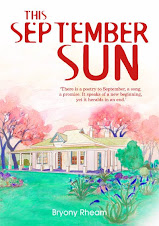
The Bulawayo Book Club just finished reading Bryony Rheam's collection of short stories entitled Whatever Happened To Rick Astley?. This is Rheam's third book after This September Sun and All Come to Dust. For the next few days I shall be doing some short reviews of some of the stories contained in the anthology.

Let me begin by saying the anthology offers thought-provoking insights into the human condition, societal issues, and the complexities of everyday life. Today I shall focus on "Potholes" and "The Piano Tuner". These two stories shed light on various themes like government neglect and the politicisation of public services, racial tensions and biases and the struggles of ordinary people in extraordinary circumstances.

Rheam's writing style, which hints at deeper meanings and leaves room for interpretation, adds depth to the narratives. 

"Potholes" is about how Gibson Sibanda starts fixing potholes in a road in Hillside suburbs and ends up moving to other roads. It is a simple story. Perhaps symbolic of how Zimbabwean roads have become. Anywhere, you know something is very wrong in a country when an individual who doesn't even own a car starts mending roads. The potholes are so many and the roads look neglected. Both local and national governments have abandoned their responsibility of mending roads. What is funny is the superficial mending of this one road because the Vice President of the country has bought a house in the suburbs. And they have to pretend to mend it. More hilarious is the fact they mend the road for an intended visit to the new house by the Vice President. A visit that never happens. A subtle dig by the author at our politicians and how simple decisions like mending a road have become political.

Then there is "The Piano Tuner". This one is set in Zambia but it might as well be a Zimbabwean story. A black piano tuner, Leonard Mwale, who apprenticed under a white piano tuner, takes over the business and continues to use the white man's name as the business name. (Doesn't this sound familiar?) On this particular day he is hired by an Indian client. The piano tuner is good. Very professional. He knows his work. Unfortunately, the Indian client discovers during lunch that he has engaged a black man and things change and racism rears its ugly head. It becomes clear that the Indian client would not have engaged the service of the piano tuner if he had known he was black. The invitation to lunch was extended to Thomas Jenkins the name, not the piano tuner. There are racial overtones in the story. So much that when the Indian leaves the payment for the service the money is short. He can't bring himself to pay a black man properly for proper service. The writer does not overwrite, she makes hints and leaves it to the reader to fill in the gaps.

With her current body of work I think Bryony Rheam now deserves to sit on the high table with other Zimbabwean literary giants. When we mention the likes of Tsítsi Dangarembgwa, NoViolet Bulawayo, Sue Nyathi, Siphiwe Gloria Ndlovu, we should not forget to include Bryony Rheam on that list. She has truly earned her spot.


Whatever Happened to Rick Astley? is published in Zimbabwe by amaBooks and in the United Kingdom by Parthian Books.


Friday, May 2, 2025

'The Mad', the translation into English of Ignatius T. Mabasa's Shona novel 'Mapenzi', soon to be published


amaBooks are soon to copublish Ignatius T. Mabasa's The Mad with Carnelian Heart Publishing in Zimbabwe and in the United Kingdom. The award-winning Shona novel Mapenzi has been translated into English by J. Tsitsi Mutiti, edited by Jane Morris and proofread by Samantha Vazhure. To quote Memory Chirere, 'When this novel first appeared, it brought to Shona literature the seduction and tyranny of storytelling. With this translation, the English speaking world will have the opportunity to experience the elegance of Ignatius Mabasa's writing.'

We are also delighted that this translation of Mapenzi has also been chosen as the first translated novel, in 2026, in the University of Georgia Press's African Language Literatures in Translation series, to be published in North America. As the series editor Christopher Ernest Ouma argues, 'The time is right for an initiative that publishes and promotes essential works of world literature written in African languages. As Ignatius Mabasa has said about the inclusion of The Mad in the series, 'I actually see the translation into English as a gain against Western hegemony ... Instead of an African story being forced by the capitalist world system and globalisation into English, the translation is a sign of respect to Shona people in wanting to understand their world view and the issues that trouble them.'

More information about the UGA series can be found here