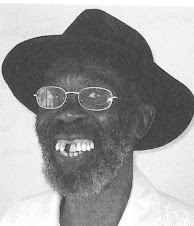
Anderson Tepper: This year both you and Tsitsi Dangarembga were awarded the prestigious Windham Campbell Prize for fiction, and NoViolet Bulawayo was shortlisted for the Booker Prize. What do these honors say about the state of Zimbabwean writing today?
Siphiwe Ndlovu: I have said it before and I will say it again: this is definitely a great time to be a Zimbabwean writer. There are just so many writers out there telling the story of a country that is often maligned or, worse still, written off as a “failed state.” These writers often help us think critically about the overly simplified way that the media tends to write about Zimbabwe.
Those of us who come from Zimbabwe understand the complexity, knottiness, and messiness that the many forms of violence and injustice—the product of exploitative and extractive settler colonialism and rampant postcolonial corruption and greed—create. The media narratives and portrayals of Zimbabwe both within the country and internationally tend to be limited and limiting and create the need for alternative narratives—and this is where storytelling comes in. In Zimbabwe’s fiction, there is anger, outrage, disappointment, disillusionment, hope (and the loss of it), but most importantly, there is a call for reckoning and change that the politics of the country have failed to successfully address. All this makes for a literature that is concerned with many of the issues that globally plague our twenty-first century: the erosion of civil rights; the rise of a dangerous, exclusionary, and myopically inward-looking populism; and the persistence of racism and other forms of hate. The international recognition of Zimbabwean writers, via such awards as the Windham Campbell Prize and the Booker Prize, shows that we are not simply telling stories about a pariah state but about a world living and fighting its way through various crises and inheritances from the past—stories that, although they are about a country, are really of the world.
Tepper: Who were some of the authors who played a role in inspiring you to first write about your country and its history?
Ndlovu: Even though I grew up in Zimbabwe and spent all my years of primary and secondary education there, I didn’t really encounter Zimbabwean fiction until I was a college student in the US. I remember reading Charles Mungoshi’s wonderful collection of short stories, Coming of the Dry Season, in high school for one of the national exams. But I believe that was the sum total of my engagement with local fiction.
In college, when I told one of my professors that I had never read Tsitsi Dangarembga’s Nervous Conditions, she was rightly appalled and aghast that I, a Zimbabwean creative writing student, had never read the book. She immediately gave me her own copy of the novel to read . . . and everything changed. I could relate to the experiences of all the characters in that novel—Tambudzai, Nyasha, Babamukuru, Lucia, Takesure. I knew and was related to people just like them. All of a sudden literature became not just something I loved but something that was familiar. That experience led to a journey of discovery that brought me into contact with such brilliant works as Dambudzo Marechera’s The House of Hunger, Shimmer Chinodya’s Harvest of Thorns, Peter Godwin’s Mukiwa, Doris Lessing’s The Grass Is Singing—these works helped me understand my country and its history.
However, it was not until I devoured Yvonne Vera’s entire oeuvre, especially Butterfly Burning and The Stone Virgins, that I realized that one could write about my city, Bulawayo, a city that I love very much, and make it come alive—make its absolute richness known to the world (see WLT, Sept. 2005, 64). I wrote my PhD dissertation on Rhodesian and Zimbabwean fiction, and thinking critically about the many issues raised within the country’s literature encouraged me to also write creatively about my country and its history.
Tepper: Tell me about the ground you set out to cover in your two novels, The Theory of Flight and The History of Man. How will the final book in the trilogy, The Quality of Mercy, complete the picture?
Ndlovu: The Quality of Mercy was published by Penguin Random House South Africa in September 2022 and is due to be published by Catalyst Press in the US in the latter half of 2023. Together these three novels—The Theory of Flight, The History of Man, and The Quality of Mercy—make up the City of Kings trilogy. The novels all deal with aspects of Africa’s modern history: colonization, decolonization, and postcolonization.
The History of Man deals with the colonial moment and its many (often limiting) narratives. The story of its protagonist, Emil Coetzee, serves as a critique of colonial power and the kind of masculinity it produces.
The Theory of Flight is concerned with the postcolonial moment and its gradual loss of “ease” as it becomes a place of increasing dis-“ease.” The story of its protagonist, Imogen Zula Nyoni, serves as a critique of postcolonial power and calls for a different kind of revolution from the one that led to independence.
The Quality of Mercy actually acts as a bridge between the first two novels and is a story of transition that delineates a country’s journey from being a colonial state to a postcolonial state. The story of its protagonist, Chief Inspector Spokes Moloi, serves as a way to think critically about the institutions, systems and attitudes that a postcolony inherits as it tries to right the many wrongs of the past.
Tepper: Though you’ve studied and lived abroad, you returned to your hometown of Bulawayo in 2018. What have been the challenges and benefits of being based back in Zimbabwe?
Ndlovu: Bulawayo is a postindustrial city and, like most postindustrial cities all over the world, it is undergoing a crisis of identity brought on by loss of opportunities, devastating levels of unemployment, deterioration of once pride-inducing infrastructure, and the gradual decay of the systems and institutions that once upon a time held it together. These realities create many challenges and difficulties for us, but Zimbabweans are extremely innovative and resilient people who are adaptable, perhaps to a fault.
Even though most factories closed and multinational companies left after the political upheavals, the bad governance and civil unrest of the early 2000s sent the country into a tailspin; paradoxically, the city of Bulawayo continues to grow as more and more people leave the rural areas or other parts of the country and come to settle in the city in search of opportunities. As a result, this is a time of great struggle and change.
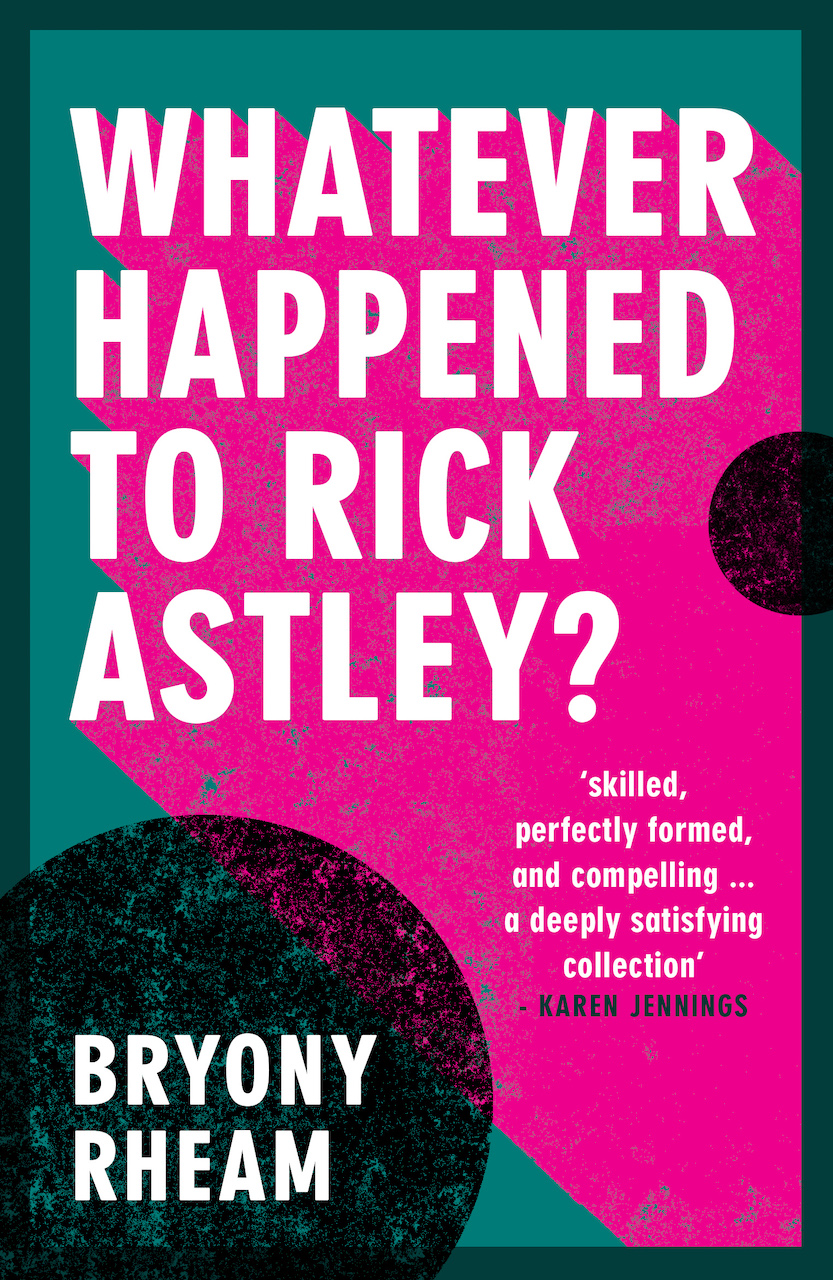
Given the state’s control over the narrative of post-2000 Zimbabwe, it is important, as a writer, to live in and witness this period of great change. One of the wonderful benefits of living in Bulawayo at this time is that there are many other writers living in and writing about the city and the country—John Eppel, Bryony Rheam, Violette Kee-Tui, Erica Gwetai, Scottie Elliot, Susan Hubert, Leroy Ndlovu, and Philani Nyoni. This means that the story of what is happening is being captured from many different vantage points and being written in its multifaceted complexity.
As academic Tsitsi Jaji has brilliantly pointed out, Bulawayo’s positionality as the second-largest city, coupled with its rather fraught history with the country’s capital, allows its writers to see and experience the country’s politics differently and, as a result, to write stories that often challenge the dominant narratives. As a writer whose works depict life in Bulawayo, the City of Kings, writing from a position of witness has been very edifying and fulfilling.
Tepper: Has the climate changed for writers and artists since the fall of Robert Mugabe five years ago?
Ndlovu: I think the climate changed for Zimbabwean writers long before the events of 2017. The immediate post-independence years saw a rise in literacy in the country, and it was almost taken for granted that educated Zimbabweans would read—newspapers, magazines, books. Libraries and bookstores thrived, providing readers access to both local and international writing. Mobile libraries traveled to out-of-the-way places—that is how much of a reading culture the country had. But reading is something of a leisurely and privileged pastime, and when people are struggling to make ends meet economically, the time they can devote to reading and consuming other forms of art dwindles. So, post-2000 Zimbabwe has seen a decline in its reading culture and support for its arts in general.
The state, understanding that writers and artists often use their work as critique and counter-narrative, seems to have taken advantage of an already bad situation and dried up or corrupted most means of arts funding. It’s made the taxes on importing books exorbitantly high, which meant that many bookstores had to close; allowed for textbooks to be photocopied, which meant that most publishing houses which relied on textbook publishing in order to publish literature have had to stop publishing local works of fiction, poetry, etc. Whatever gains in its reading culture that Zimbabwe had cultivated in the 1980s and 1990s have greatly diminished.
There is, however, a silver lining to this gray cloud. Post-2000 Zimbabwe has seen the creation of what has come to be known as the Zimbabwean diaspora, as more and more Zimbabweans leave the country and settle in other parts of the world. This diaspora has allowed Zimbabwean writers—NoViolet Bulawayo, Novuyo Tshuma, Sue Nyathi, Petina Gappah, Tendai Huchu, Brian Chikwava, et al.—to seek publication in other countries, which has led to the exponential growth of Zimbabwean literature over the past twenty years. Because of their subject matter, or because of the race or ethnicity or sexual orientation of their writers, many of the books that have been published in the diaspora would probably never have been published in Zimbabwe. The diaspora has allowed for twenty-first-century Zimbabwean literature to be truly diverse. My next series of interconnected novels will actually look at the experience of those living in Zimbabwe’s diaspora.
Anderson Tepper is co-chair of the International Committee of the Brooklyn Book Festival and curator of international literature at City of Asylum in Pittsburgh. His writing has appeared in the New York Times, Los Angeles Times, Vanity Fair, and Words Without Borders, among other places.




.jpg)







.jpg)