and one sees that their lives are interwoven. And we learn that our lives are intertwined with the characters. Is life orchestrated, ruled, and defined as musical pieces, legislation, and equations?
Tuesday, May 5, 2015
The Examiner reviews The Maestro, The Magistrate & The Mathematician
and one sees that their lives are interwoven. And we learn that our lives are intertwined with the characters. Is life orchestrated, ruled, and defined as musical pieces, legislation, and equations?
Saturday, April 18, 2015
Textures, poems by John Eppel and Togara Muzanenhamo, reviewed on www.examiner.com
Zimbabwean textures: the poetry of John Eppel and Togara Muzanenhamo
He has published 13 books (so far), one of which has been translated into French (The Giraffe Man), created a creative writing course for the University of South Africa and published three 'O' Level and one 'A' Level literature study guides. He was awarded the Ingrid Jonker Prize for his first poetry book, Spoils of War and the MNet Prize in 1993 [2] for his novel, D G G Berry's the Great North Road.[3] His second novel, Hatchings, was nominated for the MNet prize in 1993/4.
His works are studied in universities across South Africa.
“I think I’m a more subconscious poet. Togara uses a lot of his consciousness to craft his poems.”
This statement serves to foreshadow the tempo of the selections to be read, contemplated, and reviewed within the Textures (2014) collection. Muzanenhamo gives the reader ‘conscious’ prompts in the selection ‘I’ (as he writes):
he knew the world would not
change greatly after his death.
Her skin, warm-olive brown,” (Muzanenhamo, 71)
The textualities of the poetry of John Eppel and Togara Muzanenhamo contrast well for English educators to fully utilize the selections (format, style, inspiration) in literature classes. Additionally, lovers of poetry will find that the Zimbabwean poets enable one to hear a different voice from a different land. All African literature and poetry is political. The voice, the craft, and mode of African, literary, and poetic expression stimulates the senses in a unique way rivaled by few others. This is the poetry of Zimbabwe in Textures (2014).
Rosetta Codling, European Literary Scene Examiner
Monday, September 26, 2011
Long Time Coming Review, from www.examiner.com

New African Writing: [A] Long Time Coming
Rosetta Codling, European Literary Scene Examiner
September 24, 2011
Title: Long Time Coming, 'amaBooks Publishers, 2009
Edited by: Jane Morris
Synopsis: Jane Morris assembles another collection of short stories from the best contemporary writers of Zimbabwe today entitled Long Time Coming. Julius Chingono, John Eppel, and Brian Chikwava are noted contributors to this work, but there are additional Zimbabwean writers that are equally talented too. Sandisile Tshuma’s selection Arrested Development serves as an introduction to all. This first-person narrative is an account of the trials of a young lady attempting to go from point ‘A’ to point ‘B’ via the unreliable, temperamental transport system of Zimbabwe. Self described, our narrator rants: “I am not hard to spot in this crowd at the barely functioning filling station. I am the sore thumb of a twenty-something year old woman wearing high-end sunglasses and trendy jeans, carrying minimal luggage and standing in a statuesque pose…” And indeed our narrator is the typical, young, mobile, and affluent one seeking a better route and a better trip out of Africa. The banter and the despair of Zimbabweans resonate well in this short ‘snapshot’ of their lives.
The writer Mathew Chokuwenga creates an expose on life that reads like an African version of Henry James’ Washington Square. This is a complicated, many tiered story about complicated people and complicated lives. The title of the work is Lanigan Avenue. The residents of Lanigan Street and Washington Square share many secrets, intrigues and little love.
One of John Eppel’s contributions to the collection is entitled The Awards Ceremony. Eppel’s selection pairs well with the poem My Country by his (deceased) comrade Julius Chingono. The medium of satire is often illustrated in John Eppel’s writings. The Awards Ceremony is a short creation of the author that satires a farce within the hypocrisy of a government award ceremony. There is some dark humor in this one. A reader will find overt humor supplied by the ample wife of the Minister too. The poem of Julius Chingono pairs so well with The Awards Ceremony because it focuses upon the same theme. My Country is a cry from Julius Chingono. He bemoans the reality of his cosmetically attractive... but barren... homeland reduced to a disposable state that… “leads to a rubbish dump/by the cemetery.” Powerful is the word. Readers will find that this book contains short writings requiring extensive deliberations.
Critique: I was enthralled, mesmerized, intrigued, and enamored with this collection. Zimbabwean writers deserve the center of the literary stage. I have reviewed several works from this genre and my fascination and appreciation continues. I truly know that educators in the fields of language and history will find this collection useful for adult education. The readings flow easily and well, but the issues are suited for mature readers. I recommend this book to all!
Sunday, July 17, 2011
The John Eppel (Together) Interview, with Rosetta Codling

From: http://www.examiner.com/european-literary-scene-in-national/the-john-eppel-together-interview
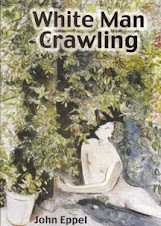
*Fascinating note: John Eppel is the author of Hatchings (2006), White Man Crawling (2007), Absent: The English Teacher (2009), and other works. He is a poet, novelist, short story writer, and teacher. He resides in his beloved homeland Zimbabwe. The latest contribution of Eppel to the literary scene is a joint endeavor, Together, with his deceased kinsman Julius Chingono. John Eppel presents a work that permits the reader to gain a glimpse into the unique, political, literary artistry of two famed writers.
Question: What is the symbolic meaning behind the title of your latest work Together (2011)?
Answer: It is unusual to think of an abstract word as a symbol, but when it becomes the title of a joint collection of poems and stories by a black person and a white person who spent half their lives in colonial Rhodesia and half their lives in Independent Zimbabwe, it becomes clear. Our country has been, and still is, defined by race. It’s the trump card in the game of politics. It gave rise to the word, apartheid, the opposite of which is togetherness.
Question: What brought you together with your kinsman Julius Chingono? After all, Chingono was a Black Zimbabwean and you are a White Zimbabwean, is that not so?
Answer: Neither of us was part of the mainstream, Nationalism, which dominated Zimbabwean writing in the first twenty years of Independence. I for obvious reasons, and Chingono because, as the late Lionel Abrahams put it in his postscript to Chingono’s poetry collection, Flag of Rags:
For all his special power of compassionate empathy with other people, his altruism, Chingono is his own man. In contrast to much protest and political poetry, his art does not spring out of a collective Cause or big Idea. Everything he writes rings of personal knowledge and experience, his own individual thought. He never trots out the fashionable formula, the convenient stereotype, the party line.
The fact that we were both marginalized for so many years was one reason for bringing us together. Another, I believe, is that, long before we met, I wrote a positive review of his poetry (in the defunct Southern African Review), which he appreciated. A third and most important reason is that neither of us judge[d] people by the colour of their skin but by their behaviour.
Question: Does your vocation as an English teacher trespass… or overlap upon your vocation as a writer?
Answer: Both. It trespasses in the sense that it leaves me little time to write; it overlaps in the sense that it provides me with much of my material, especially in my prose writing.
Question: As a writer, you are a member of an aesthetic community, why trespass into a political arena in your work?
Answer: Consciously apolitical writers are just as political as consciously political writers. The decision not to vote in an election is a political act. I like what Theodor Adorno says about this: “A work of art that is committed, strips the magic from a work of art that is content to be a fetish, an idle pastime for those who would like to sleep through the deluge that threatens them in an apoliticism that is in fact deeply political.”
I also believe that writing, especially poetry, should be beautiful, crafted. That’s where form comes in.
Question: How were you called to write…poetry…short stories….novels?
Answer: This is a difficult one. In my case, I think it might be a substitute for religion. The aesthetic experience, what James Joyce called an “epiphany”, seems to be a secular version of the religious experience. It’s got a lot to do with mortality.
Question: What does Together (2011) unfold to the reader that your previous works have not?
Answer: It is much more overtly political; there is less white guilt… that’s about all.
Question: Sick at Heart is a very emotional poem that defies nationality. How did you come to write it?
Answer: The year 2008 was Zimbabwe’s annus horribilis. The economy collapsed totally. People’s pensions and life savings were reduced to nothing. A mass exodus took place, mainly to South Africa. School teachers like me were earning less than a dollar (US) a day. It was also an election year, which resulted in the brutal deaths of over 200 opposition supporters. My story, “Of the Fist”, which records one of these deaths, was edited out of Together because the publishers found it too shocking. “Sick at Heart” was allowed to remain because it is metaphorical. The title (and the last words of the poem) comes from Hamlet. To this hour there is something rotten in the state of Zimbabwe. Not one of the perpetrators of those rapes, tortures and murders has been brought to book.
Question: Can you provide us with some ‘insider’ details about your selection entitled English Sonnet in Broken Metre?
Answer: As I have said elsewhere, I don’t write sonnets, I write parodies of sonnets. My seeming fixation on prosody is a deliberate form of self-mockery, an accusation of the culture that produced it. This poem is an angry response to the way some western governments baled out obscenely rich brokers with public money. One of the paradoxes of capitalism is the richer you get the cheaper living becomes. In Zimbabwe, as the final couplet suggests, it’s not brokers but very senior government officials who regard public funds as pocket money for themselves.
Question: What is the dramatic and political irony of your short story Who Will Guard the Guards?
Answer: One of the ironies here is that there is a strong perception in Zimbabwe that whites are fair game when it comes to the “redistribution of wealth”. The reasoning is that the whites, historically, took everything from the blacks, so why shouldn’t the blacks, now, take everything from the whites? If you go far enough back in history, say 2 000 years, you find that that the Shona peoples were also settlers in this part of the world, and they would have been the first to displace the aboriginal San peoples. I guess the distance you go back in history is determined by political expediency.
Our so-called guards – the police, the army, the CIO – are partisan, and that is a very scary situation for anybody who is not a paid-up member of ZANU-PF.
Question: Your short story The Debate sheds light on international, political hypocrisy. How did you come to write this powerful treatise?
Answer: The cartoonist in me.
Question: The death of the legendary Julius Chingono calls upon us all to think of our legacies. What will your legacy be?
Answer: A rickety old house (if it doesn’t get redistributed), a 1978 Ford Escort, the complete recordings of Enrico Caruso, and a fistful of poems.
Saturday, July 9, 2011
Zimbabwe's literary kinsmen: Together, part II

Together: Stories and Poems, 2011,
Genres: Poetry and short stories
Literary Elements: Imagery, wit
Comfort Level: Easy reading….but attention to detail is advised
Synopsis: The reader will find that John Eppel’s political side is unleashed ‘sans’ the covert references noted in his novel Absent:The English Teacher (2009). Together is about the fraternity of two political writers. Julius Chingono’s works are showcased in the early portion of the collection. John Eppel’s works follow. The poems of John Eppel entitled ‘The Coming of the Rains’ and ‘Charles Dickens Visits Bulawayo’ stem from the vast literary repertoire of the English teacher. Eppel can summon Rousseau, Kafka, and Dickens in a manner that facilitates the reader’s ability to implement ‘relevancy’ as a means of contrasting and comparing past political issues with those occurring in contemporary Zimbabwe. The author’s methodological (*classic John Dewey style) skills, as an English teacher, surface here. The short story ‘Who Will Guard the Guards’ is quite universal in the message illustrated. Eppel fashions an honorable, White, Zimbabwean character (perhaps) filled with guilt for the past colonial atrocities suffered by his Black kinsmen. The White Zimbabwean displays enough compassion and empathy to provide residency for a needy kinsman. But, the ‘needy’ man responds to the noble gesture in classic socio-pathetic fashion. The compassionate character goes on to find that ‘no good deed goes unpunished.’ And the new keepers of justice are as corrupted as those of the past. Is this all a form of reparations for past victims or mere revelations for the new victims? The reader must judge this one alone. The last poetry selection in Eppel’s segment ‘Waiting’ calls upon the reader to look back to Juilius Chingono’s own short story ‘We Waited’. In both selections, the writers Eppel and Chingono look and wait for change. The reader sees that these men are definitely of a similar, literary and political thread. Each man waits and beckons change in his writings. But will change come soon…or too late?
Critique: It was a pleasure to read this treasure. John Eppel continues to educate his students and readers. He is able to master the genres of poetry and short story writing with ease. This is no small feat. The works in Together appeal to the ‘literary’ scholarly set and those politically in tune with today’s events. Each segment of Together is a joy to read and savor. I do look forward to future works from John Eppel. We need brave writers to remind us of our obligations as citizens… and humanitarians, universally.
From: John Eppel is Together (II) - National European Literary Scene | Examiner.com http://www.examiner.com/european-literary-scene-in-national/john-eppel-is-together-ii-review#ixzz1RaMnokGU
Reviewed by Dr Rosetta Codling
Wednesday, July 6, 2011
Zimbabwe's literary kinsmen: Together
From the National European Literary Scene: Examiner.com
(http://www.examiner.com/european-literary-scene-in-national/zimbabwe-s-literary-kinsmen-together-review)
Part I –Julius Chingono and the text Together
Genres: Poetry and short stories in one collection
Literary Elements: Irony, imagery, simile, pathos
Comfort Level: Easy reading (*but…be not deceived)
Synopsis: This collection permits the reader to gain an introduction into the art of Julius Chingono, a Zimbabwean poet and writer. As a political writer, unabashedly, he wrote of the times in which he lived. He wrote of the trials of his people. And often, one will find that his sentiments and findings are universal. For example, in this collection, there is a poem entitled ‘Curiosity’ which nearly ‘protrudes’ from the pages of this text onto today’s headlines. This poem is about a man who hears gun shots outside his home. He opens his door…only to become a victim of his own curiosity. The current Arab Spring has claimed many victims or bystanders in the same manner. The short story ‘We Waited’ is timely too. Chingono writes of people waiting for justice. The people wait in the same manner as those in Samuel Beckett’s Waiting for Godot. As you know, no one could recognize Godot--even if he appeared in the play. No one would even know--if he had appeared. Justice is just as aloof and unrecognizable by the waiting masses in Chingono’s text. They await the opportunity to declare injustice and to claim justice. Justice never comes. In fact, tragedy awaits those who linger too long. In accordance with contemporary events, this selection of Chingono is too true. The Arab Spring has not brought justice to most who declared injustice.
The reader may shift gears and examine something a bit more personal in the‘I Lost a Verse’ poem. It’s about an interruption in verse. This selection may be illuminating because of the general trials that interrupt our own creativity and concentration. There is solace in knowing that Julius Chingono has suffered the same fate. But, he regained his tempo and wrote… once more.
Educators will enjoy the fact that Together permits you to teach the poems and short stories in installments. Readers, you will enjoy the fact that you can learn about Julius Chingono through his poetry and his short stories.
Critique: For those that enjoy the simple wisdom of Chinua Achebe, you will find itin Together. There are those who realize the cultural candor to be found in Langston Hughes and his ‘Simple’ short stories. You will find it in Together too. Sadly, Julius Chingono died too soon. There is much I would have asked him about his work and his life. But, Together will have to answer those questions…for now. I truly recommend this work.
By Rosetta Codling
Dr. Rosetta Codling is a literary scholar and critic. Her critiques of African and African-American literature have appeared in numerous journals throughout the world. Her latest critiques appears in The Journal of African Literature, Literary Criticism (IRACLC), The African Quarterly, and the CIEA7 World African Conference (2010). This year, she has served as a panelist at conferences in Puerto Rico, Peru, Portugal, and Spain. She is Education Editor for G&G Magazine, writing a column for educators. She is most currently composing her own book of short stories focusing on America's indigenous people. A graduate of CUNY, New York University, and Teachers College/Columbia University, Dr. Codling earned her doctorate degree from Bircham International University (Madrid). Professional honors have been awarded to her by U.S. Senator Charles Schumer and Congressman Gregory Meeks of New York.