Thursday, January 6, 2011

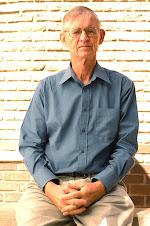
Tribute to Julius Chingono from Peter Thompson


"I first got to know Chingono's poetry, and was moved by its economy and dry comment. When I discovered his short prose, in the volume Together, I was overwhelmed by the clarity and force of his narrative gift (and I'm still tempted to say: poetic gift) .

Together will be a great testament, and I sincerely hope that we are able to find and publish more of his work."


Peter Thompson teaches Romance languages and literatures at Roger Williams University in the USA, and has been instrumental in getting Julius and John Eppel's collection Together co-published by the University of New Orleans Press. A book of his poems, Late Liveries, appeared in 2000, and another manuscript was a finalist in the National Poetry Series competition. Recent translating credits are Vamos a cantar(folksongs – Capital University Press), and Red Earth, poetry by Véronique Tadjo (E. Washington University Press). He has worked on issues of creolity and francophone writing, under various grants and awards, in Africa, the Caribbean, and the South Pacific. Thompson has also translated Léon-Paul Fargue’s Poëmes (2003), and is currently working on Nabile Farès’s Escuchando tu historia.

He is also the editor of Ezra: An Online Journal of Translation. He has also edited two anthologies of francophone literature, Littérature moderne du monde francophone, andNégritude et nouveaux mondes, which are widely used in schools and colleges.


Wednesday, January 5, 2011

Tribute to Julius Chingono from Fungai Rufaro Machirori


There are many things wrong with Bulawayo’s public library, but sometimes it startles you with a gem of a book that changes your perception about things.

I first came across Julius Chingono’s writing in 2007 when flitting across the shelves of library books, my hands stopped to rest on a book with an image of a dark window frame emitting the bright light of a yellow sky, bruise-red sun and neon green mountain tops.

Not Another Day.

It was indeed not another day as I read through the poems and short stories in that anthology, awestruck by the man’s superb ability to use verse to revolt against the political and social suffocation of our beloved Zimbabwe.

So how did my perception change?

I realised that a man, much older than me, whose historical context couldn’t have been more different to mine, could speak to many of my situations as a 23-year-old young woman waiting for life to finally happen to her.

I learnt that words know no owner, and that when used well and respected fully, they can mediate between the most unlikely of people.

I still have Julius’s poetry written up in my old university notebook - welcome salve to the drudgery of lectures and intellectual labour on hot summer days.

I still have the words that he left us all behind with, words which have immortalised this man so that future generations may marvel too at the wonder of his brilliance.

Go well.

Tuesday, January 4, 2011

Tribute to Julius Chingono from Mgcini Nyoni


"The loss of Julius Chongono is a great loss to the literary community.

He was such a humble being and very unassuming. One thing I learnt, and many poets (he is best known for his poetry even though he was also a great prose writer) learnt, from Julius is to be natural and to be yourself as a writer.

Julius' writing is natural and unforced and a joy to read, and he was also a joy to listen to when he read his work. I remember him reading one of his poems at Intwasa 2007. It was a piece about getting onto the bus during those days when transport was a problem; it was so simple and yet a powerful piece of literature.

May his soul rest in peace. Heaven needs a great writer I guess: that's why God decided to take him."


From Together:

At the Bus Station

When you arrive

at the bus station

pull down your tie

or remove the tie

to prevent strangulation.

During the fight

to board the bus,

unfasten all buttons

of the shirt and jacket

to avoid losing the buttons.

During the battle

to gain entry

to the bus,

tighten both shoelaces

for, when you are hauled

into the bus,

you hang in the air

and the shoes may come off,

tighten your belt

to avoid being undressed

during the scrambling

at the door,

remove your spectacles

and hold tight to someone

until you are in the bus.

During the climb

pay no attention to human sounds,

also bear in mind

words lose meaning

until you are inside the bus.

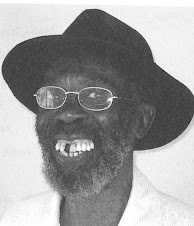
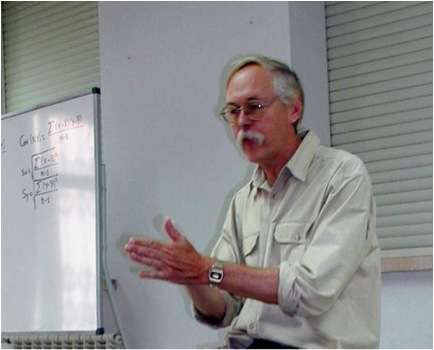
Tribute to Julius Chingono from John Eppel


"I barely knew Julius – met him, briefly, on three occasions – and yet I feel, somehow, that we’d been together for a long time. I guess that’s what happens with kindred spirits.

I was so looking forward to launching our joint collection of poems and short stories together, in the flesh – here in Bulawayo and maybe even further afield; but that is not to be.

Julius, poor himself, was a champion of the poor; and that is what I loved about his writing. One of Zimbabwe’s funniest poets, he was also one of her most serious. He knew that there is nothing amusing about poverty, especially unnecessary poverty; but he also knew, as a recorder of township life, how cruelly funny squalor could be.

And so I say goodbye to a humble man (his magnificent hat notwithstanding), of piercing intelligence, and a heart that loved the oppressed. I say goodbye to the frail old body, but not to the writing, through which one of Zimbabwe’s most idiosyncratic blasters of rocks and minds will live on - for ever and a day."


Julius Chingono


It is with sadness that we have learnt that Julius Sekai Chingono, the much loved poet and prose writer, died at Norton General Hospital on January 2.

Born in 1946 on a commercial farm near Harare, Julius spent much of his working life as a rock blaster in the mines. He wrote in both Shona and English, and won awards for poems written in both languages.
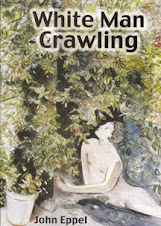
Julius had five books published: one play, Ruvimbo; one novel, Chipo Changu; two poetry collections, Flag of Rags and Kazwi; and one collection of short stories and poetry, Not Another Day.

Together, a collection of poems and stories by Julius and John Eppel, is to be published early in 2011 by 'amaBooks, and co-published in the USA by the University of New Orleans Press.

His poem They are picked was chosen by New Internationalist for their collection Fire in the Soul, of the best 100 human rights poems from across the world over the last 100 years.

Julius read his poetry at various international festivals, including the Poetry International Festival in the Netherlands, Poetry Africa in Durban, and the Shaari International Poetry Festival in Israel.

We first got to know Julius during the Intwasa Arts Festival koBulawayo in 2007. One particularly memorable occasion was the 'Dinner with Poetry' at the National Gallery of Zimbabwe in Bulawayo, when he read from his work between courses, together with the Welsh poet Lloyd Robson and with John Eppel, based in Bulawayo. The poets appreciated each others' work and the idea of a joint collection between Julius and John was born. Julius contributed a short story and a poem to Long Time Coming: Short Writings from Zimbabwe and five memorable poems to the collection Intwasa Poetry, and it was his poems in this book that brought his work to the attention of the University of New Orleans Press, and hence the co-publication of Together. Julius was very excited about his joint publication with John, and with his work becoming available in the USA. It is tragic that Julius will not be around to see the finished product but we are pleased that more of his work, both poems and short stories, will be available.

Julius was able to cock a snook at those that abused their power through his writing. His humour and his feeling for the oppressed will live on.


From Together:

No Funeral

When I die

no gathering

no fires

or chairs around fires

no wake

no gloating

no fussing.

Do not cry

over my carcass.

Do not sigh

over my excesses.
Life is not

what you make it

it is

what it makes

of itself.

Before disposal of my corpse

no vigil

no singing

no drumming

sniffing forbidden

no mourning

no moaning

no speeches

no ceremony

no cadaver viewing

no funeral

no coffin

or tin to contain

my remains.

Shove me in

a hessian sack,

throw it in a deep hole,

cover the hole

with rocks and soil.

Disperse forthwith.

Tuesday, December 7, 2010

Sandisile Tshuma's short-listing covered by Zimbo Jam and others

The short-listing of Sandisile Tshuma's short story Arrested Development, first published in Long Time Coming: Short Writings from Zimbabwe, for the Thomas Pringle Award has been covered by various newspapers and websites, including Zimbo Jam. Zimbo Jam noted the impressive list of previous winners of the award, including Nadine Gordimer and John M Coetzee.

The Zimbo Jam article can be found at
http://www.zimbojam.com/culture/literary-news/2046-bulawayo-writer-shortlisted-for-prestigious-thomas-pringle-award.html

The short-listing is also covered in News Day, in The Chronicle and in The Zimbabwean
http://www.newsday.co.zw/article/2010-12-06-zim-writer-shortlisted-for-top-award

http://www.chronicle.co.zw/inside.aspx?sectid=14401&cat=3

http://www.thezimbabwean.co.uk/index.php?option=com_content&view=article&id=36216:zim-writer-shortlisted-for-prestigious-award-&catid=70:sunday-issue

Sunday, December 5, 2010

Sandisile Tshuma Shortlisted for Thomas Pringle Award


Sandisile Tshuma's short story, Arrested Development, has been shortlisted for the Thomas Pringle Award. The story first appeared in Long Time Coming: Short Writings from Zimbabwe, and was then reproduced in the Longhorn collection When the Sun Goes Down for Kenya, Uganda and Tanzania, and in the South African literary journal Wordsetc.

Sandisile was born and raised in Bulawayo. She returned to the city after three years studying Chemical, Molecular and Cellular Sciences at the University of Cape Town, to study Development and Disaster Management at the National University of Science and Technology. She has a keen interest in human rights and is currently engaged as a Programme Associate for the UNESCO East and Southern Africa EDUCAIDS programme. Arrested Development, her first and only published short story, looks with humour at the struggle to survive in Zimbabwe through the eyes of a student researching an essay on cross-border trading.

The Thomas Pringle Award, organised by the English Academy of Southern Africa, is for the best short story published in a newspaper, journal or periodical. The other shortlisted writers are Stephen Watson (Professor in English and Director of the Creative Writing Centre at the University of Cape Town), Liesl Jobson (South African poet and musician, winner of the Inglis House Poetry Contest and editor of the magazine Mad Hatters' Review), Arja Salafranca (South African writer and poet, editor of the Life supplement of The Sunday Independent, winner of a Sanlam Award for Poetry(1994) and for short fiction(1999), and winner of the 2009 Dalro Award for poetry) and Gail Dendy (South African contemporary dancer and poet with six collections to her name, with 5 university degrees).