Tuesday, April 8, 2014

A Memory This Size: The Caine Prize for African Writing 2013

From: Harare News, Issue 9, April 2014

Review by Tinashe Mushakavanhu

Tinashe is a writer and editor. He read for a PhD in English at the University of Kent


The quality of the Caine Prize anthologies is always mixed but the gift of the Caine Prize to Africa has been to create a platform to share the continent’s rich terrain of stories and contradictions.

The book is in two sections. The first part comprises of the shortlisted stories and the eventual winner. Considering that these went through a rigorous judging process, they are certainly of high quality. The second section contains workshop stories.

What is quite intriguing on the list is the dominance of Nigeria. Are Nigerian writers far ahead of their African peers? And is Nigerian literature blooming while other African literatures are struggling?

The 2013 Caine Prize shortlist also highlights the fact that the African diaspora is increasingly shaping African literature, whereas before African literature grew out of the streets and bushes of the continent. What happened? Is it a shift of power? Or is it simply that the African narrative now has huge global demand? Whatever the case may be, thanks to the African diaspora for injecting life to an ailing literary culture. Our literature, African literature, is better off.

The creeping presence of America on the African imagination ties three of the stories together. Tope Folarin’s story Miracle touches on the issues of faith religion. Pede Hollist's Foreign Aid is a tale about the folly of a ‘Been-to’ who imagines he can return to his native land (in this case Sierra Leone). Elnathan John’s Bayin Layi unravels the violence in northern Nigeria. Chinelo Okparanta's America is, as the title suggests, a story about America as the longed-for-utopia. And Abubakar Adam Ibrahim’s The Whispering Trees is a magic realism narrative of a young man crippled by an accident that killed him, but didn’t.There is something particularly striking about African literature as reflected in these five shortlisted stories. Three of the stories are directly concerned with diaspora life in America. It points to a geographical extension of the African imagination in most of the new writing. The literature is a window into the African experience beyond Africa, its global interactions with other cultures though not always pleasant.The second section of the collection, the workshop stories, holds some brilliant work and some of a less polished standard. As outlined in the Ernest N. Emenyonu edited volume, Writing Africa in the Short Story, the short story genre is not an easy form despite its urgency and potency. A lot of the struggling stories in the volume have weak endings. It could be that African literature has for a long time been fed with long and elaborate tales in the form of folktales or in the form of novels.However, the stories in the second part of the anthology cover a wide range of topics and encompass a variety of styles representative of the diverse pool of writers from various African countries. There is irony and dark humour (Melissa Tandiwe Myambo); pathos (Hellen Nyana); satire and magic realism (Rotimi Babatunde); haunting and topical (Stanley Onjezani Kenani) among many other sensations. It’s a book worth reading simply because it provokes and challenges.

A Memory of this Size is published in Zimbabwe by 'amaBooks. It is available at the Book Café bookshop, National Gallery and Avondale Bookshop in Harare and at the National Gallery, Induna Arts, Tendele Craft and Phenduka in Bulawayo.

Africa39 List includes Novuyo Rosa Tshuma

We were thrilled to learn today that Novuyo Rosa Tshuma is included in the Africa39 list - a list of 39 of the most promising African writers of fiction from sub-Saharan Africa under the age of 40. The Africa39 Project was set up as a key part of the programmes and celebrations of Port Harcourt UNESCO World Book Capital 2014. The project is a partnership between the Hay Festival of Literature, the Arts Ltd UK and the Rainbow Book Club in Port Harcourt.

We first got to know Novuyo when we were involved in the British Council Identity and Diversity project. As part of the project we published two anthologies of short stories and poems - ‘Echoes of Young Voices’ and ‘Silent Cry’. Novuyo’s short stories appeared in both the collections. So started a long standing friendship with Novuyo. In 2011 we published ’Where to Now? Short Stories from Zimbabwe’, which included ‘Crossroads’ by Novuyo. This collection has recently been translated into isiNdebele, as Siqondephi Manje?, and the isiNdebele translation of Novuyo’s story is titled 'Kwandlela ziyaphambana’. ‘Crossroads’ later appeared in ‘Shadows’ Novuyo’s first collection - a novella and short stories.

Last year we were fortunate to travel to Kenya with Novuyo as the Zimbabwe representatives to a workshop 
being held there. The programme in Kenya was organised to celebrate the British Council’s partnership with Granta, the UK’s leading literary magazine on their announcement of the “Best of Young British Novelists 4”. One of these “Best of Young British Novelists”, Nadifa Mohamed, is also on the Africa39 list.


Running in parallel with a workshop for publishers on “Promoting New Writers”, which we attended, was a fiction writing workshop in which Novuyo participated. Novuyo joined writers from Kenya, Nigeria, South Africa and Uganda.

Novuyo is currently a Maytag Fellow in Creative Writing at the University of Iowa. There will be many more stories flowing from her pen.


Congratulations also to the other 38 writers on the list, which includes a few other writers we've been  pleased to publish in recent Caine Prize anthologies: Rotimi Babatunde, Tope Folarin, Abubakar Adam Ibrahim, Stanley Kenani and Mehul Gohil; and Clifton Gachagua, who will be published in this year's anthology.

Siqondephi Manje? launched in Bulawayo


The launch of the translation of ’amaBooks collection of short stories Where to Now? Short Stories from Zimbabwe into the isiNdebele version Siqondephi Manje?Indatshana zaseZimbabwe  took place at the National Gallery of Zimbabwe in Bulawayo on Saturday March 29.
The book launch was supported by Bulawayo Agenda and coincided with the Zimbabwe International Book Fair taking place at the Large City Hall. The audience were welcomed by Voti Thebe, Director of the Gallery, and Debra Mabunda, chair of the board of Bulawayo Agenda.
The book was introduced by the co-director of ’amaBooks, Brian Jones, who explained that the collection is the fifth in the series of short writings that the company have published to date, but that it was the first of their titles to be translated into isiNdebele. The translator of the work, Dr Thabisani Ndlovu, spoke about the process of literary translation and how it is an exacting job to capture the essence of what the writer wanted to say. He went on to discuss how many words that are currently used by people when speaking isiNdebele have been incorporated from other languages but ‘Ndebele-ised’. He felt it important that literature was produced that reflected common usage so that young people could identify with it and want to engage in reading. The language used by the translator should depend on context, for example: a teacher in school would tend to use more formal language than two young men talking in a beer garden.
Dr Ndlovu spoke of the diversity of the pieces in the book that came from a variety of cultures and were written in a number of styles. This diversity is what helps to make Where to Now? such an interesting read, and this is reflected in Siqondephi Manje?.
Following readings from the book by Mzana Mthimkhulu and Thabisani Ndlovu, who have stories in the anthology, and by Pathisa Nyathi and Sithandizile Dube, who read from stories by Sandisile Tshuma and NoViolet Bulawayo respectively, there followed a lively discussion, moderated by Butholezwe Nyathi, about the state of the isiNdebele language, its future and writings in isiNdebele.
The event concluded with a brief explanation by Itai Zimunya of the role of the Open Society Initiative for Southern Africa, the partner with ‘amaBooks for the translation of Where to Now?.
Amongst the audience of about 100 people were academics, students, writers and members of the reading public. It was a well supported event and clearly demonstrated the interest in works in isiNdebele.

The book will be available in outlets throughout Zimbabwe, as well as through www.megabooks.co.za and www.africanbookscollective.com.

Photos courtesy of Mgcini Nyoni (Poetry Bulawayo) and 'amaBooks


Friday, March 28, 2014

Caine Prize Writing Workshop 2014: Interview with Publisher, Jane Morris

amaBooks holds a lot of significance for me, personally, as the first publisher to accept my work aged 22. Every time Jane Morris (amaBooks co-founder) and I meet, the exchanges are effervescent and full of laughter. Here, I interview her ahead of the currently ongoing Caine Prize for African Writing Workshop. Read an article about the workshop here.
Fungai Machirori (FM): How  is business in the publishing sector lately? What factors are influencing this?
Jane Morris (JM): Our impression is that the general economy of Zimbabwe is in a poor state at the moment, and obviously the book industry is affected by this. People having less disposable income results in less money being spent on buying books. Unfortunately reading, outside school or college syllabi, is not a priority for many people in Zimbabwe. ’amaBooks are publishers of Zimbabwe fiction and there is a very small market for most fiction titles.
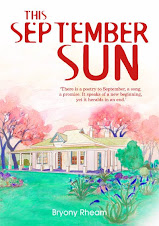
However, there are positives – success stories such as NoViolet Bulawayo’s (We Need New Names)or Bryony Rheam’s (This September Sun) have stimulated an interest in local literature, and the availability of short-run printing in the region means we can continue to make books available even if their sales are fairly limited.
FM: Are you receiving manuscripts? Are they good? Do you have the capacity to publish?
JM: We are receiving manuscripts, and some are of a good standard. Unfortunately with the limited sales for fiction we have to be very selective in what we choose to publish. There have been occasions when we have enjoyed a manuscript and would have liked to accept it for publication but did not have the requisite resources at that time. However, the publishing world is changing. Publishing used to depend on litho printing, which required a large print-run in order to keep unit costs low – hence a large initial investment. New technology has helped in that respect; a smaller print-run is now possible, meaning that publishers can take a chance on books that are not likely to sell in big numbers, including fiction and poetry. e-books add another dimension, with that, and print-on-demand, books can remain in circulation even when numbers selling are small.
FM: Are you selling many copies locally, and why or why not? Are all the books nationally available?
JM: Our books are available in the main centres of Bulawayo and Harare and a limited number in Mutare. We would love our books to be available in the smaller centres, such as Gweru and Kwekwe but most outlets only buy school text books. They are not a great number of bookshops in Zimbabwe and we make an effort to get our books into other outlets, such as shops selling crafts. Anyone having difficulty getting hold of one of our titles can contact us directly. The biggest market for our books still remains Zimbabwe. There are people in the country who do buy new books, but the number of such buyers is limited and discerning. Efforts are being made to encourage an interest in literature through literary events, competitions, reading clubs, workshops and launches
We are endeavouring to enter into co-publishing, or rights selling, arrangements to make our titles more readily available outside Zimbabwe. Most of our books are available outside of Zimbabwe, on a print-on-demand basis through African Books Collective.
FM: You have turned some books into e-books. Are they being bought? Why do you think this is the case? What are you most popular titles currently?
Most of our books are available as e-books on a number of platforms. Outside of Zimbabwe, e-books do seem a good proposition cost-wise for our fiction titles, given the high cost of distribution or the high cost of print-on-demand. Certainly, e-books sales are on the increase, we have been heartened at some of the recent sales figures. It has also been good to be able to bring some of our older titles back as e-books. The good news locally is that a local company, Open Book, will soon be up and running, selling e-books both for the standard e-readers and for cell phones that do not need to be too smart. The option to sell either complete books and individual stories or poems is very exciting and innovative. Worldreader are working in a similar way to promote a reading culture, distributing Kindles in projects in schools and elsewhere across Africa. Worldreader recently launched in Zimbabwe at King George VI School for Children living with Physical Disabilities in Bulawayo, and we are just about to publish a collection of stories and poems by the students there, which will be available as an e-book.
The most successful e-book title we’ve had is Bryony Rheam’s This September Sun, which topped sales on Amazon in the United Kingdom in mid-2013 and remains consistently in the top 100 of Women’s Literary Fiction.
FM: You just translated ‘Where To Now’ into Ndebele? How easy/ hard was it to get backing for this? How do you intend to distribute this version?
JM: We have been encouraged to take the step of publishing in isiNdebele by many writers and academics and we hope that the publication of Siqondephi Manje? will lead to a greater interest in reading literature for pleasure. The emphasis of publishing in indigenous languages again seems to have been on the school market.
Literary translation is a highly skilled activity and we’ve been fortunate in having Dr Thabisani Ndlovu, who is a well-regarded creative writer and academic, to translate the work. Feedback from the writers in the collection about the standard of the translation has been very positive. The funding for the translation was part of a wider project supporting literature in Zimbabwe.
We will distribute the book through our usual outlets, and we hope that local libraries will show an interest in the anthology.
FM: Has the partnership with the Caine Prize in co-publishing the Caine Prize Anthology boosted your profile and profitability?
JM: We are delighted to be the publishers of the Caine Prize anthology in Zimbabwe – we have always been enthusiastic about partnerships across Africa. We wanted to bring some of the best writers from the continent to the attention of Zimbabwean readers and this seemed an ideal opportunity. We would also like our books to be more readily available in other African countries and are pursuing this possibility through selling rights. Publishing the Caine Prize anthology does raise our profile across the continent, though, with the economic situation in Zimbabwe, sales of such collections are limited.
FM: There are prolific writers of fiction in Zimbabwe but most are published first outside of Zimbabwe. Why do you think this is? And how easy/ hard is it to get local publishing rights?
JM: Certainly many of the best-selling fiction writers outside of Zimbabwe are those that are published outside of the country – not surprisingly given the promotion by their international publishers, and given the exodus of so many of the educated population and the writing community. The most prolific Zimbabwean writers are those who tend to be published within the country – John Eppel, Christopher Mlalazi and Shimmer Chinodya spring to mind. With dollarization, it is becoming easier to bring titles from outside the country to Zimbabwean readers, but the situation again means low numbers sold.
FM: What are your hopes for Zimbabwe’s literary sector?

JM: These are exciting times for publishing across the world – with technological changes leading to much more open and varied access to publishing. Zimbabwe has special challenges, due to the economic climate, and to the exodus of many of those who write and who would purchase literary fiction. e-book technology does seem to offer a way of distributing content at fairly low cost to potential readers, but we must ensure that there remains a vibrant local publishing industry that provides high quality local literary content. There are good Zimbabwe writers, both in Zimbabwe and in the diaspora, and we think that the future is safe in their hands. We have always been keen to publish new writers and the ideal platform has been the series of short writings we have published. A number of these writers have gone on to publish their own books – Novuyo Rosa Tshuma, Bryony Rheam, Christopher Mlalazi, Mzana Mthimkhulu, Raisedon Baya, Deon Marcus and we understand that a number of others are working on books. We hope that this gives encouragement to new writers following on. It is really exciting as a publisher when a manuscript from a new writer appears on your screen, and you think … Yes. Initiatives to encourage writing, such as the Yvonne Vera Award and the Writers International Network Zimbabwe manuscript assessment programme are initiatives that support and encourage writing and there is certainly the need for more of these.


http://fungaineni.com/2014/03/28/caine-prize-writing-workshop-2014-interview-with-publisher-jane-morris/

Caine Prize Workshop 2014: Interview With Writer, Tendai Huchu


http://fungaineni.com/2014/03/27/caine-prize-2014-interview-with-writer-tendai-huchu/

Fungai Machirori (FM): As a writer whose book was first published in Zimbabwe and is now being republished internationally, would you say there is a difference in sales/ professionalism/ marketing between Zimbabwe and the international space? If so, please explain.
Tendai Huchu (TH): That is a difficult question because each market is different and so the sales reflect that. My book is a local novel in the Zimbabwean context, which is different from marketing it, say, in the UK where it is a foreign title. Western markets are more affluent and the novel is an established art form there, so you are not comparing like with like. In terms of professionalism, the two publishing houses you have in Zimbabwe that do fiction, Weaver Press and amaBooks, are working in very difficult circumstances but there can be no criticism of their standards, you only need to read through their catalogue to see that. More power to them for what they’ve achieved.
FM: In the post-2000s, you are one of the few Zimbabwean writers who has managed to write a novel that does not pay too much attention to the political situation in Zimbabwe. Do you think there is a market for that sort of writing locally and internationally? Why?
TH: I don’t think in terms of “the market” when I write. In my work, I’m trying to engage with ideas and concepts that interest me, but I do think there is room out there for all sorts of literature from vampire erotica to literary political fiction and everything in between. Ultimately all we are doing is peddling stories, and storytelling is an ancient art form, one that still exists because it answers an intrinsic human need.
FM: Has there been any local resistance to your book for tackling homosexuality which remains a highly divisive issue across the continent?
TH: Certainly none that I’m aware of. The text is open to the reader’s interpretation, so while some people obsess about the fact it has a gay character, other people realise that there is a lot more going on in the book. One also has to think about the kind of person who would go into a book store and spend their hard earned cash buying my work. I keep repeating the fact that books are an art form, and so my audience is probably just as limited as the audience you’d get if you put on opera or a yodelling performance. If a Sungura artist tackled that, then I’m sure they would reach a wider audience, and as a consequence enjoy much more interesting feedback from the public.
FM: The Caine Prize has constantly come under pressure for ‘pigeon-holing’ Africa across a handful of reductive themes. Do you think this is true? Can you explain why or why not?
TH: The Caine Prize comes under a bit of criticism which should be expected for a successful, high profile institution. But the Caine does not and cannot control the work writers across the continent choose to produce. They have different judges from different backgrounds each year, which means you have people with different tastes participating. But judging a literary prize is all about aesthetics; I would like to believe the judges are independent and the Caine doesn’t give them a tick list for what to look for. I confess that I’ve not followed it closely over the last fifteen years, but I’m sure the dynamic is the other way round, that is to say, the prize itself is influenced by what writers on the continent are interested in, because they provide the raw material that enables it to exist.
FM: Do you think the workshop being held in Zimbabwe will herald literary ‘re-engagement’ with Zimbabwe, or has this always been happening?
TH: Literature is about ideas and so I don’t believe it is possible for the world to disengage or re-engage with us, rather you have natural cycles, peaks and troughs, depending on whether the ideas being produced in one canon appeal to readers in another and vice versa. Zimbabwe is just one of many players jostling in the global literary market, and a single workshop is nothing in the grand scheme of things. What I believe though, with no empirical proof, is that, because it has a disproportionately sized diaspora, Zimbabwean literature reaps the benefits of having practitioners who interact with ideas from all across the world and that can only be enriching.


Monday, March 24, 2014

Launch of Siqondephi Manje? Indatshana zaseZimbabwe


with readings from their stories by Raisedon Baya, Mzana Mthimkhulu and Thabisani Ndlovu, and a reading of NoViolet Bulawayo's story by Sithandazile Dube.


Friday, March 21, 2014

Caine Prize Workshop 2014: Interview with Director Lizzy Attree

from http://fungaineni.com 


Snippets of this interview appeared in an article published this week ahead of the Caine Prize for African Writing Workshop happening in Zimbabwe this year.


Fungai Machirori (FM): Why is the Caine Prize returning to Zimbabwe? How was the decision arrived at?
Lizzy Attree (LA): The Caine Prize has long wanted to hold a workshop in Zimbabwe and support Zimbabwean writers, but has not felt the environment was right until recently.  We also found funders who were supportive of the idea, so we took the plunge.
F:M One of the challenges that has been clearly articulated around the Prize has to do with the dearth of north African winners/ finalists? Why do you think this is?
LA: I think north Africa already has a well-established literary scene and prizes that reward writers from that region, so I think that is one of the reasons we do not receive many entries from north Africa.  Much of the literature is also in Arabic, and so the issue of translation arises.  The International Prize for Arabic Fiction is a sister Prize, also backed by the Booker Trust, so we are confident that IPAF is making great strides in recognising and rewarding north African, as well as Middle Eastern literature.
FM: Wouldn’t the more logical step, therefore, be to try to hold the workshops in north Africa?
LA: We would very much like to do this and a recent visit I made to Morocco and the Casablanca Book Fair was encouraging.  We have plans to approach funders for workshops in north Africa in the near future.
F:M In 2000, when the Prize was first held, Zimbabwe still had a somewhat robust literary scene. But the nation was on the verge of it decline in the early 2000s. Is the return therefore symbolic/ strategic?
LA: There are no strategic considerations when planning workshops, certainly no political aspirations, other than ensuring the country is safe and relatively politically stable. Our only strategic concern, in terms of fairness, is that we try to cover east, south and west Africa evenly, so we have had workshops in Ghana, Cameroon, South Africa, Kenya and Uganda and hope soon to be in Nigeria, Zambia etc.   There is a symbolic link and many of our council members are fond of Zimbabwe for a number of reasons, but really our return is partly based on the high number and quality of entries we receive from Zimbabwean writers, and the funding conditions that make such an expensive enterprise possible.
FM: Two Zimbabweans have won the Caine Prize since its inception with NoViolet Bulawayo particularly enjoying great success since. Do you see the Caine Prize as an important gateway to get more Zimbabwean writers out into the mainstream?
LA: We aim to ensure the Caine Prize is an important gateway for all African writers to get in to the mainstream.
FM: Is the publishing partnership with amaBooks yielding significant benefits thus far?
LA: The partnership with amaBooks is fantastic for us. It is very important to the Caine Prize that the stories are read widely and are therefore locally available.
FM: Can you tell me a bit more about the participants in this year’s workshop? How were they sought and what do you expect from the workshop?
LA: Participants are selected based on the previous year’s shortlist and informed by the previous year’s entries.  So, four shortlisted authors are attending this year, unfortunately the winner, Tope Folarin, couldn’t join us due to work commitments.  We also took recommendations from the judges to invite a number of writers, as well as recommendations from other colleagues and professionals in the field of literature and publishing, as well as past winners, who we listen to closely.  We aim to have a range of writers from different countries, a mix of men and women of different abilities and to include four or five writers from the country in which the workshop takes place.
The workshop will produce 13 publishable short stories, and will involve hard work from the moment we arrive.  Our facilitators, Henrietta Rose-Innes and Nii Parkes will help the writers to shape and edit their work, as will group sessions of readings and criticism which take place daily.  The writers will also visit four senior schools near Mutare, to meet and talk with local school children. There will then be 2 events, one at the Harare City Library and one at Meikles Supermarket on 1st and 2nd April respectively.  The stories will then be published in the 2014 Caine Prize anthology, which will also include this year’s shortlisted stories, which will be announced in late April.
FM: There is often criticism levelled against the Prize for selecting literature that paints Africa in a parochial and formulaic light (hunger, strife, dictatorship, etc). What do you say to this?
LA: Really I think literature is subjective and everyone is entitled to their opinion. I think the stories that have won and been shortlisted for the Caine Prize have been of a very high quality and that unfortunately it makes bigger headlines to critique writing on the basis of subject matter, than on the basis of literary or linguistic style and accomplishment.  Having said that I do hope that Caine Prize stories provide a bright window in to a continent that is often not understood in all its complexity in the West. If this window involves telling tales that are hard to read or which details the often terrible events that occur in countries all over the world, then so be it.  I cannot tell writers what to write, or editors what to publish.  We work with the stories that are sent to us every year.